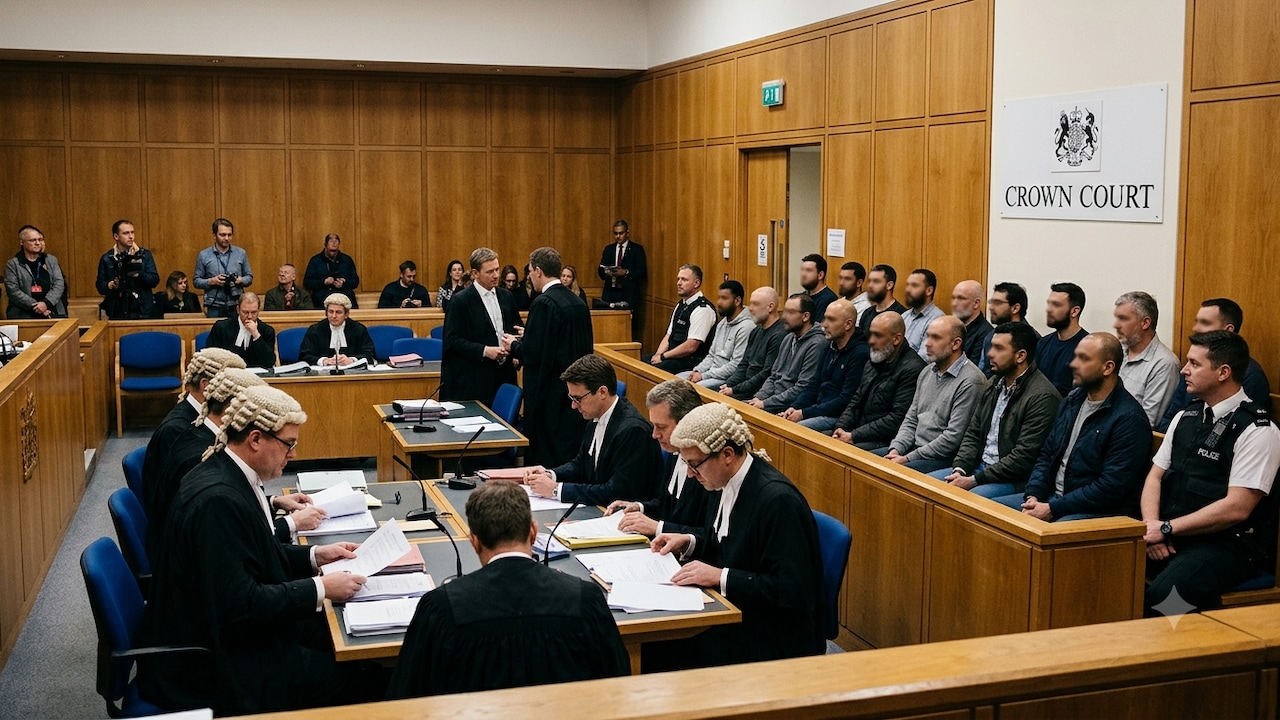
The Supreme Court has ruled that BCI President Manan Kumar Mishra is merely an interim official and cannot take major policy decisions. The court has also mandated strict timelines for State Bar Council elections and female representation.
- BCI President Manan Kumar Mishra restricted to routine administrative tasks only.
- Involvement of Attorney General and Solicitor General mandatory for policy shifts.
- Strict timelines set for the formation of new State Bar Councils.
- Mandatory inclusion of female members in State Bar Councils within two weeks.
New Delhi: In a significant move to safeguard the institutional integrity of the legal profession, the Supreme Court of India has restrained the interim President of the Bar Council of India (BCI), Manan Kumar Mishra, from making any major policy decisions. A bench comprising Chief Justice Surya Kant, Justice Joymalya Bagchi, and Justice V. Mohana clarified that his role is limited to the day-to-day functioning of the organization until fresh elections are conducted.
The court's observation came during the hearing of petitions alleging that Mr. Mishra had been overstaying his tenure and exercising undue influence. Justice Bagchi noted that since the current leadership is not democratically elected for a permanent term, they cannot initiate structural or policy-driven changes. To prevent any unilateral decisions, the court ruled that the Attorney General (AG) and the Solicitor General (SG)—who are permanent ex-officio members of the BCI—must be consulted for any significant policy matters.
Why This Matters
BozokMedia analysis shows that this ruling is a critical check against the centralization of power within legal regulatory bodies. The BCI holds immense influence over legal education and professional standards in India; allowing an interim head to make sweeping policy changes could jeopardize the democratic mandate of the legal fraternity. This decision reinforces the principle that institutional authority must stem from a legitimate, elected mandate.
An interim appointment must never be allowed to morph into a period of unchecked policy-making power.
Beyond the limitations on the BCI President, the Supreme Court has also fast-tracked the democratic restructuring of State Bar Councils. The bench directed the Chief Justices of various High Courts to ensure that the process of including female members in State Bar Councils is completed within two weeks. This emphasis on gender diversity aims to make the legal profession more inclusive and representative.
The judicial roadmap is precise: once the inclusion of women is finalized, State Bar Councils must notify their new composition within one week. Subsequently, these newly formed councils are required to elect their President, Vice-President, and other office-bearers within three weeks. This process will ultimately pave the way for the election of new, permanent officials for the Bar Council of India.
Frequently Asked Questions
Question 1: Can the current BCI President make new rules for lawyers?
Answer: No, the Supreme Court has ruled that he can only handle routine administrative tasks; major policy changes require the involvement of the AG and SG.
Question 2: What is the timeline for the new elections?
Answer: The court has set a strict schedule involving the immediate formation of State Bar Councils with female representation, followed by their internal elections.