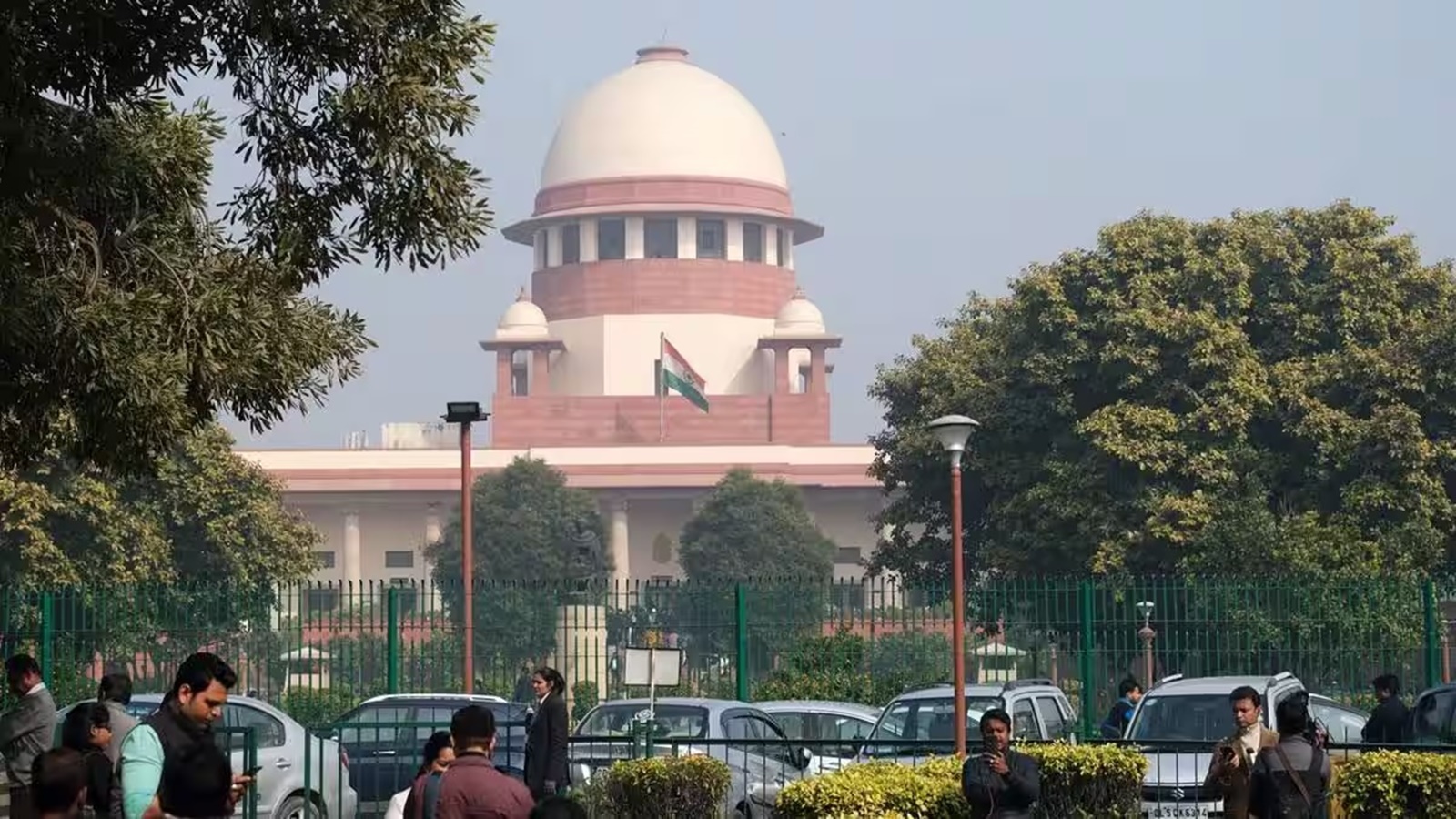
The Supreme Court has set aside a Delhi High Court order, validating the NCTE's authority to demand annual performance appraisal reports from Teacher Education Institutions (TEIs).
- Supreme Court validated the NCTE's public notice requiring annual Performance Appraisal Reports (PAR) from TEIs.
- The Court set aside the Delhi High Court's 2023 order that had termed the notice arbitrary and illegal.
- The Bench emphasized that institutional accountability is vital for ensuring quality elementary education.
- TEIs and the NCTE have been officially recognized as key 'duty-bearers' in the education system.
New Delhi: In a significant move to strengthen the quality of teacher training in India, the Supreme Court on Thursday upheld a Public Notice issued by the National Council for Teacher Education (NCTE). The notice requires all Teacher Education Institutions (TEIs) to file annual Performance Appraisal Reports, ensuring a standardized level of accountability across the sector.
Overturning the High Court Decision
A bench comprising Justices P S Narasimha and Alok Aradhe set aside a March 13, 2023, order from the Delhi High Court. The High Court had previously ruled that the September 2019 notice issued by the NCTE Executive Committee was arbitrary and lacked legal standing. However, the Apex Court clarified that the High Court "committed an error" in its judgment, affirming that both the Council and its Executive Committee possess the jurisdiction to mandate such regulatory filings.
Why This Matters
BozokMedia analysis shows that this judgment closes a major regulatory loophole that allowed several teacher training institutes to operate without stringent oversight. By empowering the NCTE to demand performance audits, the court has ensured that the regulators have the necessary tools to monitor the effectiveness of those training the nation's future educators. The court noted that even without explicit statutory language, such regulatory measures are incidental and ancillary to the duties of a statutory body.
The development of a child is integrally connected to the role of an elementary school teacher, making institutional accountability paramount.
The Concept of 'Duty-Bearers'
The judgment provides a profound legal framework for the Right to Education. The Supreme Court highlighted that identifying elementary education as a fundamental right necessitates clearly defined responsibilities. Previously, five 'duty-bearers' were recognized: the Government, local authorities, neighboring schools, parents/guardians, and the teachers themselves. The Court has now expanded this to include two more critical entities:
| Entity Type | Role in Education |
|---|---|
| 6th Duty-Bearer | Teacher Education Institutions (TEIs) |
| 7th Duty-Bearer | National Council for Teacher Education (NCTE) |
The Bench remarked that the duties of the Council and its constituent bodies are perhaps the highest among all duty-bearers, as they are responsible for the planned and coordinated development of the entire teacher education system.
Historical Background and Legal Context
This ruling aligns with the Right of Children to Free and Compulsory Education (RTE) Act, 2009. Under Section 23 of the Act, an 'academic authority' is empowered to lay down minimum qualifications for teachers. The Supreme Court reaffirmed that the NCTE, established under the NCTE Act of 1993, serves as this essential academic authority, bridging the gap between legal mandates and classroom reality.
Frequently Asked Questions
1. Why did the Supreme Court disagree with the Delhi High Court?
The Supreme Court found that the NCTE has the inherent regulatory power to ask for reports to fulfill its statutory mandate, a power the High Court had mistakenly restricted.
2. What are TEIs?
TEIs stands for Teacher Education Institutions, which are the colleges and universities responsible for training individuals to become professional teachers.