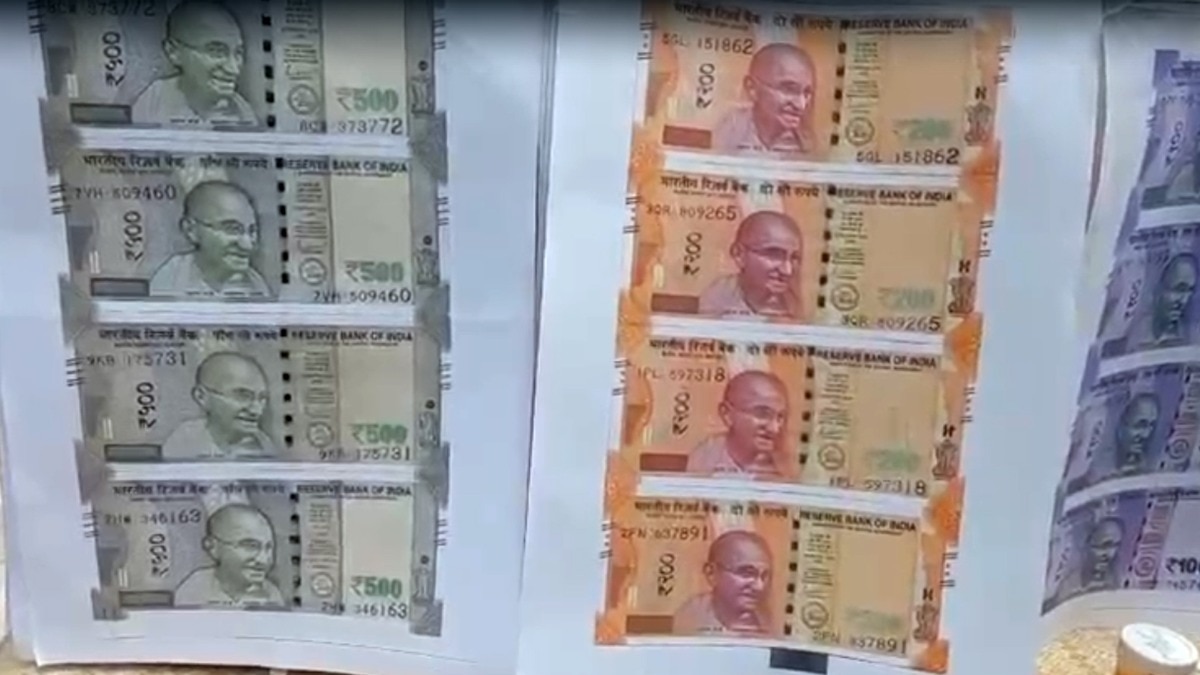
Hyderabad police have dismantled a counterfeit currency gang that was using high-end color printers to manufacture fake ₹100, ₹200, and ₹500 notes at home.
- Hyderabad police arrested three individuals and seized 1,124 counterfeit notes.
- The suspects learned the counterfeiting process via YouTube and Instagram videos.
- The gang targeted liquor shops and vegetable markets to circulate the fake notes.
- Seized items include an Epson color printer, scanner, laminator, and watermark paper.
Hyderabad, Telangana: In a major breakthrough, the Hyderabad police have busted a sophisticated counterfeit currency gang operating from a residential premises. The Shamshabad Zone Task Force, in coordination with the Balapur police, arrested three suspects who had converted a domestic space into a mini printing press for forged Indian currency.
According to investigative reports, the suspects were manufacturing fake denominations of ₹100, ₹200, and ₹500. The most alarming aspect of the investigation is that the criminals did not rely on professional training but instead utilized instructional videos from YouTube and Instagram to master the art of counterfeiting. This highlights a growing trend of digital-assisted crime.
Why This Matters
BozokMedia analysis shows that the democratization of high-quality printing technology, combined with the accessibility of instructional content on social media, has lowered the barrier to entry for serious financial crimes. This case serves as a critical case study for law enforcement on the evolving nature of domestic-based criminal enterprises.
The transition from professional counterfeiting labs to home-based setups using consumer-grade electronics is a significant shift in criminal methodology.
The police raid resulted in the seizure of 1,124 counterfeit notes with a total face value of approximately ₹2.91 lakh. The arrested individuals have been identified as Ramavat Ramu (a Zomato delivery worker), Ramavat Motilal (a Rapido driver), and Ramavat Gandhi (an auto-rickshaw driver). All three are residents of Chintal Thanda, Vaddipatla.
The gang's operational strategy involved circulating the forged notes during late-night hours in high-volume cash environments such as liquor stores and vegetable markets. This method was intended to minimize the risk of detection by unsuspecting vendors. Additionally, police recovered several authentic notes which were being used as templates to replicate security features like watermarks and the portrait of Mahatma Gandhi.
Frequently Asked Questions
Question 1: What equipment was used by the gang to print fake notes?
Answer: They used an Epson L6460 color printer, a color scanner, a laminator, and a paper cutter.
Question 2: How did the suspects learn to make fake currency?
Answer: The suspects reportedly learned the process by watching tutorial videos on social media platforms like YouTube and Instagram.