The Delhi High Court has delivered a landmark judgment clarifying that Booth-Level Agents (BLAs) cannot be held legally responsible for the accuracy of all details in electoral enumeration forms, limiting their liability to identity verification only.
- Delhi High Court rules BLAs are not liable for verifying all details in Special Intensive Revision (SIR) forms.
- Verification of elector particulars remains the primary statutory duty of the Booth Level Officer (BLO).
- BLAs are only responsible for verifying that the elector's photograph matches their identity.
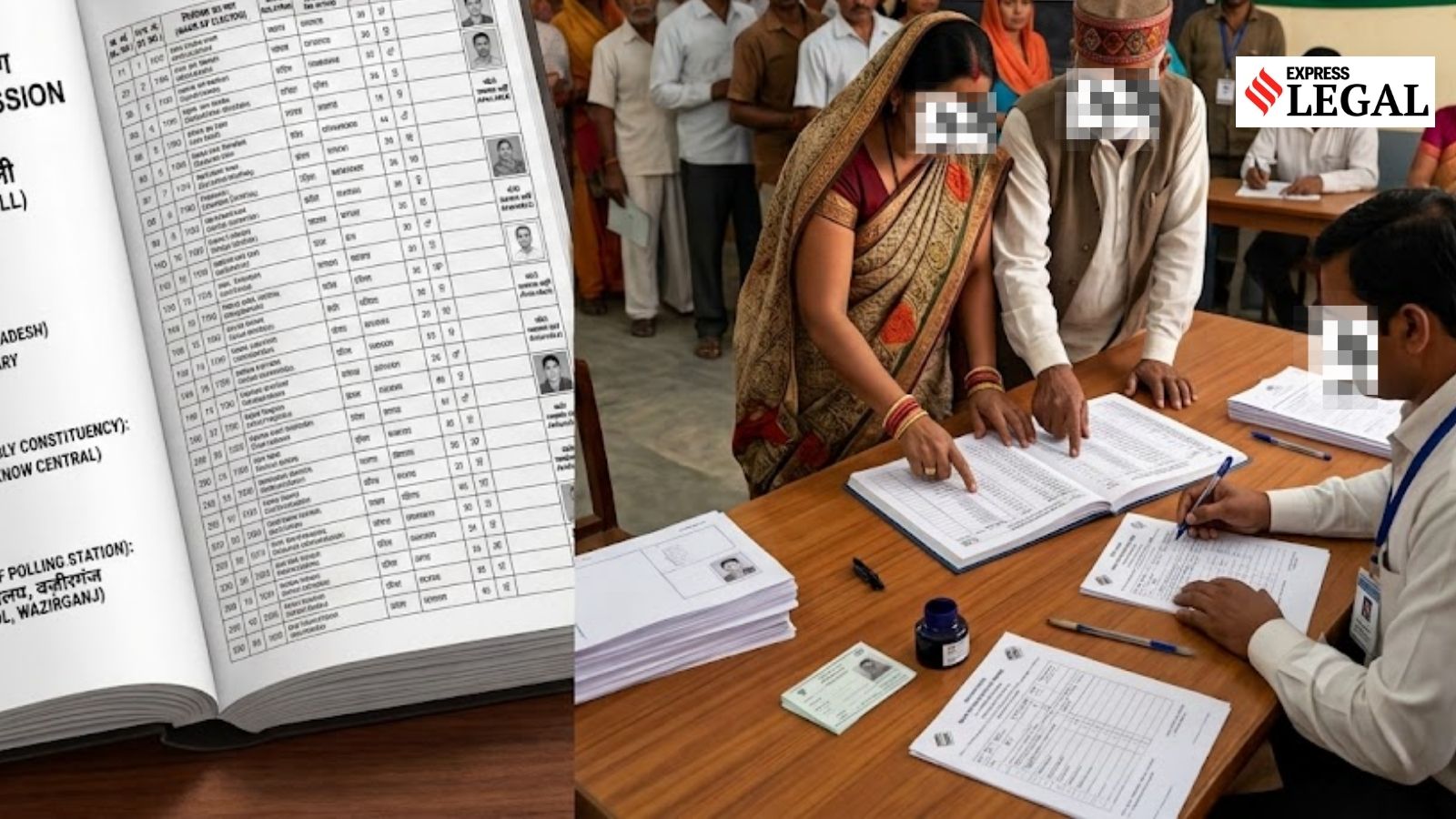
In a significant legal victory for political party representatives, the Delhi High Court has ruled that Booth-Level Agents (BLAs) cannot be compelled to provide personal undertakings certifying the absolute correctness of all information contained in enumeration forms during the Special Intensive Revision (SIR) of electoral rolls. The court emphasized that much of the required information is exclusively within the knowledge of the elector and cannot be independently verified by a party agent.
The case was brought forward by the Delhi Pradesh Congress Committee, specifically by President Devender Yadav and the chairman of its Booth Management Committee. They challenged a mandate by the Election Commission of India (ECI) that required BLAs to sign undertakings confirming the accuracy of particulars submitted to Booth Level Officers (BLOs). The petitioners argued that this requirement placed an impossible and illegal burden on party volunteers.
Justice Amit Bansal, presiding over the matter, observed that the statutory responsibility for house-to-house verification lies solely with the BLO. The court noted that since the BLO is the official entrusted with the verification process, there is no legal justification for requiring a BLA—who is a political representative—to furnish a personal guarantee for data they have no official means to verify.
Why This Matters
BozokMedia analysis shows that this ruling prevents the potential criminalization of political volunteers. If the ECI's mandate had stood, thousands of BLAs could have faced prosecution under Section 31 of the Representation of the People (RP) Act for unintentional errors made by voters in their forms. This judgment reinforces the boundary between official state verification and political observation.
"The court has rightly distinguished between the statutory duty of a government officer and the voluntary role of a party agent, ensuring that accountability is placed where the actual power of verification exists."
During the proceedings, senior counsel Sakal Bhushan argued that a BLA's role is limited to ensuring the person submitting the form is who they claim to be. Conversely, the ECI, represented by Dama Sheshadri Naidu, contended that since appointing a BLA is voluntary, the agent must accept the responsibilities assigned by the Commission as a system of 'checks and balances'.
The court ultimately rejected the ECI's stance, stating that BLAs do not participate in the statutory process of inclusion or exclusion in electoral rolls. Therefore, their liability is limited strictly to the identification of the elector via their photograph.
| Feature | Booth Level Officer (BLO) | Booth Level Agent (BLA) |
|---|---|---|
| Role | Government Official | Political Party Representative |
| Primary Duty | Statutory House-to-House Verification | Observation & Identity Check |
| Liability | Full verification of all form details | Matching photo with identity only |
| Nature of Work | Mandatory/Statutory | Voluntary/Party-appointed |
Frequently Asked Questions
1. What is the Special Intensive Revision (SIR)?
SIR is a comprehensive process conducted by the ECI to update electoral rolls, removing deceased or shifted voters and adding new eligible electors.
2. Can a BLA still be penalized?
Yes, but only if they provide false information regarding the identity of the elector or the matching of the photograph, as per the court's ruling.