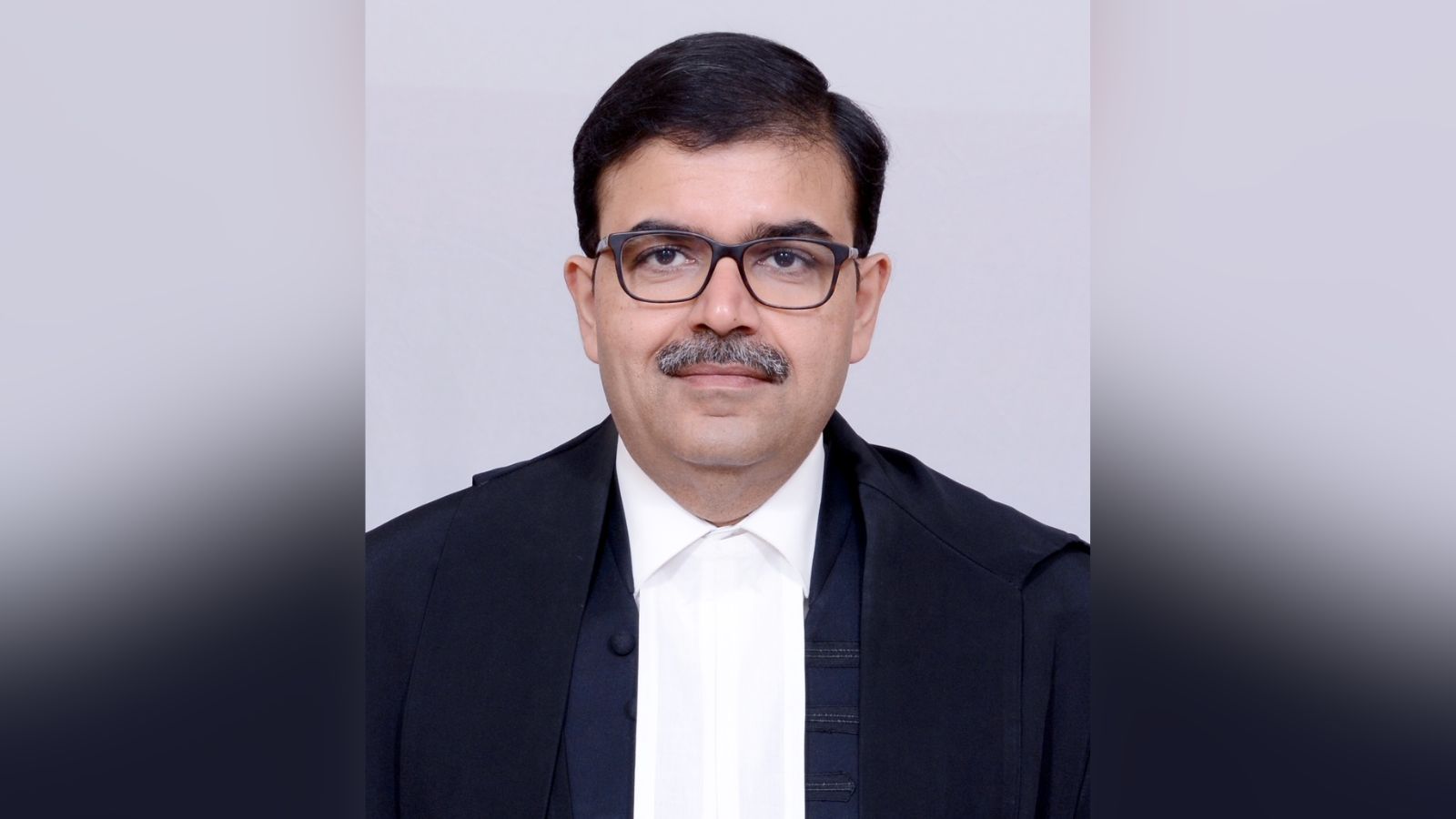
Chief Justice of the Punjab and Haryana High Court, Justice Ashwani Kumar Mishra, has asserted that the institution will stand firm against any tactics aimed at undermining its authority. The remarks came during a hearing regarding the Punjab government's alleged non-compliance with DA/DR payment orders.
- Chief Justice Mishra emphasized that the court is bound by its constitutional oath and the rule of law.
- The case involves the Punjab government's failure to release pending DA/DR installments to employees.
- Allegations have been made regarding ₹340 crore spent on advertisements despite court restrictions.
Chandigarh: In a powerful assertion of judicial independence, the Chief Justice of the Punjab and Haryana High Court, Justice Ashwani Kumar Mishra, stated on Monday that the institution would not be "browbeaten by any kind of tactics." Speaking during a high-stakes hearing, the Chief Justice reinforced that the court remains strictly governed by the rule of law and its constitutional mandate.
The oral observations were made during a hearing concerning an application filed against officials for allegedly willfully disobeying a division bench order dated August 3. That order had directed the Punjab Government to release pending Dearness Allowance (DA) and Dearness Relief (DR) installments and arrears to its employees and pensioners.
The Advertising Controversy and Financial Allegations
A significant point of contention in the proceedings was the state government's spending habits. Counsel for the applicants alleged that despite the High Court's explicit direction to avoid "unproductive expenditures"—such as large-scale advertising campaigns in print or social media—until employee dues were cleared, the state government proceeded with massive publicity.
It was further submitted that the state government allegedly spent approximately ₹340 crore on full-page advertisements issued on September 1. This expenditure has been characterized as a direct attempt to bypass judicial scrutiny and undermine the authority of the High Court.
Why This Matters
BozokMedia analysis shows that this confrontation highlights a growing friction between the state executive and the judiciary. The ability of a state government to adhere to judicial mandates regarding fiscal responsibility and employee welfare is a critical benchmark for democratic governance and the maintenance of the separation of powers.
"This court would be governed by the rule of law and this institution will not be browbeaten by any kind of tactics." - Justice Ashwani Kumar Mishra
The Division Bench, comprising Chief Justice Mishra and Justice Rohit Kapoor, made it clear that they would not be influenced by the submissions of either party. The state counsel argued that the matter was not maintainable as a Special Leave Petition (SLP) had already been filed in the Supreme Court, though applicants countered that the SLP remains in the "defective list," suggesting a stalling tactic.
Frequently Asked Questions
1. What was the High Court's original order to the Punjab government?
The court directed the state to release all pending DA/DR installments to employees and pensioners by August 31 and to cease unproductive spending on advertisements.
2. Why is the state government being accused of stalling?
Applicants allege that the state is using the filing of a defective SLP in the Supreme Court as a tactic to delay the implementation of the High Court's orders.