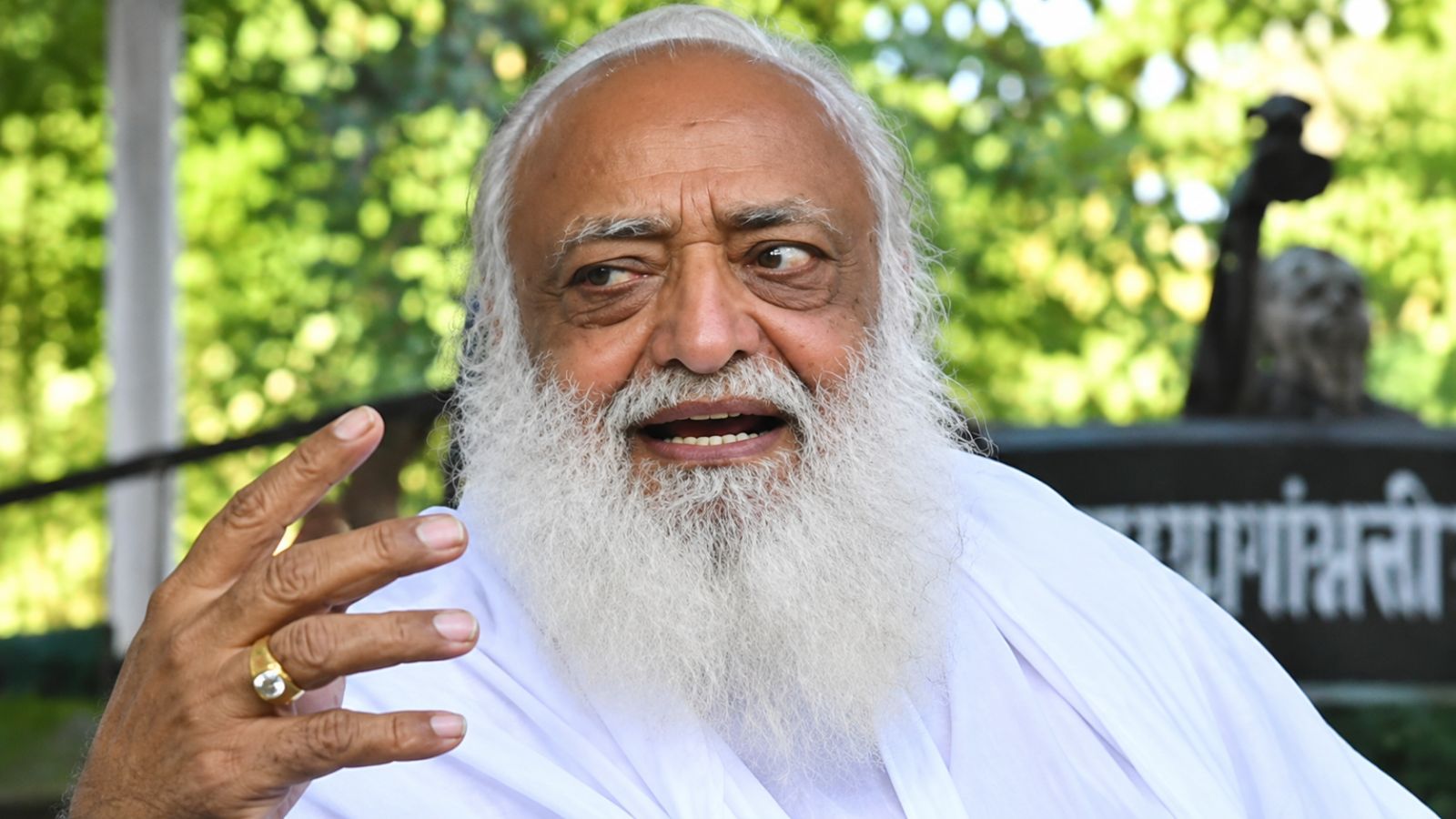
The Gujarat High Court has dismissed self-styled godman Asaram Bapu's application for temporary bail, rejecting his attempt to leverage a parole order from Rajasthan to secure release in Gujarat.
- Gujarat High Court dismissed Asaram Bapu's plea for 20 days of temporary bail.
- The plea was based on a parole order previously granted by the Rajasthan High Court.
- The State argued that no independent grounds for bail were presented to the Gujarat court.
- The court noted the Supreme Court's previous ruling regarding Asaram's health and caregiver needs.
In a significant legal setback for the self-styled godman Asaram Bapu, the Gujarat High Court has rejected his application for temporary bail. Asaram, who is currently serving a life sentence following his conviction by a Gandhinagar court in a 2013 rape case, had sought a 20-day release based on a precedent set by the Rajasthan High Court.
The core of Asaram's argument rested on a recent order from the Rajasthan High Court, which had granted him a 20-day parole in a separate rape case. His legal counsel argued that the Rajasthan court had considered his advanced age and the fact that he had spent over 13 years in incarceration. Furthermore, the counsel highlighted that the Rajasthan authorities' apprehensions regarding his release had been dismissed as "figments of imagination" by that court.
Why This Matters
BozokMedia analysis shows that this ruling underscores the strict judicial boundary between different state jurisdictions in India. The Gujarat High Court's refusal to automatically mirror the Rajasthan High Court's decision emphasizes that parole or bail in one case does not create an entitlement for release in another, especially when the crimes are of a similar gravity. It reinforces the principle that discretionary powers of the court must be triggered by independent, case-specific grounds.
The State's opposition was fierce. Public Prosecutor Hardik Dave argued that the petitioner was attempting to use the court's discretionary powers without providing any independent justification. The prosecution pointed out that Asaram failed to disclose the specific grounds on which the Rajasthan parole was granted, which was a critical omission for the Gujarat court to consider.
The judicial insistence on 'independent grounds' prevents the creation of a legal loophole where a lenient order from one state could be used to bypass strict scrutiny in another.
The court also referenced a Supreme Court order from August 6, which followed a medical report from AIIMS Jodhpur. The report concluded that while Asaram did not require hospitalization, he did need round-the-clock assistance from trained caregivers. While the apex court allowed him to hire a caregiver, it kept the application for suspension of sentence pending.
Ultimately, Justice Gita Gopi and Justice L S Pirzada ruled that there was no reason to entertain the plea at this stage. The court suggested that if Asaram's health were to deteriorate further, his appropriate recourse would be to approach the Supreme Court again.
Frequently Asked Questions
1. Why did the Gujarat High Court reject Asaram's bail plea?
The court found that Asaram failed to provide any independent grounds for temporary bail and was merely relying on a parole order from a different state's court.
2. What was the Supreme Court's stance on Asaram's health?
The Supreme Court allowed Asaram to have a full-time caregiver in jail after an AIIMS Jodhpur report stated he needed assistance but did not require hospitalization.