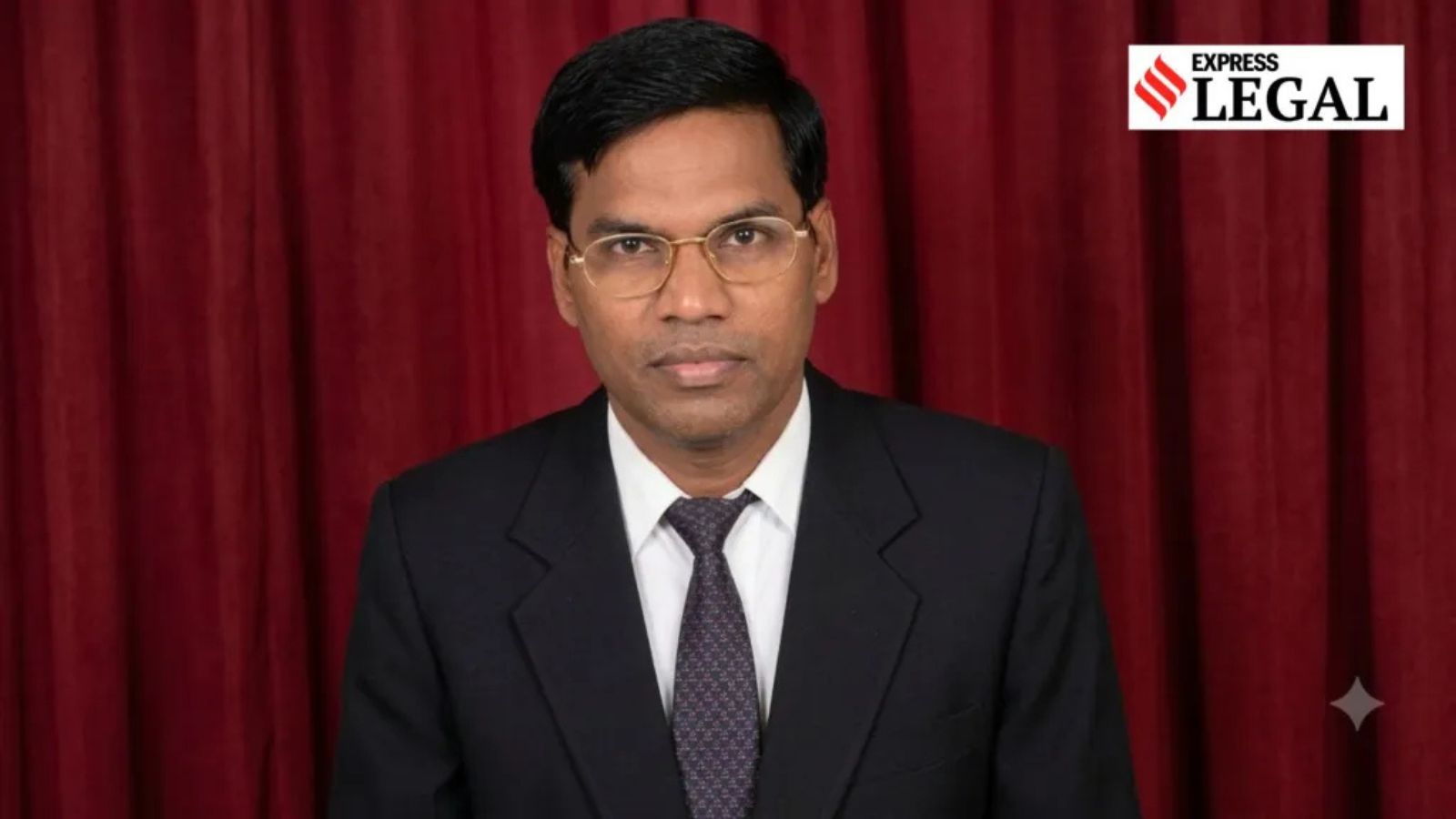
Additional District and Sessions Judge Ravi Kumar Diwakar has sparked a national conversation after awarding his 23rd death sentence, declaring he will never succumb to the pressure of mafias or strongmen.
- Judge Ravi Kumar Diwakar has handed down 23 death sentences in just four months.
- The judge explicitly stated he would resign rather than be dictated to by criminals or mafias.
- 97 pending murder cases were recently transferred from his court by administrative order.
In a bold and unprecedented assertion of judicial independence, Ravi Kumar Diwakar, the Additional District and Sessions Judge (FTC 3) in Muzaffarnagar, Uttar Pradesh, has reinforced his commitment to fearless justice. While delivering a death sentence in a dowry death case on September 7, Judge Diwakar penned a striking statement that has sent ripples through the legal community.
Writing in Hindi, the judge declared that he "would rather die" than be labeled a "coward" or allow the dictates of mafias, strongmen, or criminals to influence his courtroom. He stated, "If I become fearful of other forces... it would be appropriate for me to resign from this sacred judicial institution." He emphasized that as long as he occupies the judge's chair, the authority to deliver judgments remains solely his.
Why This Matters
BozokMedia analysis shows that this incident transcends a simple legal ruling. In a landscape where the judiciary often faces immense pressure from local power brokers and organized crime syndicates, Judge Diwakar's public stance serves as a psychological blow to criminal elements. It restores the public's faith in the 'Rule of Law,' signaling that the bench cannot be intimidated by the 'muscle power' of the streets.
"The courage of a single presiding officer can redefine the perceived accessibility of justice for the common citizen in high-crime districts."
The judge credited his unwavering resolve to his parents, who taught him to fear only the Divine. He argued that for a common citizen entering a court of law, the expectation is to find a judge who is impartial, courageous, and entirely devoid of fear. Any deviation from this, he suggested, would be a betrayal of the judicial oath.
However, the narrative takes a complex turn with recent administrative actions. An order passed by the Muzaffarnagar District and Sessions Judge on August 18 revealed that 97 murder cases previously pending before Judge Diwakar have been "recalled" and transferred to other courts. While the reasons for this mass transfer remain administrative, it has sparked debate regarding the internal dynamics of the district judiciary.
It is important to note the procedural safeguards in the Indian legal system. Under Sections 407 to 412 of the Bharatiya Nagarik Suraksha Sanhita, no death sentence awarded by a Sessions Court can be executed without confirmation from the High Court. Consequently, all sentences passed by Judge Diwakar will be scrutinized by the Allahabad High Court.
Frequently Asked Questions
Q1: Will the death sentences awarded by Judge Diwakar be carried out immediately?
No, they must first be confirmed by the Allahabad High Court as per the Bharatiya Nagarik Suraksha Sanhita.
Q2: How many cases were transferred from Judge Diwakar's court?
A total of 97 murder cases were recalled and transferred via an administrative order on August 18.