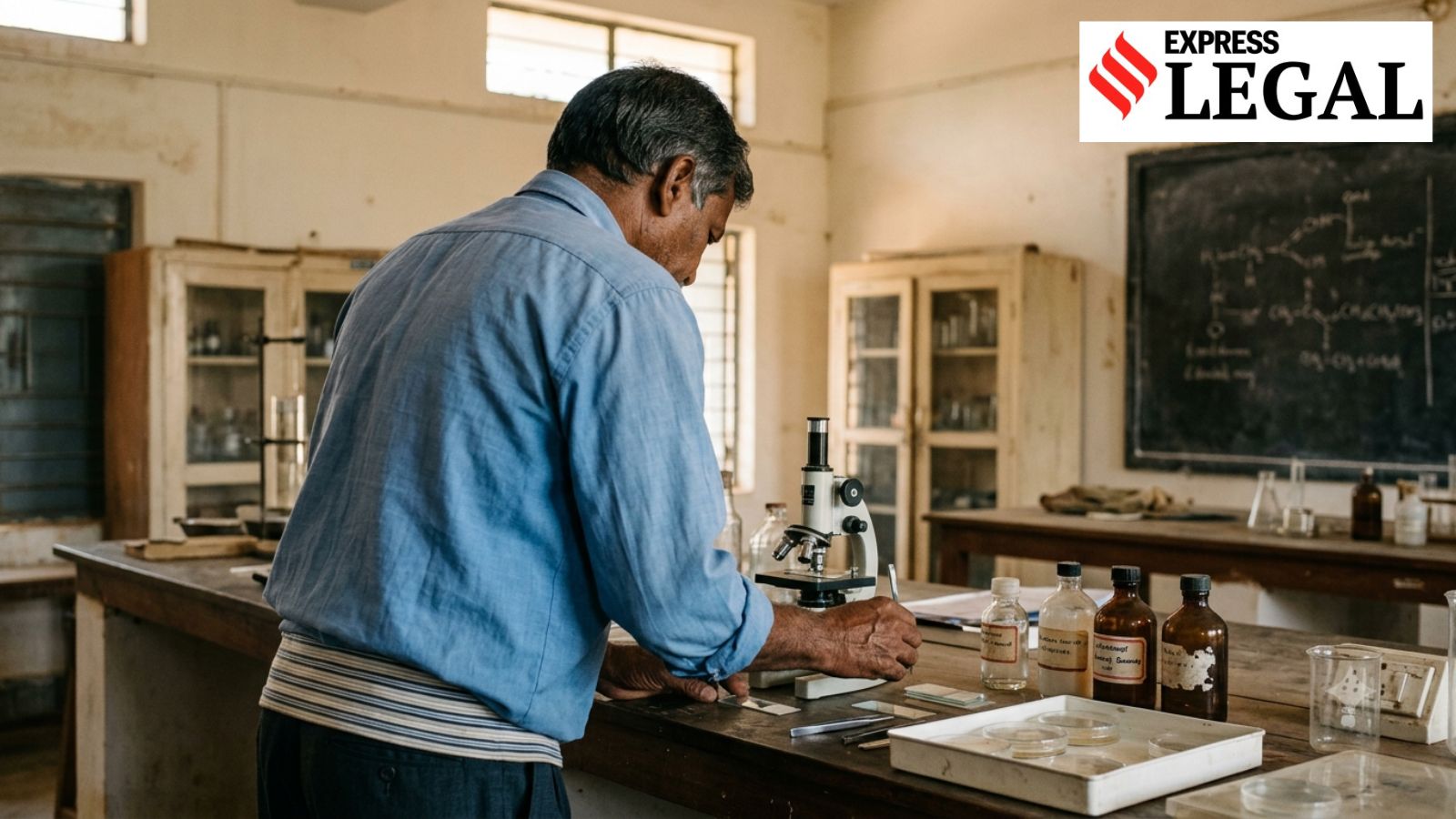
The Orissa High Court has set aside the rejection of a laboratory attendant's plea for regularisation after 21 years of service. Justice Murahari Sri Raman termed the prolonged uncertainty as a 'Sword of Damocles' and ordered the state to act within three months.
- The Orissa High Court intervened to protect a contractual employee serving for over 21 years.
- The court quashed the state government's 2019 order rejecting the regularisation plea.
- The Odisha Higher Education Department must now reconsider the claim within a strict three-month deadline.
In a landmark judgment addressing labor exploitation and administrative apathy, the Orissa High Court has provided a new lease of life to a long-serving contractual employee. The court described the 21-year struggle of a college laboratory attendant as a 'Sword of Damocles', emphasizing that keeping an employee in a state of perpetual uncertainty is a form of systemic exploitation.
The case was brought forward by Santosh Kumar Patra, a laboratory attendant at Shailabala Women’s Autonomous College, Cuttack. Patra challenged the state government's decision dated August 9, 2019, which had summarily rejected his request to be regularized as a permanent employee.
Chronology of Service
The records indicate a trajectory of dedication and versatility. Patra began his journey on September 1, 2005, as a peon earning a mere Rs 70 per day. By 2007, he transitioned to an attendant role, and by 2010, he became a contractual laboratory attendant. Over the years, he served across various critical departments, including admissions and examinations, maintaining an unblemished professional record.
Why This Matters
BozokMedia analysis shows that this ruling strikes a blow against the 'contractualization' of government labor. By rejecting the government's reliance on reservation laws introduced years after the initial hiring, the court has established that retrospective technicalities cannot be used to deny justice to workers who have dedicated their prime years to an institution.
"The judicial intervention here ensures that administrative indifference cannot override the fundamental right to fair employment terms."
The state government had attempted to distinguish Patra's case from that of another employee, Anama Charan Nayak, who had been successfully regularized. The government cited reservation requirements from 2013 and 2014 as barriers. However, Justice Murahari Sri Raman dismissed these as "jejune grounds," noting that the responsibility for following policy lay with the appointing authority at the time of engagement.
Frequently Asked Questions
Q1: Why did the government initially reject the plea?
The government cited reservation laws introduced in 2013-14 and claimed the worker was not similarly situated to previously regularized employees.
Q2: What was the court's final directive?
The court set aside the 2019 rejection order and directed the Higher Education Department to reconsider the regularisation claim within three months.