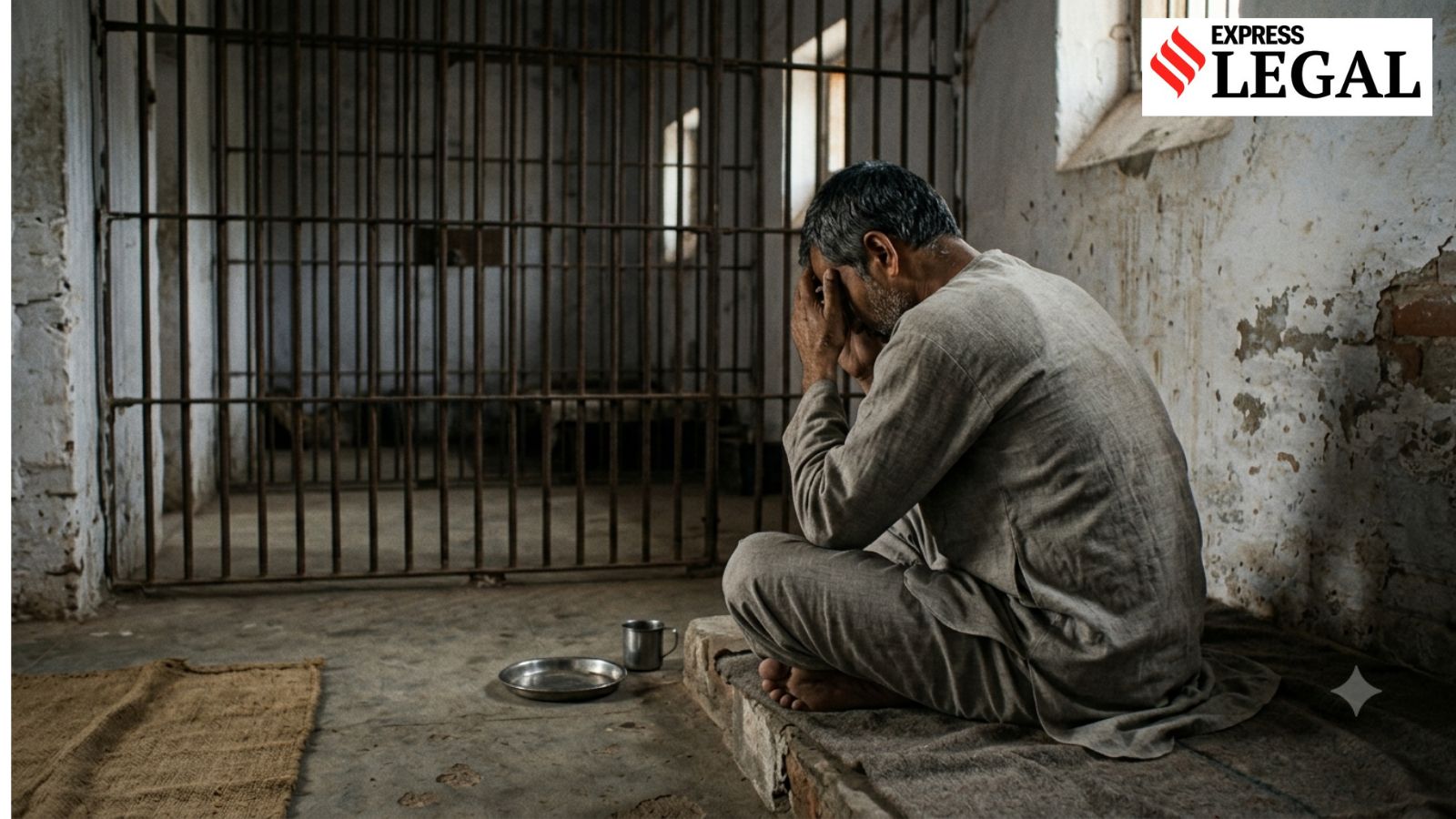
The Meghalaya High Court has slammed authorities for keeping a Bangladeshi national in prison for over a year after his six-month sentence ended, labeling the continued detention as illegal.
- A Bangladeshi national remained jailed for over a year despite completing a 6-month sentence.
- Meghalaya High Court termed the continued imprisonment as 'illegal detention'.
- The court ruled that delays in nationality verification do not justify prolonged jail time.
- The IG Prisons has been summoned to clarify post-release arrangements.
The Meghalaya High Court has expressed grave concern over the continued incarceration of a Bangladeshi national who has already served his court-mandated sentence. The prisoner, who was sentenced to six months, has remained behind bars for more than a year, purely because authorities are awaiting nationality verification from the Bangladeshi government.
A division bench comprising Chief Justice Revati Mohite Dere and Justice W. Diengdoh questioned the logic of keeping a man imprisoned simply because of administrative delays. The Assistant Advocate General (AAG) informed the court that the man is being held until the Assistant High Commissioner of Bangladesh confirms his nationality.
Why This Matters
BozokMedia analysis shows that this case exposes a systemic failure in the coordination between prison authorities and diplomatic missions. By treating administrative deportation as a continuation of criminal punishment, the state effectively imposes an indefinite sentence without a trial. This ruling reinforces the principle that the expiration of a judicial sentence must result in immediate release or transfer to a non-punitive detention center.
"The absence of a response from a foreign authority cannot be used as a legal shield to justify the infringement of an individual's basic right to liberty."
The court warned that if the Bangladeshi national continues to be held beyond his sentence, the state may be compelled to pay him compensation. The bench emphasized that it was the obligation of the authorities to initiate verification steps the moment the case began, rather than waiting until the sentence was served.
Furthermore, the court made a sharp distinction between serving a prison sentence and completing administrative formalities. The bench noted that the prisoner should have been moved to a detention centre or deported immediately upon completion of his term. The court observed that the process of obtaining a response from a foreign mission can take years, and a prisoner cannot be expected to languish in jail during that interval.
In a decisive move, the High Court directed the Inspector General (IG) of Prisons to appear personally before the court. The IG is required to provide a clear plan regarding where the national will be housed following his immediate release, noting that he has been over-detained by nearly a year.
Frequently Asked Questions
1. Can a foreigner be kept in jail after their sentence ends for verification?
No. According to the Meghalaya High Court, this constitutes illegal detention. They should be moved to a detention center, not a prison.
2. Why did the court mention compensation?
Because the state violated the individual's fundamental right to liberty by detaining him for a year beyond his legal sentence without a valid judicial order.