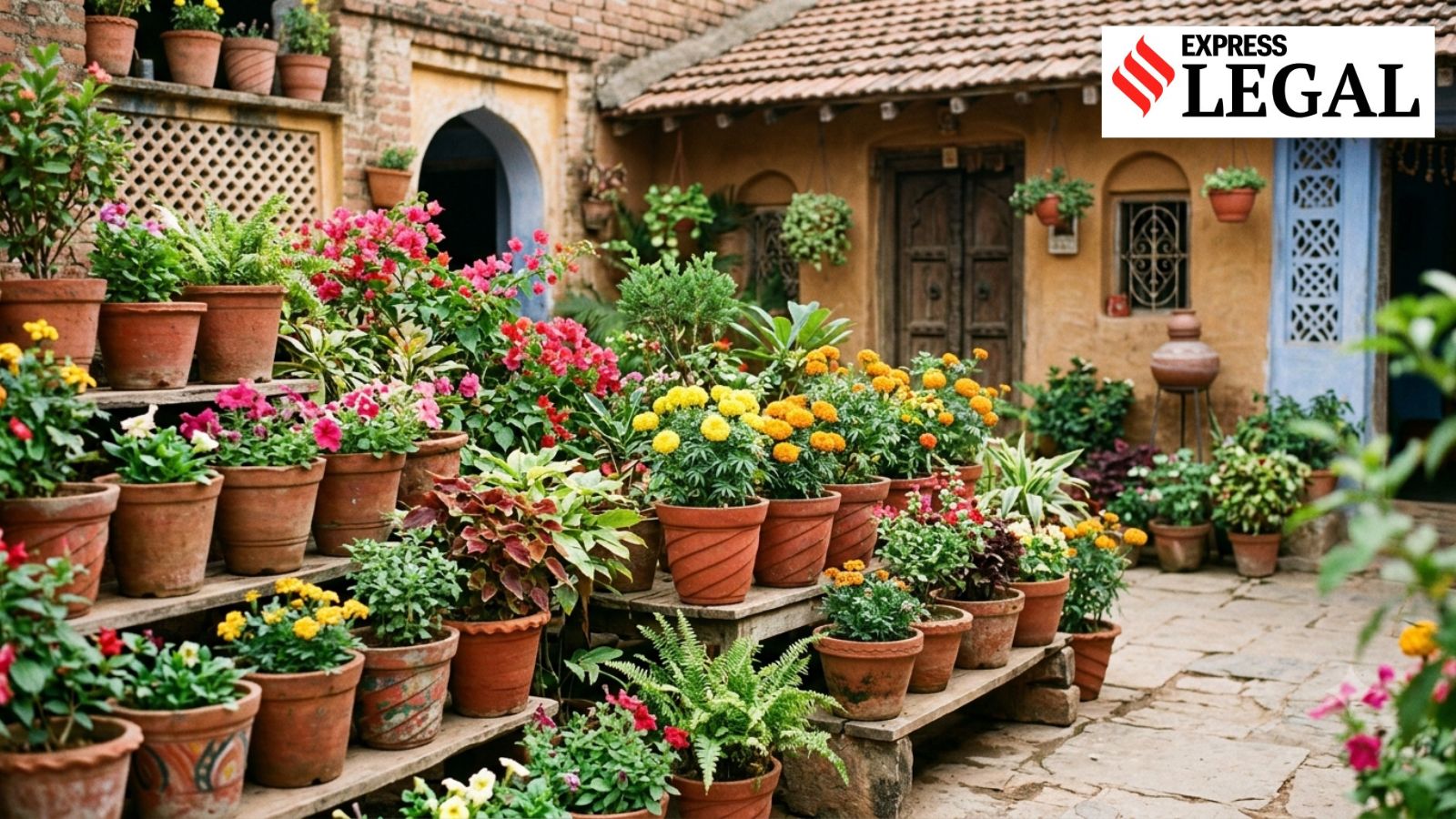
In a rare judicial move, the Patna High Court has granted anticipatory bail to a liquor case accused on the condition that he contributes ₹15,000 for flower pots to beautify the Muzaffarpur court campus.
- Patna High Court granted anticipatory bail to Praveen Anand in a whisky seizure case.
- Unique condition: Contribution of ₹15,000 for flower pots for the Muzaffarpur Civil Court.
- Strict monitoring: Daily police reporting for one month, followed by fortnightly visits for six months.
The Patna High Court has introduced an unconventional element into the bail process in a case involving the alleged seizure of 112 litres of whisky. Justice Rajiv Roy, while hearing the anticipatory bail plea of Praveen Anand, accepted an offer from the defense to contribute ₹15,000 toward the purchase of flower pots for the Civil Court campus of the Muzaffarpur Judgeship.
The case originated at the Goriakothi police station in Siwan district on February 22, following the interception of a vehicle containing 112.320 litres of whisky. The FIR was registered under the Bihar Prohibition and Excise Amendment Act. However, the court noted a critical detail: no contraband was recovered from the conscious possession of the petitioner, Praveen Anand.
Why This Matters
BozokMedia analysis shows that this ruling reflects a shift toward 'Creative Jurisprudence.' By linking bail to a contribution for public utility—in this case, the beautification of a judicial campus—the court is blending legal discipline with community benefit. It serves as a psychological deterrent while simultaneously improving the environment of the judiciary.
"Such unusual conditions are often used by courts to test the bona fides of the accused while ensuring that the legal process provides some tangible benefit to the public infrastructure."
The financial contribution must be made via a demand draft from a local branch of the State Bank of India and deposited with the Muzaffarpur District Legal Services Authority. This monetary condition was a prerequisite for the extension of the anticipatory bail privilege.
Beyond the flower pots, the court imposed a rigorous set of behavioral conditions. Anand is required to furnish a bail bond of ₹10,000 with two sureties. To ensure accountability, one of the sureties must be a relative, supported by official identification such as an Aadhaar card or PAN card.
The most stringent aspect of the order is the mandatory reporting schedule. The accused must report to the concerned police station every single day for the first month. Subsequently, he must mark his attendance every fortnight for the following six months. A final certificate of compliance must be submitted to the trial court.
The court explicitly warned that any attempt to threaten witnesses, tamper with evidence, or commit a fresh criminal offense would lead to the immediate cancellation of the bail bonds.
Frequently Asked Questions
1. Why did the court grant bail despite the large quantity of liquor?
The court found that the liquor was not in the 'conscious possession' of the accused, and based on a full bench decision, bail can be granted if the offense is not clearly made out against the individual.
2. What happens if the accused fails to report to the police station?
The State has been granted the liberty to move for the cancellation of the bail bonds if the attendance requirements are not met.


