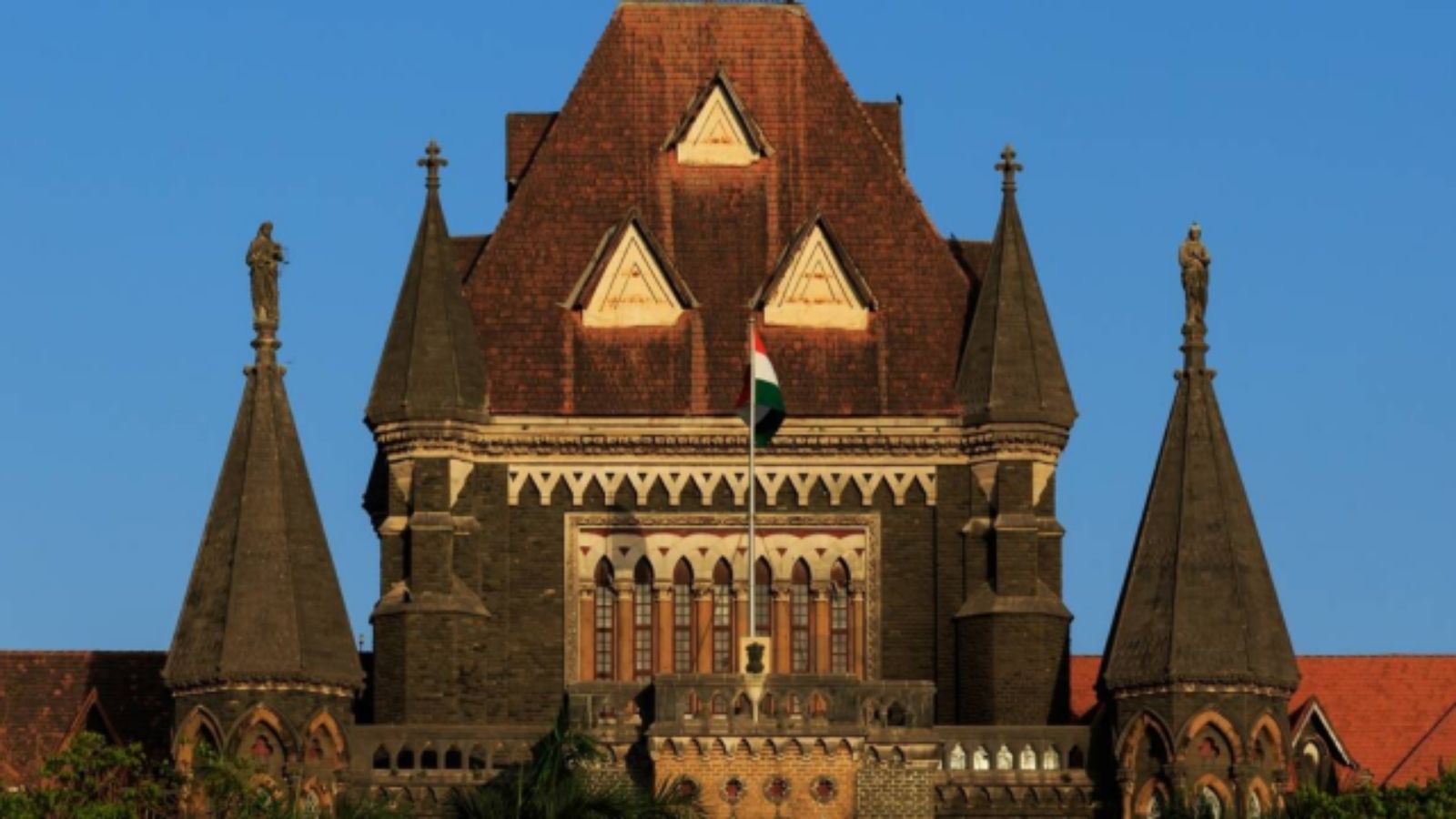
The Bombay High Court has directed the Maharashtra government to end the practice of long-term contractual appointments in public employment, calling it 'ad-hocism.' The court specifically ordered the VVMC to regularize over 450 medical staff members.
- Bombay HC directed Maharashtra to end 'ad-hocism' in public employment.
- Ordered Vasai Virar Municipal Corporation (VVMC) to regularize 450+ medical and paramedical staff.
- Quashed the requirement for contractual staff to retake written exams.
- Court emphasized that contractual appointments should be the exception, not the rule.
The Bombay High Court on Friday issued a landmark directive to the Maharashtra government, demanding that 'ad-hocism in public employment be consigned to history.' A division bench comprising Justices Girish S. Kulkarni and Aarti A. Sathe urged the state to instruct all municipal corporations to cease long-term contractual appointments and instead implement regularization in accordance with established Supreme Court precedents.
The VVMC Mandate
In a specific relief to healthcare workers, the Court ordered the Vasai Virar Municipal Corporation (VVMC) to absorb and regularize over 450 medical officers and paramedical staff. These employees, including MBBS/BAMS doctors, specialists, nurses, and technicians, had been serving on a contractual basis for 8 to 11 years despite fulfilling all eligibility criteria, including interviews and reservation requirements.
The bench took a stern view of January 2026 communications from the Urban Development Department and VVMC, which attempted to force these long-serving contractual employees to undergo fresh written examinations. The Court quashed these communications and directed the civic body to complete the regularization process within two weeks.
Why This Matters
BozokMedia analysis shows that this ruling addresses a systemic flaw in Indian bureaucracy where 'contractualization' is used as a tool to bypass the creation of permanent cadres. By forcing qualified professionals into perpetual cycles of contract renewal, the state creates instability in essential services like public healthcare.
'The creation and maintenance of a robust and permanent cadre should be the rule, while contractual appointments should remain a strictly limited exception.'
Justice Kulkarni observed that in a country where unemployment is a primary concern, citizens are justified in seeking any available public employment. The court criticized 'red-tape and bureaucratic lethargy,' questioning why sanctioned posts for regular appointments are not being filled when a qualified workforce is already on the ground.
Historical Background
For decades, the issue of contractual vs. permanent employment has been a battleground in Indian courts. While the government often cites fiscal constraints, the Supreme Court has repeatedly held that long-term, continuous service under contract should not be used to deny employees the benefits of regular service, especially when they have fulfilled all legal requirements for permanent roles.
Frequently Asked Questions
1. What was the specific order regarding the VVMC staff?
The Court ordered VVMC to regularize 450+ medical and paramedical staff members who had been working on contract for nearly a decade.
2. Why did the High Court criticize the government's approach?
The Court criticized the government for fostering 'ad-hocism' and using bureaucratic delays to avoid creating permanent positions for qualified workers.