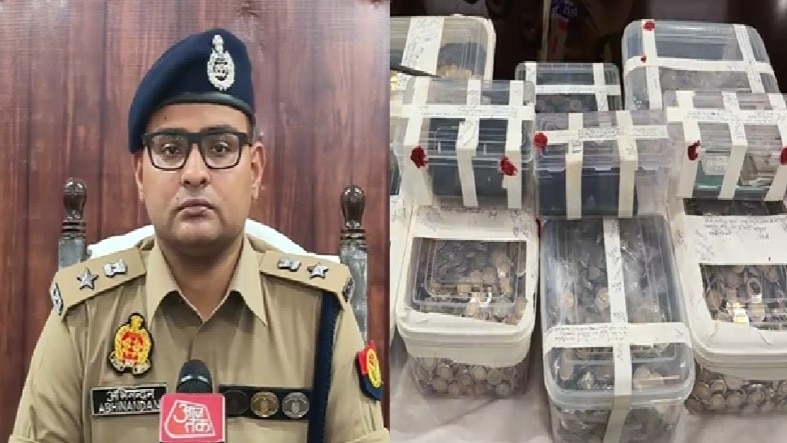
The Saharanpur police have dismantled an interstate gang involved in manufacturing high-quality counterfeit coins. The gang used advanced coating techniques to mimic genuine currency.
- Saharanpur police arrested 5 suspects and seized 6,400 counterfeit coins.
- The gang manufactured approximately 12,000 fake coins daily.
- Technique involved coating iron-zinc bases with brass to mimic real coins.
- The mastermind is a resident of Mohali, Punjab, active since 2001.
In a major breakthrough, the Saharanpur police have busted an interstate criminal syndicate involved in the large-scale production of counterfeit coins. A joint operation by the Kotwali Nagar Police, SOG, SWAT, and Surveillance teams led to the arrest of five individuals. Authorities recovered 6,400 counterfeit 20-rupee coins, along with specialized machinery, dies, and a complete manufacturing setup.
The Sophisticated Manufacturing Process
SSP Abhinandan detailed the meticulous process used by the criminals to deceive the public. The gang would first cut iron and zinc plates to create the base of the coin. To replicate the appearance of genuine currency, they applied a brass coating over the base. Finally, high-precision dies and machines were used to stamp official designs and markings onto the coins, making them nearly indistinguishable from real ones.
The precision with which these counterfeit coins were being manufactured poses a significant challenge to traditional detection methods used by small merchants.
Distribution Network and Economic Impact
The investigation revealed a highly organized distribution network. The gang targeted high-cash-flow areas such as liquor shops, toll plazas, and small-scale retail businesses to circulate their fake currency. The gang was reportedly in the process of setting up a new operational base in Saharanpur when the police intercepted them.
BozokMedia analysis shows...
BozokMedia analysis shows that organized counterfeiting syndicates like this one exploit the gaps in local cash transactions. By targeting sectors like toll booths and liquor stores, they ensure a high velocity of circulation, making it difficult for authorities to track the total volume of fake currency in the market.
Historical Background: The Evolution of Counterfeiting
Counterfeiting in India has evolved from crude manual imitations to highly sophisticated industrial-scale operations. Following major demonetization drives, counterfeiters have increasingly turned to advanced metallurgy and precision engineering to create fake coins and notes that bypass basic scrutiny of common citizens and small vendors.
Frequently Asked Questions
1. What items were seized during the raid?
Police seized 6,400 fake coins, six machines, five iron dies, 39 unmarked dies, 20 stamped dies, and polishing equipment.
2. Who is the leader of this gang?
The mastermind has been identified as Upkar Luthra, alias Abhay Pratap Singh, a resident of Mohali, Punjab.