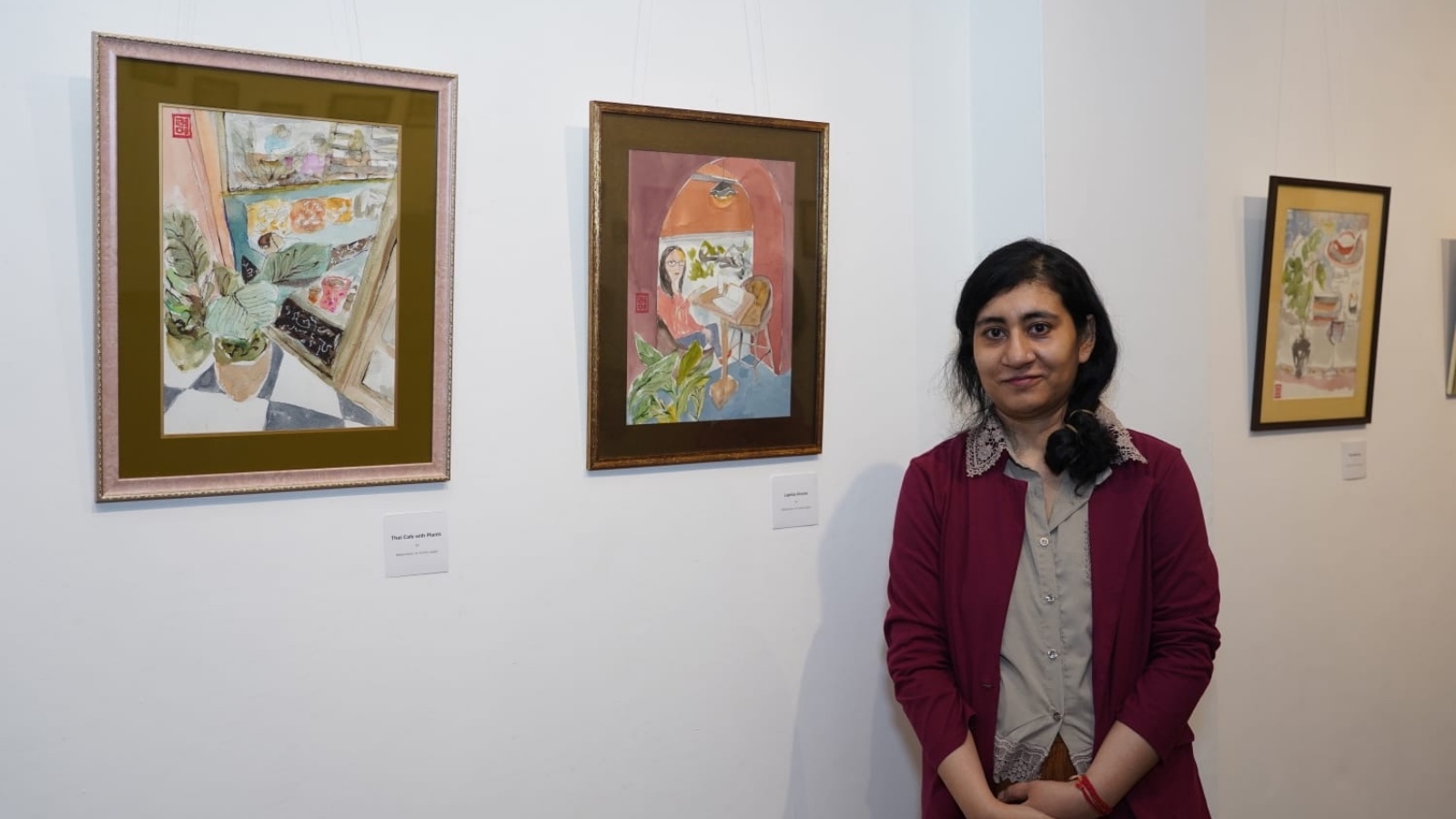
At Delhi’s IIC Annex, artist Anupriya Roy presents a 40‑piece watercolour series that portrays cafés as social sanctuaries within the bustling metropolis. The show links today’s café boom with a lineage of café depictions dating back to 17th‑century Dutch masters and French Impressionists.
The ongoing exhibition ‘Café Decking’ at the IIC Annex showcases 40 watercolour paintings by Delhi‑based artist Anupriya Roy, each turning a city café into a quiet stage for urban narratives. Works such as “Brunch at Khan” zoom into a corner of the iconic Khan Market café, where a table sits beneath a window that frames trees and wall art—yet no patrons are visible, inviting viewers to imagine the unseen slice of metropolitan life.
Exhibition Overview
Roy explains that she never entered cafés with the intention of painting them; they were initially people‑watching spots that gradually turned her sketchbook into a visual diary. Her first café work, “Aut and About,” depicted a small café in Aut, Himachal Pradesh, and while the original is lost, a digital print now resides in the exhibition. She visits a new café roughly once a week, favouring The Grammar Room in Khan Market and Devan’s in Lodhi Colony.
Artist’s Journey
Each canvas is a portrait of lived space, populated by objects and implied presence. In “The Backpack,” a bag sits opposite an unseen diner; in “The Red Cup,” the solitary cup beckons the audience to conjure the surrounding conversation. These works treat cafés as pauses in the urban rush—a moment to finish a coffee, a sketch, or a thought.
Cafés in Art History
The tradition of depicting cafés stretches back to the 17th‑century Dutch Golden Age, but it was the 19th‑century French modernists who placed cafés at the heart of visual culture. Édouard Manet’s A Bar at the Folies‑Bergère (1882) and Edgar Degas’s L’Absinthe (1876) explore urban loneliness, while Vincent van Gogh’s Café Terrace at Night (1888) uses vivid yellows to convey warmth without a single stroke of black. Across the Atlantic, Edward Hopper’s Nighthawks (1942) translates the Parisian café‑as‑isolation motif into American urban alienation.
Indian Context and Future Prospects
In India, the café has rapidly evolved from a niche hangout to a crucible of ideas, remote work, and social interaction. Yet, there is scant precedent for Indian fine art that treats cafés—or even dhabas—as sites of modern sociability. Roy’s series begins to fill that gap, suggesting a fertile ground for future artists to explore the nuanced choreography of Indian urban life.
‘Café Decking’ is more than a visual showcase; it is a mirror reflecting the quiet moments that stitch together the fabric of a fast‑moving city. Each cup of coffee becomes a narrative node, hinting at stories that linger long after the canvas fades.