The annual Jagannath Rath Yatra has commenced in Puri, Odisha. Explore the profound spiritual significance, unique rituals like Chhera Panhara, and the architectural brilliance of the 12th-century temple.
Key Takeaways
- Lord Jagannath, Balabhadra, and Subhadra embark on a 9-day journey to Gundicha Temple.
- The 'Chhera Panhara' ritual symbolizes equality and the dignity of labor.
- The temple is a masterpiece of Kalinga architecture, built in the 12th century.
- Chariots are constructed using specific wood species: Phasi, Bhaunra, and Asana.
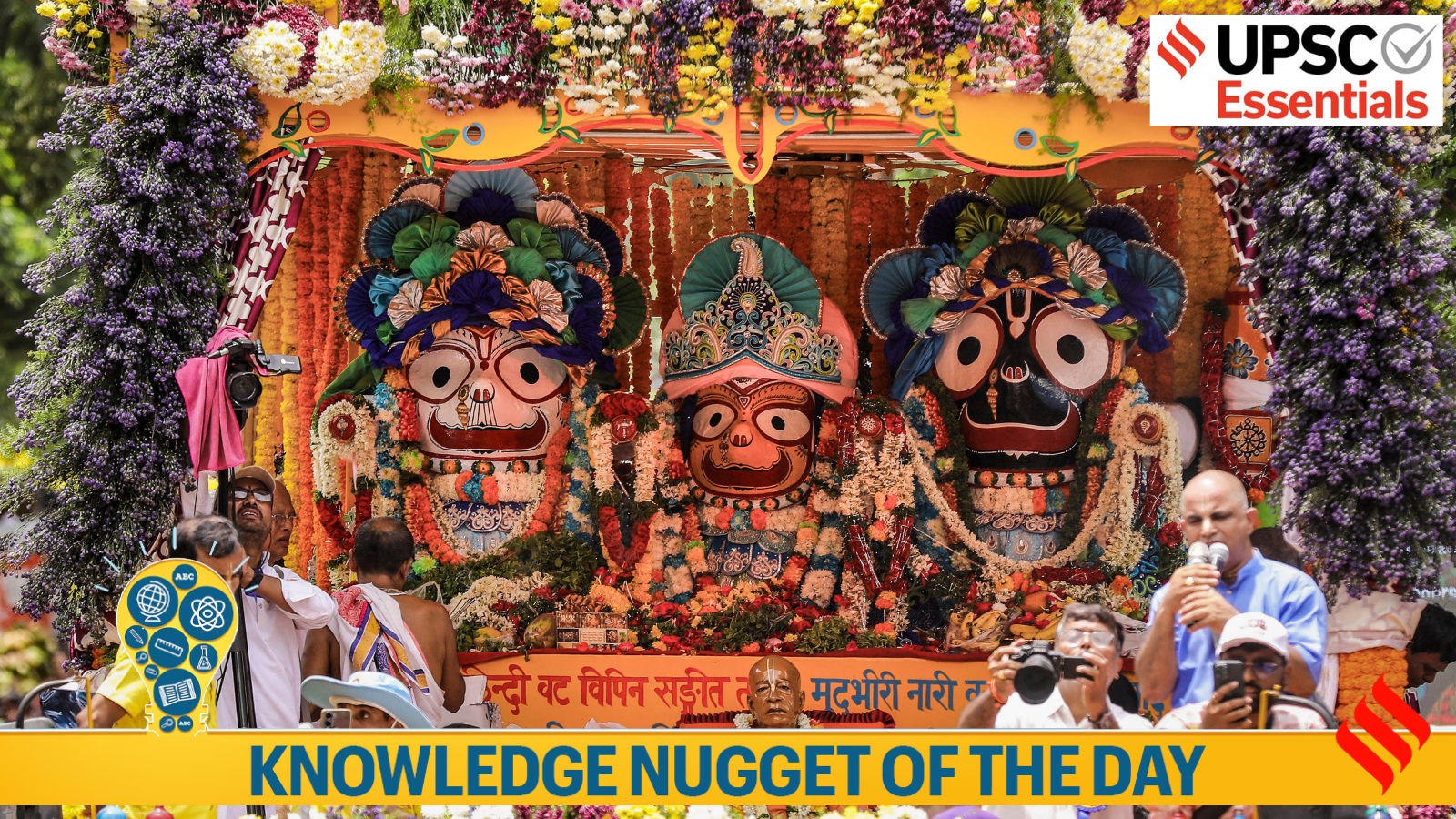
The historic city of Puri in Odisha is once again bathed in spiritual fervor as the annual Jagannath Rath Yatra begins. This grand festival sees millions of devotees congregating to witness the deities—Lord Jagannath, his elder brother Lord Balabhadra, and sister Devi Subhadra—travel from their main sanctum to the Gundicha Temple. This nine-day sojourn is not merely a procession but a profound display of faith and ancient Indian tradition.
The Sacred Rituals and Symbolism
The festival is defined by several intricate rituals that hold deep sociological and spiritual meanings. One of the most poignant is the 'Chhera Panhara' ritual. In this ceremony, the scion of the erstwhile Puri royal family sweeps the chariots with a golden broom. This act serves as a powerful reminder that in the eyes of the Divine, there is no distinction between a king and a commoner, emphasizing the dignity of labor.
As the deities travel along the Bada Danda (Grand Road), they board three distinct chariots: Nandighosa (Jagannath), Taladhwaja (Balabhadra), and Darpadalan (Subhadra). The festival concludes with rituals like 'Suna Besha', where the deities are adorned in gold, and 'Niladri Bije', marking their homecoming to the sanctum sanctorum.
Architectural Grandeur: The Kalinga Legacy
The epicenter of this devotion, the Jagannath Temple, is a marvel of Kalinga architecture, a regional variation of the Nagara style. Built in the 12th century by King Ananta Varman Chodaganga Deva of the Eastern Ganga dynasty, the temple stands as a testament to medieval engineering. The structure was completed around 1230 AD during the reign of Anangabheema Deva III.
Architecturally, the temple comprises a deul (curvilinear spire), a garbhagriha (sanctum sanctorum), a jagmohana (porch), and a bhog mandir (offering hall). Built using Khondalite stone without the use of mortar, the temple relies on iron dowels for structural integrity. The four cardinal gateways—Singha Dwar, Vyaghra Dwar, Hasti Dwar, and Aswa Dwar—provide access to this sacred complex, which remains one of the most significant pilgrimage sites in the world.