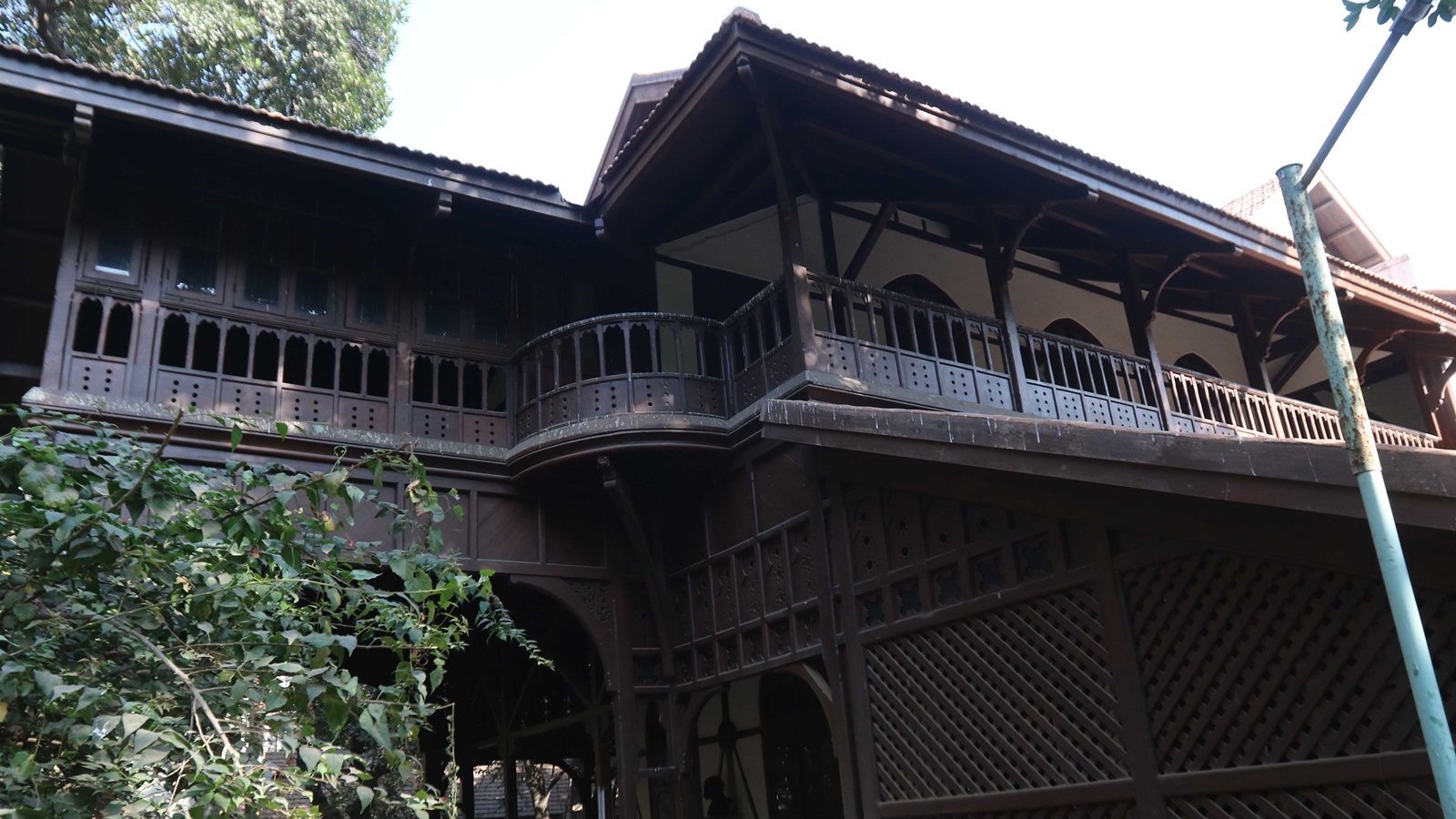
The historic 144-year-old Kipling Bungalow, located inside Mumbai’s prestigious Sir J J School of Art, is undergoing a massive Rs 10-crore transformation. Slated to become Mumbai's premier cultural destination, the heritage structure will feature art galleries, an amphitheater, and public performance spaces akin to Delhi’s Bikaner House.
- The historic Kipling Bungalow is being transformed into a major cultural hub in Mumbai with Rs 10 crore in state funding.
- The project will feature four art galleries, an amphitheater, and spaces for performing arts and public events.
- The initiative was sparked by the new Vice Chancellor, Prof. Him Chatterjee, and is modeled after Delhi's famous Bikaner House.
The historic 144-year-old Kipling Bungalow, nestled inside the campus of the Sir J J School of Art, Architecture and Design in Mumbai, is poised for a grand transformation. After serving as the residence for the institute's deans and directors for over a century, the heritage structure is being reimagined as a premier cultural destination. The state government has stepped in to spearhead this ambitious conservation and adaptive reuse project.
The wood-and-brick structure, which beautifully reflects the architectural character of colonial Bombay, was originally known as the Dean’s Bungalow. It eventually became popular as the 'Kipling Bungalow' due to its deep historical association with Rudyard Kipling, the Nobel laureate author of *The Jungle Book*. Although Kipling was born on the campus in 1865—where his father, John Lockwood Kipling, served as the first dean—the current bungalow was constructed in 1882.
A Vision for a New Cultural Landmark
The plan to breathe new life into this forgotten heritage site was set in motion by Prof. Him Chatterjee, the newly appointed Vice Chancellor of the university. Upon taking charge, Prof. Chatterjee's search for a suitable residence led him to the derelict bungalow. Recognizing its immense historical value despite the lack of modern amenities like water supply, he envisioned converting the space into a public cultural asset rather than a private residence.
Why This Matters
BozokMedia analysis shows that preserving colonial-era architectural marvels and repurposing them as public cultural spaces is crucial for retaining a city's historical identity while fostering contemporary artistic growth. By bridging the gap between historical heritage and modern creative expression, this transformation sets a precedent for urban renewal across India's metropolitan landscapes.
Following detailed discussions with Maharashtra’s Chief Secretary Rajesh Aggarwal, the vision expanded into a larger plan to turn the bungalow and its surrounding 1.5-acre premises into Mumbai's equivalent of Delhi's famous Bikaner House. To support this vision, the Maharashtra government has sanctioned a financial package of Rs 10 crore for the project.
“It would be magical when there will be a singing performance happening here on the porch, while an art exhibition is being displayed inside the gallery,” says Prof. Him Chatterjee, VC of the Sir J J School of Art.
The transformation is already underway. The first of the four proposed art galleries has been created by converting the former servants' quarters on the premises. This narrow, stable-like structure of ten small rooms was opened up to create a spacious exhibition hall. In August, it hosted its inaugural exhibition, 'Swaraj', showcasing archival artworks from the university's collection dating from the 1940s to the 1960s, including works by legendary artists like V S Gaitonde, Jatin Das, and M S Talwalkar.
| Feature | Kipling Bungalow (Mumbai) | Bikaner House (Delhi) |
|---|---|---|
| Original Status | Dean's Residence (Colonial Structure) | Former Royal Residence (Princely State) |
| Key Facilities | 4 Art Galleries, Amphitheater, Performance Porch | Galleries, Ballroom, Conference Rooms, Gardens |
| Funding/Support | Rs 10 Crore State Government Funding | Delhi State/Cultural Ministry Managed |
Frequently Asked Questions
Q1: What is the historical significance of the Kipling Bungalow?
A1: Built in 1882, it served as the residence for the deans of the Sir J J School of Art. It is named after Rudyard Kipling, the Nobel laureate author of *The Jungle Book*, whose father was the school's first dean.
Q2: What will the transformed space offer to the public?
A2: The site will feature four state-of-the-art art galleries, an outdoor amphitheater, public performance spaces, and beautifully landscaped yards exhibiting student sculptures.