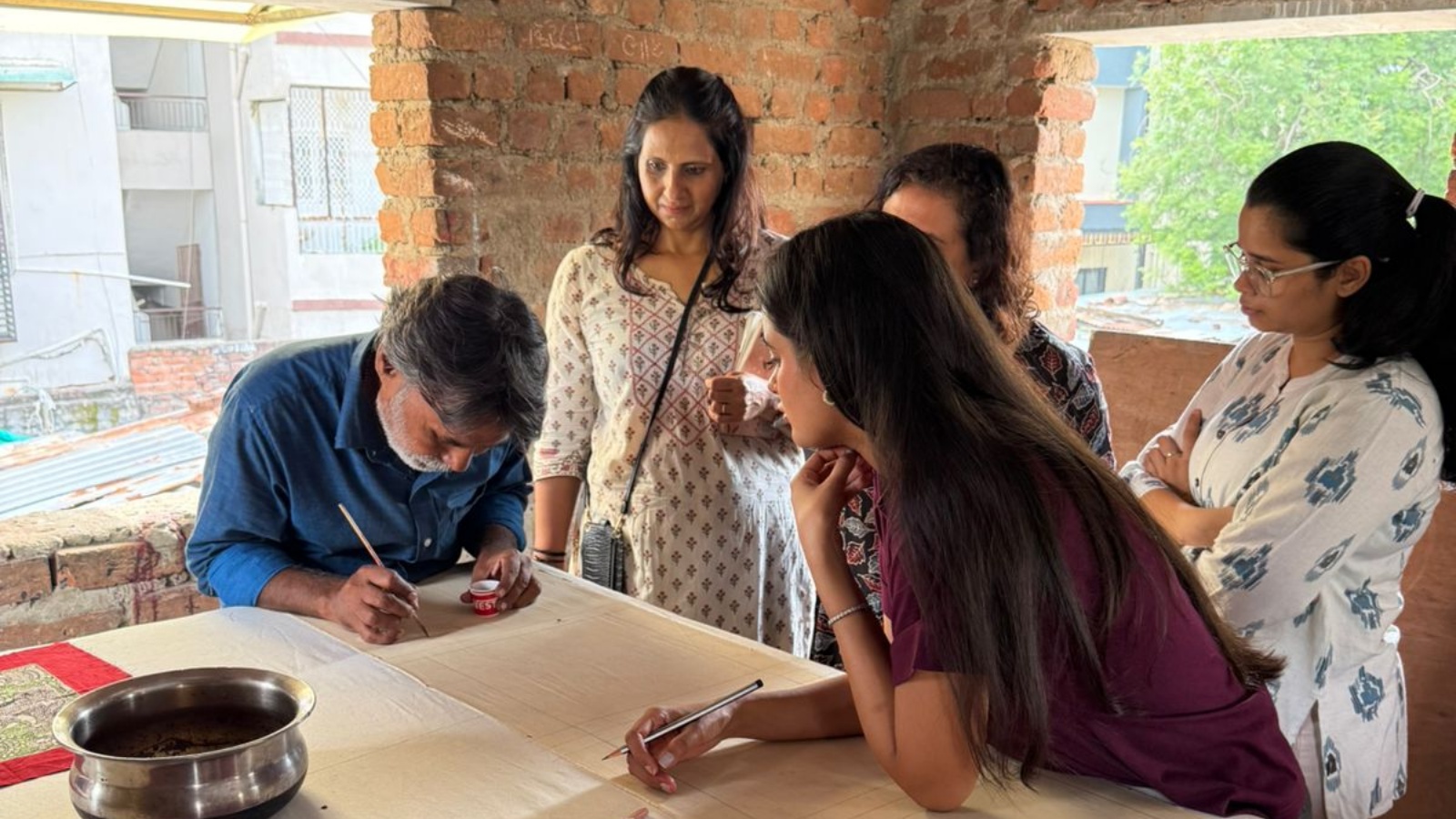
For over 300 years, the Chitaras of Ahmedabad have kept the 'Mata ni Pachhedi' tradition alive—a sacred textile art born from a community's protest against temple exclusion.
- 'Mata ni Pachhedi' is a ritual textile featuring Goddess Durga as the central motif.
- The art originated 300 years ago as a form of protest by the Devipujak community against temple entry bans.
- The craft has recently been awarded a Geographical Indication (GI) tag.
- It served as a 'portable temple' for communities during times of displacement or social barriers.
In the Vasna area of Ahmedabad, 22-year-old Om Chitara is fighting to ensure a centuries-old legacy does not fade into history. As a ninth-generation artist, Om is part of the Chitaras—a community of Devipujaks (formerly known as Vaghri)—who specialize in the intricate and sacred art of Mata ni Pachhedi.
The name literally translates to 'Behind the Mother Goddess.' This ritual textile, which depicts Goddess Durga, was not merely an aesthetic choice but a profound act of social defiance. Over 300 years ago, when members of the Devipujak community were barred from entering certain temples, they turned to art to bring the divine into their own homes. This created a portable form of worship that could be folded, carried, and set up anywhere.
Why This Matters
BozokMedia analysis shows that Mata ni Pachhedi represents more than just textile craftsmanship; it is a living archive of social history. It highlights how marginalized communities use creative expression to reclaim their spiritual agency and maintain cultural identity in the face of systemic exclusion.
The technical mastery required for this art is immense. Using specialized bamboo 'kalam pens,' artists draw on unbleached fabric. The palette is strictly organic, utilizing indigo, henna, wild turmeric, and a black pigment derived from fermented iron rust and jaggery. The process is grueling; a single 2×2 feet piece can take up to two and a half months of meticulous labor.
"If a problem crops up during washing, the whole painting gets ruined; if the color turns out bad, the painting gets ruined; if the cloth isn’t treated properly, the color will spread." — Om Chitara
The art form has gained significant formal recognition in recent years. Om’s father, Kiranbhai Chitara, received a national award in 2005, and the craft itself secured a Geographical Indication (GI) tag in 2023. Furthermore, in 2025, fellow artist Bhanubhai Chitara was honored with the prestigious Padma Shri.
| Feature | Traditional Mata ni Pachhedi | Modern Textile Art |
|---|---|---|
| Color Source | 100% Organic (Turmeric, Indigo, Rust) | Synthetic/Chemical Dyes |
| Tools | Bamboo Kalam Pens | Brushes/Digital/Screen |
| Purpose | Ritualistic/Portable Worship | Decorative/Commercial |
Frequently Asked Questions
1. Why was this art form created?
It was created as a way for the Devipujak community to worship Goddess Durga at home when they were denied entry to traditional temples.
2. How long does it take to make one piece?
A standard 2×2 feet piece typically takes about two to two and a half months to complete due to the intricate hand-drawing and natural dyeing processes.

