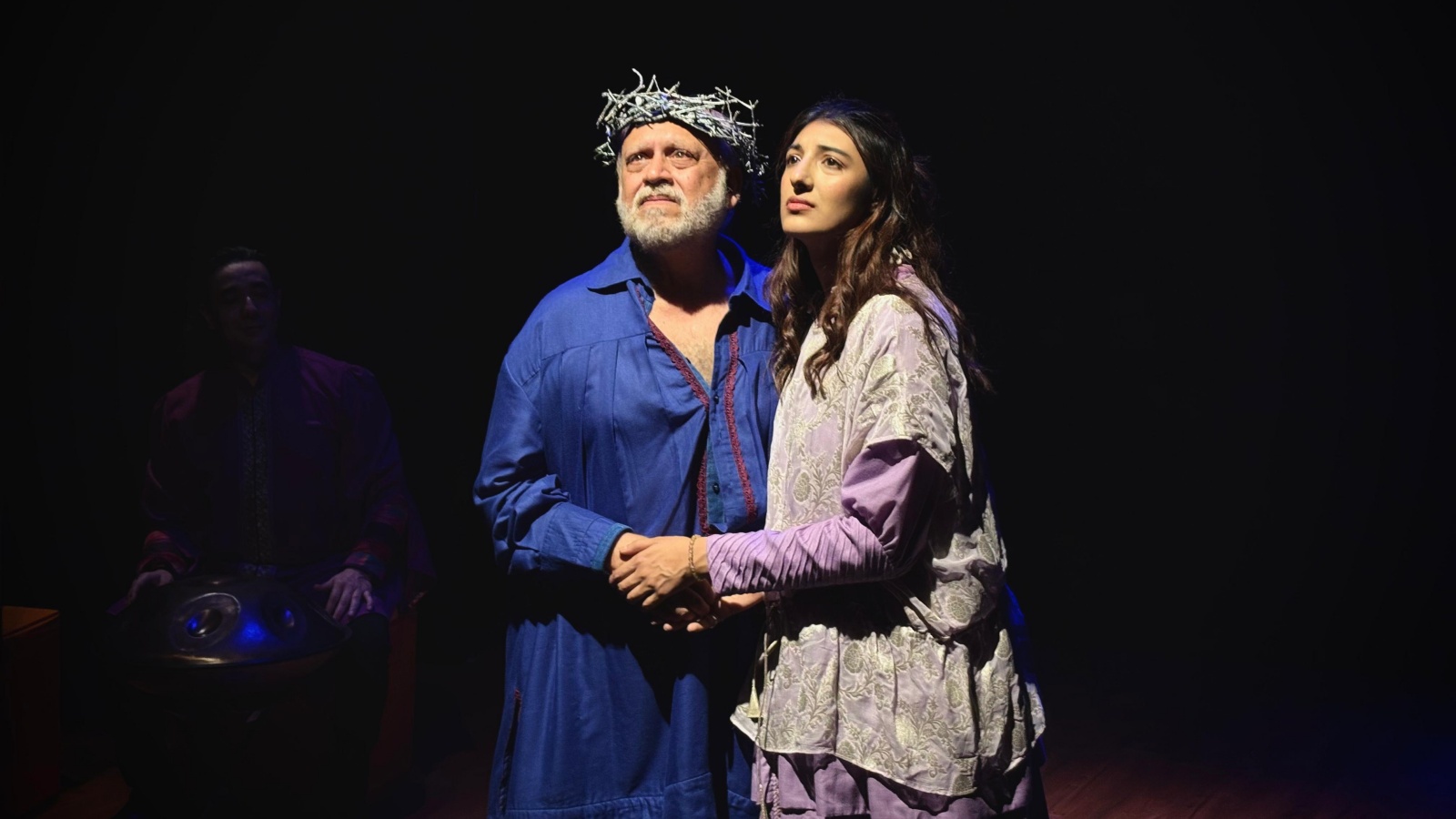
Conceived by Krishnakshi Kashyap and scored by Bhaskar Jyoti Ojah, this production blends Assam's devotional heritage with the Panchabhuta to evoke Krishna as cosmic consciousness.
- Explores Krishna's divinity through the five elements: Earth, Water, Fire, Air, and Space.
- Performed by 'Sattriyakristi' at the Srimanta Sankaradeva Kalakshetra, Guwahati.
- Integrates traditional Assamese musical forms like Borgeet and Bhatima.
In a breathtaking evening at the Sri Sri Madhavdeva International Auditorium of Srimanta Sankaradeva Kalakshetra, Guwahati, the ensemble 'Sattriyakristi' presented 'Sarvabhutatma Sri Krishna'. Conceptualized and choreographed by Krishnakshi Kashyap, the production transcended the traditional storytelling of the Bhagavata tradition, presenting Krishna not just as a deity, but as the all-pervading principle of consciousness.
The production utilized the Panchabhuta (five elements) as its primary dramaturgical framework. By mapping divine leelas to natural forces, the choreography created a symbolic bridge: the lifting of Govardhan represented Earth, the subduing of Kaliya represented Water, the consumption of the forest fire represented Fire, the melody of the flute represented Air, and the revelation of the Vishwarupa represented the boundlessness of Space.
Why This Matters
BozokMedia analysis shows that this production represents a critical evolution in classical dance. By reorganizing ancient texts around a conceptual, elemental theme, Kashyap has successfully modernized the presentation of Sattriya without compromising its sacred grammar, making it accessible to a global, contemporary audience.
The performance was a masterclass in the balance between suddha nritya (pure dance) and abhinaya (expressive dance). The dancers exhibited a remarkable quality of Ulaah—the characteristic grace and buoyancy that defines the Sattriya idiom. The synchronization of the ensemble suggested a deep, shared understanding of the choreographic language, ensuring that the philosophical core remained the focal point.
When the precision of Sattriya meets the vastness of the Panchabhuta, the stage transforms from a performance space into a spiritual portal.
The production's strength was further amplified by its scholarly engagement with Assam's devotional literature. Sangeet Natak Akademi Awardee Bhaskar Jyoti Ojah curated texts from the Srimad Bhagavata, Srimanta Sankardeva’s Kirtan Ghoxa, and Sri Sri Madhavdeva’s Naam Ghoxa. The musical landscape was rich with Borgeet, Bhatima, and Prasangia Sur, rooting the performance firmly in the spiritual soil of Assam.
The event also highlighted the importance of continuity, beginning with the youngest students of Sattriyakristi performing the Krishna Nritya and Mati Akhara. This ensures that while the art form evolves through contemporary conceptualizations, its foundational training remains intact.
Frequently Asked Questions
1. What does 'Sarvabhutatma' signify?
It refers to the concept of the soul or consciousness that resides in all living beings and elements of the universe.
2. Who provided the musical direction for the production?
The music was directed and partly composed by Sangeet Natak Akademi Awardee Bhaskar Jyoti Ojah.