A new proposal called ORKS aims to standardize the revocation of leaked API keys, ensuring that compromised credentials are neutralized in seconds rather than days.
- ORKS introduces a standardized way to identify and revoke leaked API keys programmatically.
- The framework includes issuer prefixes, discoverable kill switches, and a 'quarantine mode' to prevent outages.
- The rise of autonomous AI agents makes rapid, machine-readable revocation an urgent necessity.
Every security professional has faced the nightmare of a leaked API key appearing in a public GitHub repository. Currently, the process of neutralizing these keys is a fragmented 'scavenger hunt'—finding the right contact, verifying the issuer, and manually revoking access. By the time a human responds, malicious bots have already exploited the credential. The Open Revocable Key Standard (ORKS) seeks to replace this manual chaos with a streamlined, automated protocol.
The ORKS proposal is built on four critical architectural pillars. First, it mandates issuer-specific prefixes, allowing scanners to identify who issued the key offline. Second, it utilizes a discoverable kill switch via a standard JSON file at /.well-known/api-key-config. Third, it allows revocation by possession, meaning anyone with the key can request its destruction. Finally, it introduces declared constraints, making security capabilities like IP-pinning transparent and queryable.
Why This Matters
BozokMedia analysis shows that the industry is currently relying on proprietary, centralized solutions like GitHub's Secret Scanning Partner Program. While effective, these are 'walled gardens.' ORKS democratizes this security, allowing any open-source scanner to trigger a revocation regardless of the provider, effectively closing the window of vulnerability from days to seconds.
"The window between credential compromise and abuse has collapsed from days to seconds; any revocation path that starts with an email is categorically too slow."
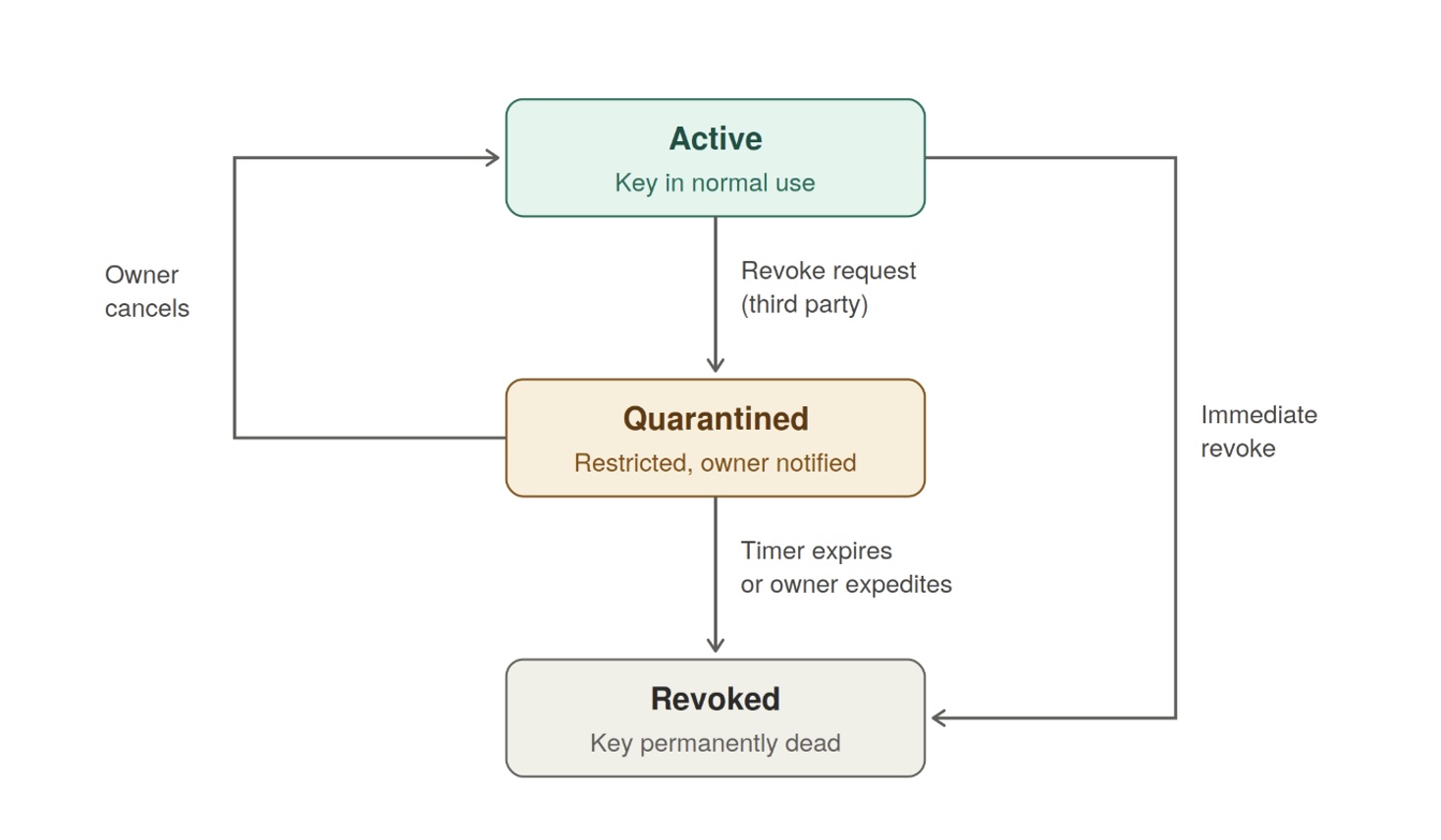
To address the risk of 'griefing'—where an attacker revokes a key just to cause a production outage—ORKS proposes a Quarantine Mode. Instead of an immediate kill, the key is restricted to read-only or throttled access, and the owner is notified. This 'Andon Cord' approach allows for human verification while still neutralizing the threat of destructive operations.
The urgency of ORKS is amplified by the era of AI Agents. These agents act as credential multipliers, often holding keys to multiple sensitive systems. Because they can be manipulated via prompt injection to leak their own secrets, the need for a machine-readable, reflexive kill switch is no longer optional—it is a requirement for safe AI deployment.
| Feature | Traditional API Keys | ORKS Standard |
|---|---|---|
| Revocation Speed | Slow (Manual/Email) | Instant (Programmatic) |
| Issuer Discovery | Manual Search | Automated (Prefix/JSON) |
| AI Compatibility | High Risk | Native Guardrails |
Frequently Asked Questions
1. Does ORKS require authentication to revoke a key?
No. The logic is that if someone possesses the key, they can already abuse it; therefore, allowing them to destroy it is a net security gain.
2. How does the quarantine mode prevent downtime?
It restricts the key's permissions (e.g., making it read-only) and starts a countdown timer, giving the legitimate owner time to intervene before total revocation.