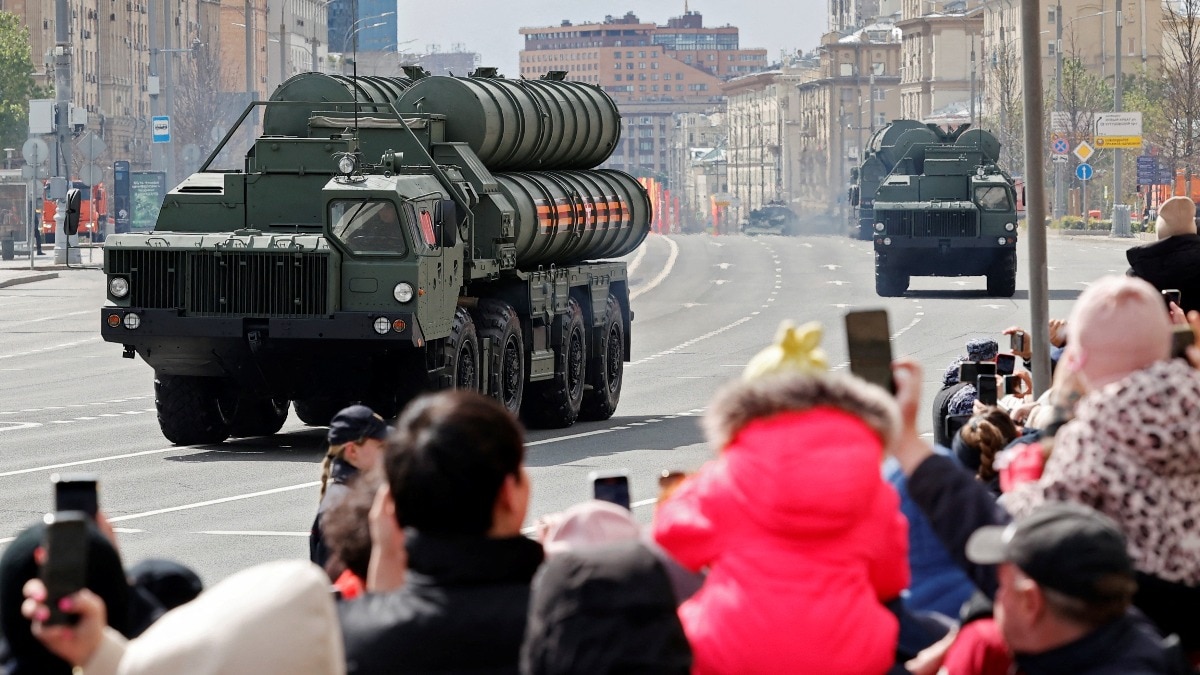
Following the strategic success of Operation Sindoor, India is moving to acquire five more S-400 Triumf squadrons from Russia. The deal aims to double India's air-defence capabilities and introduce domestic production through technology transfer.
- Russia has proposed 5 additional S-400 squadrons costing over ₹50,000 crore.
- Operation Sindoor proved the system's lethality with a record 314 km missile kill.
- Deal includes potential joint production of 2 units in India via technology transfer.
- Total S-400 inventory could increase to 10 squadrons upon conclusion.
In a significant move to fortify its airspace, Russia has submitted a comprehensive proposal to India’s Ministry of Defence for the procurement of five additional squadrons of the S-400 Triumf long-range air defence system. With an estimated valuation exceeding ₹50,000 crore, the proposal is currently under rigorous evaluation by Indian defence authorities following a formal tender process.
The momentum for this acquisition gained pace after the Defence Acquisition Council (DAC) cleared the procurement in March 2026. The catalyst for this urgency was Operation Sindoor in May 2025, where the S-400 system demonstrated unparalleled efficiency in neutralizing Pakistani aerial threats, effectively validating the system's operational superiority in a high-tension environment.
Why This Matters
BozokMedia analysis shows that India is transitioning from a 'buyer-seller' relationship with Russia to a 'partnership' model. By integrating the S-400 with the indigenous Project Kusha, New Delhi is creating a multi-layered 'Iron Dome' style shield. This ensures that whether the threat is a stealth fighter or a swarm of drones, the Indian Air Force has a response at every altitude and range.
The ability to engage targets at 314 km fundamentally changes the tactical geometry of the border, pushing enemy assets far beyond their effective strike range.
India's existing inventory consists of a 2018 agreement for five squadrons worth $5.43 billion. While four have already been deployed in critical northern and western sectors, the fifth is slated for delivery by November 2026. The proposed addition would effectively double the fleet to 10 squadrons, providing comprehensive coverage across both the western and eastern fronts.
A pivotal aspect of the new proposal is the emphasis on domestic participation. Unlike previous deals, this contract explores the joint production of two units by the Indian private sector under a technology-transfer arrangement. Furthermore, the establishment of a Maintenance, Repair, and Overhaul (MRO) facility within India would significantly reduce downtime and reliance on Russian technicians.
Beyond the launchers, India is also seeking to replenish its interceptor missile stocks. Reports indicate a planned procurement of over 280 missiles to ensure operational readiness after the high expenditure of munitions during Operation Sindoor.
| Feature | Original 2018 Deal | Proposed New Deal |
|---|---|---|
| Squadron Count | 5 Units | 5 Additional Units |
| Production Model | Direct Import | Hybrid (Import + Local ToT) |
| Strategic Goal | Initial Deterrence | Comprehensive Layered Defence |
Frequently Asked Questions
1. What was the significance of Operation Sindoor?
It was a real-world operational test in May 2025 where India used the S-400 to destroy a Pakistani surveillance aircraft at a record distance of 314 km.
2. Will the S-400s be made in India?
The current proposal suggests that two of the five new squadrons could be produced domestically by private firms via technology transfer.