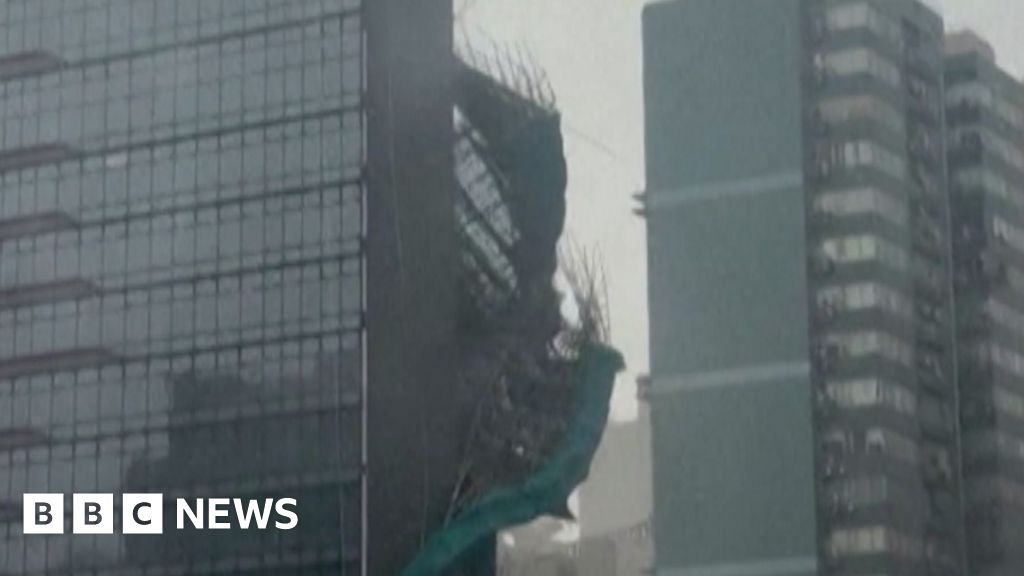
Typhoon Noul made landfall in southern China, sending strong winds that toppled scaffolding in Hong Kong. No injuries were reported, but more than 360 flights were cancelled at the airport. It is the most powerful typhoon to strike China this year.
Key Takeaways
- Scaffolding collapsed in Hong Kong, no injuries
- Typhoon Noul made landfall in southern China
- Hong Kong airport cancelled over 360 flights
Police received numerous emergency calls after multi‑storey scaffolding along Cheung Sha Wan Road gave way under powerful gusts on Saturday. Authorities confirmed that, despite the dramatic collapse, no one was hurt.
Typhoon Noul struck southern China on Sunday morning, unleashing fierce winds and heavy rain. The storm forced Hong Kong International Airport to cancel roughly 360 passenger flights, disrupting travel across the region.
State media reported that Noul is the strongest typhoon to make landfall in China in 2026, highlighting the growing intensity of tropical cyclones in the area.
Historical Background
The West Pacific typhoon season typically runs from May to November. In recent years, storms like Typhoon Vamco (2020) and Typhoon Hato (2022) caused significant damage, but Noul’s wind speeds have set a new benchmark for this year.
Why This Matters
BozokMedia analysis shows that rapid urban development combined with inadequate safety protocols heightens the risk of construction‑site accidents during extreme weather events, underscoring the need for stricter enforcement.
"During intense typhoons, structural integrity of temporary works must be a top priority," says Prof. Li Wei, a meteorology expert.
Frequently Asked Questions
Q1: Did Typhoon Noul affect any other countries?
A: Yes, the storm also brought heavy rain and winds to parts of Vietnam and the Philippines.
Q2: What measures can prevent similar incidents?
A: Implementing stricter construction codes, regular safety inspections, and robust emergency response plans are essential.