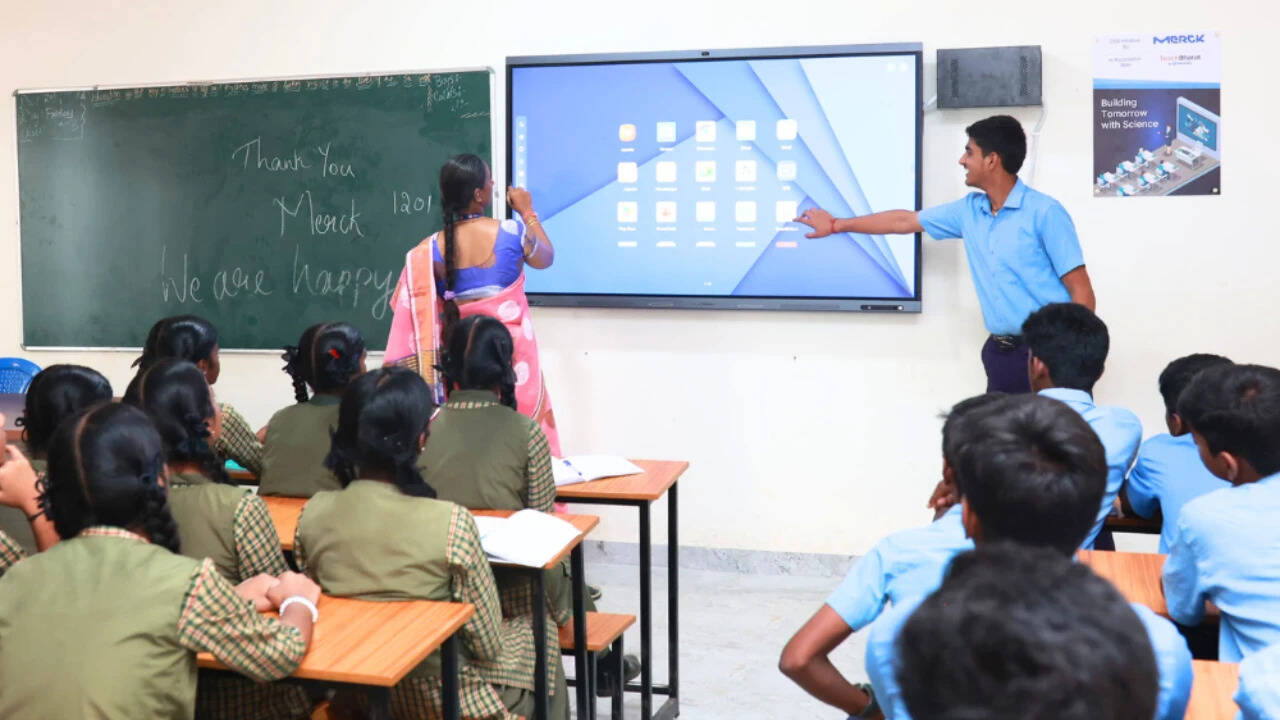
In three years, government schools lifted internet coverage from 46.2% to 63.1%, closing the gap with private and aided institutions. Smart classroom adoption and computer availability also rose, though digital libraries remain scarce.
मुख्य बिंदु (Key Takeaways)
- Government school internet coverage reaches 63.1% in 2025-26
- Smart classroom penetration rises to 33.9% nationally
- Digital libraries are present in less than 7% of schools
The National Education Policy (NEP) 2020 placed digital literacy at the core of India’s schooling agenda, yet for years government schools lagged behind private and aided counterparts in basic connectivity. In 2023‑24, only 46.2% of government schools reported internet access, a gap of roughly 28 percentage points.
Three‑Year Surge in Connectivity
According to the latest UDISE+ data, internet coverage in government schools surged to 63.1% for the 2025‑26 academic year, trimming the disparity to about 16 points. This leap reflects combined efforts of the Digital India programme, state‑level smart‑school initiatives, and targeted funding. Goa, Andhra Pradesh and Tamil Nadu have breached the 99% threshold, while West Bengal remains the lowest performer at 19.7%.
Smart Classrooms and Computer Availability
Nation‑wide smart‑classroom coverage climbed from 24.4% to 33.9%, with government schools posting an 11‑point gain. Overall, 69.9% of schools now have computers, but the split shows 66.9% for government, 76.6% for aided, and 80% for private unaided institutions. Usage of computers for teaching lags further—59.4% in government schools versus 73‑74% in private sectors—highlighting gaps in teacher training and curriculum integration.
Digital Libraries Remain Sparse
Digital libraries are still a rarity, existing in only 7.1% of schools; government schools account for 5.7% of that figure. While connectivity improves, the lack of curated digital content threatens to blunt the impact of hardware investments.
Policy Implications and Way Forward
NEP envisions schools equipped with “computing devices, internet, libraries” to create a safe, inclusive, and effective learning environment. Realising this vision demands parallel focus on content provision, professional development for teachers, and closing rural‑urban gaps through differentiated funding models. Continuous data‑driven monitoring will be essential to transform connectivity gains into measurable learning outcomes.