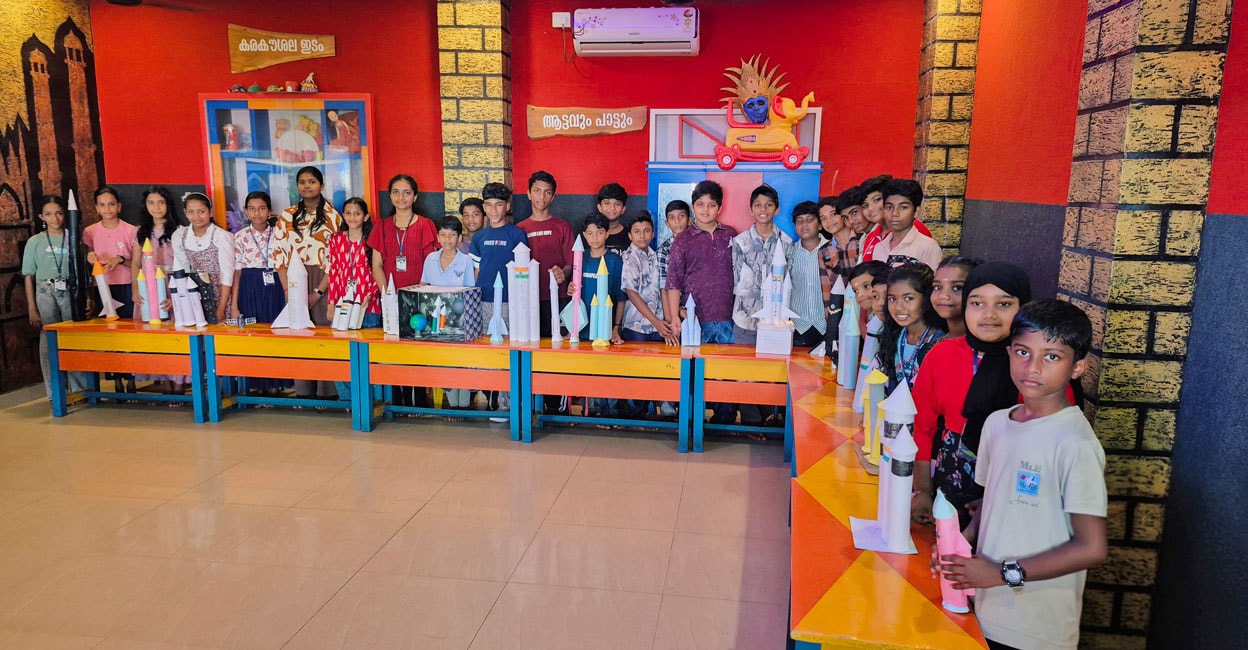
Young scientists at V.K. Kani Govt High School in Kerala have stunned onlookers by transforming everyday waste into stunning space models. The 'Waste to Space' exhibition featured detailed replicas of Chandrayaan-3's lander and rover.
Key Takeaways
- Students of V.K. Kani Govt High School organized a 'Waste to Space' exhibition.
- Models of Chandrayaan-3's Vikram lander and Pragyan rover were recreated using scrap.
- Materials used included plastic bottles, aluminum foil, and old CDs.
- The initiative promotes environmental sustainability and scientific temper.
In a remarkable display of ingenuity, the young scientists of V.K. Kani Govt High School in Tholicode Panakkode, Thiruvananthapuram, have turned trash into cosmic treasures. To celebrate Moon Day, the school's Science and Social Science clubs collaborated to host an extraordinary exhibition titled 'Waste to Space'.
The exhibition showcased how discarded household items can be reimagined through the lens of science. Students utilized aluminum foil from kitchens, tissue paper rolls, discarded plastic bottles, empty medicine boxes, and old CDs to build their masterpieces. What was once destined for a landfill was transformed into the wonders of the universe.
Why This Matters
BozokMedia analysis shows that such grassroots-level scientific engagement is crucial for fostering a culture of innovation. By integrating environmental conservation with space science, these students are learning the vital lesson of circular economy—turning waste into value.
Transforming scrap into space models is a powerful testament to the limitless potential of young minds when fueled by curiosity.
The highlight of the event was the meticulous recreation of India's pride, Chandrayaan-3. The 'Vikram' lander and 'Pragyan' rover were brought to life using cardboard and foil, capturing their essence with surprising accuracy. Additionally, PSLV and GSLV rockets were constructed from plastic bottles, while shimmering satellites were fashioned from old CDs. Even the lunar surface, complete with craters, was simulated using egg trays.
Historical Background
The success of India's space missions, particularly the Chandrayaan series, has sparked a massive wave of scientific interest across Indian schools. This exhibition is a direct reflection of that national pride, translated into creative learning by students in rural Kerala.
Frequently Asked Questions
1. What was the primary goal of the exhibition?
The goal was to promote environmental awareness and encourage scientific curiosity among students.
2. What kind of waste was used for the models?
Students used aluminum foil, plastic bottles, old CDs, cardboard, and egg trays.