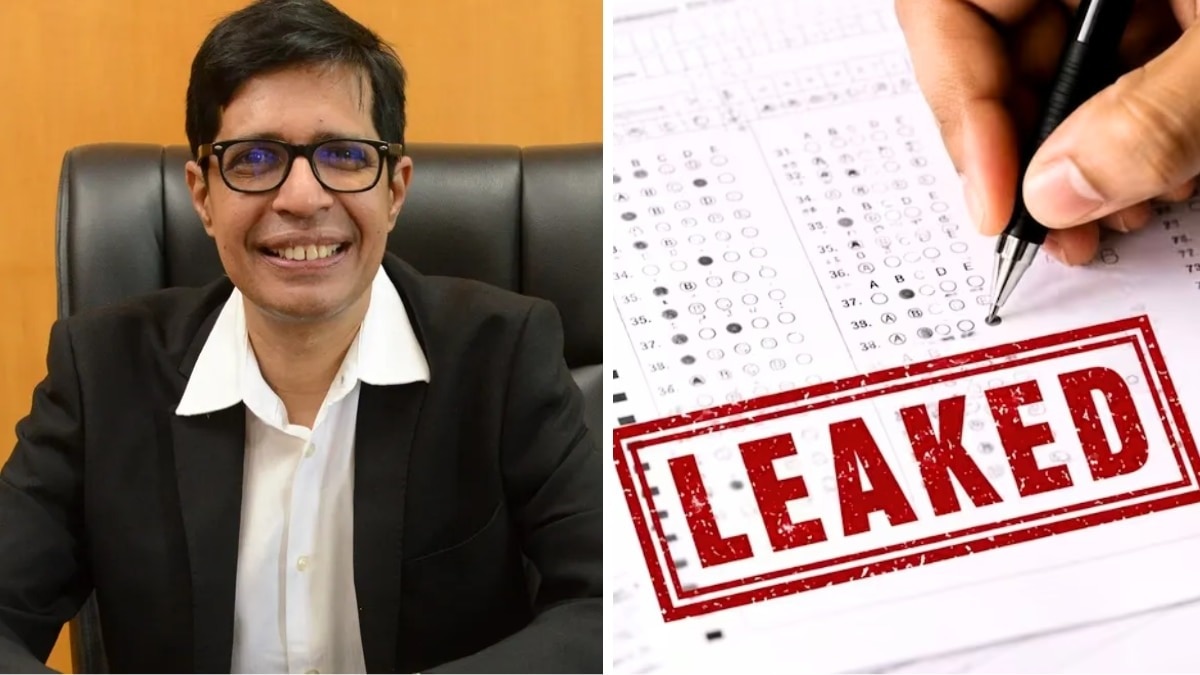
Prime Minister Narendra Modi announced a high‑powered task force to overhaul the National Testing Agency (NTA). IIT Madras Director Dr. V. Kamkoti told Aaj Tak that relying solely on technology cannot fully prevent paper leaks.
Key Takeaways
- The task force will work to make the exam system transparent and leak‑proof.
- Emphasis on institutional reforms alongside technology.
- Consideration of a ‘maker‑checker’ model for added security.
Formation and Members of the Task Force
Prime Minister Narendra Modi announced a special task force to reform the National Testing Agency (NTA). The committee is chaired by renowned technology expert Nandan Neelakani and includes former ISRO chief Dr. S. Somanath, ex‑IB director Tapan Deka, former education secretary Anita Karwal, and senior officer Amrit Lal Meena, among others.
Insights from IIT Madras Director
In an exclusive interview with Aaj Tak, Dr. V. Kamkoti, Director of IIT Madras, stressed that paper‑leak issues cannot be solved by technology alone. He highlighted that the “root of trust” – the person preparing the question paper – must be secured and held accountable.
Historical Perspective
When the JEE exam was first conducted in 1985, only about 5,000 candidates appeared. Today, participation has surged to over 1.5 million, making robust technological and procedural safeguards essential.
| Year | Candidates |
|---|---|
| 1985 | 5,000 |
| 2026 | 1,500,000+ |
Why This Matters
BozokMedia analysis shows that strengthening institutional checks while integrating advanced technology can set a global benchmark for exam integrity, safeguarding millions of aspirants’ futures.
“Implementing a two‑tier verification process for question‑paper creation is the key to preventing leaks.” – Security expert Dr. R. Singh
Frequently Asked Questions
- When will the task force finalize its recommendations? The committee is in its early stage; a full report is expected within the next 6‑9 months.
- What is the ‘maker‑checker’ model? It involves two independent individuals verifying each other's work, reducing the risk of fraud.