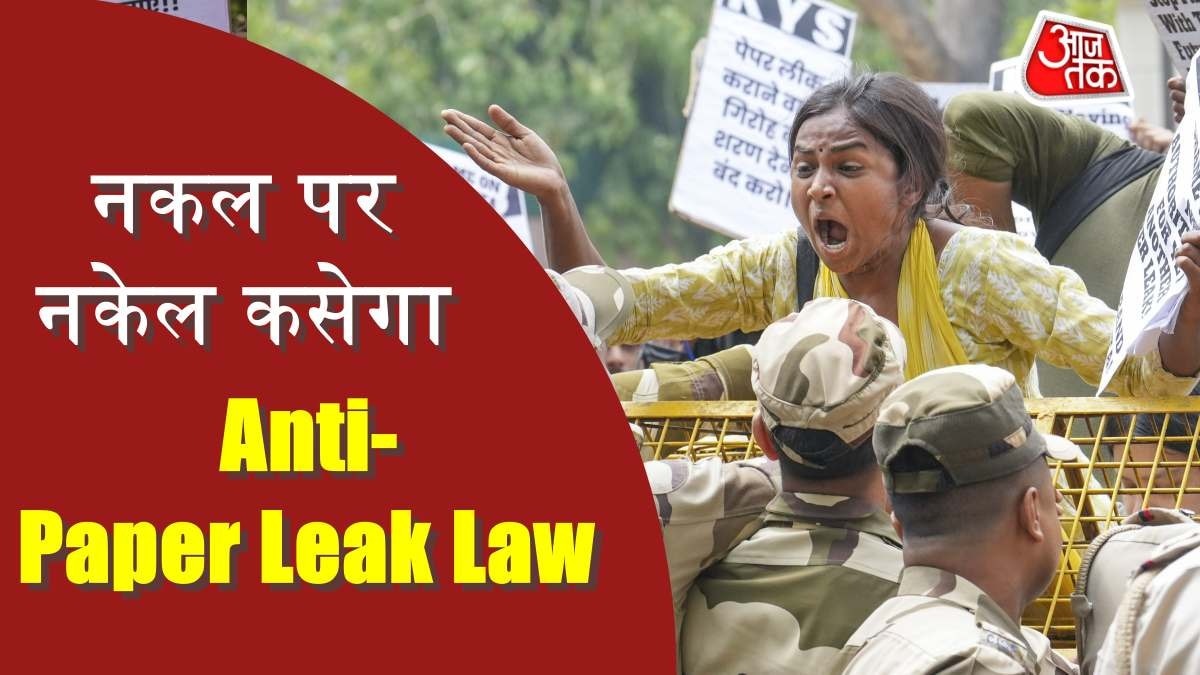
Following widespread protests and exam cancellations, the government has implemented a stringent 'Anti-Paper Leak Law.' This landmark legislation aims to dismantle paper leak syndicates with heavy fines and long-term imprisonment.
Key Takeaways
- Applies to major national exams conducted by NTA, UPSC, SSC, RRB, and IBPS.
- Organized syndicates face up to 10 years in prison and ₹1 crore in fines.
- Students are classified as victims, not criminals, under this specific act.
- Investigations will be led by high-ranking officers (DSP/ACP level).
In a decisive move to restore faith in the nation's examination system, the government has enacted the 'Public Examinations (Prevention of Unfair Means) Act.' This follows massive student protests at Jantar Mantar and controversies surrounding exams like NEET-UG. The law is designed to treat paper leaking as a heinous crime rather than a mere administrative lapse.
Scope of the New Legislation
The law covers all major national-level examinations conducted by central agencies. This includes NTA (NEET, JEE, CUET), UPSC (Civil Services), SSC (Staff Selection Commission), RRB (Railway Recruitment), and IBPS (Banking). While state-level board exams are not directly under this central ambit, the government has urged states to adopt a similar legal framework.
Why This Matters
BozokMedia analysis shows that this law addresses the systemic rot caused by 'solver gangs' and paper mafias. By criminalizing the entire ecosystem—from digital hacking to fake admit cards—the government is attempting to protect the hard work of millions of aspirants who lose years of preparation to single instances of fraud.
This legislation is a paradigm shift that moves from mere administrative penalties to severe criminal prosecution of organized crime syndicates.
The law defines several activities as non-bailable offenses, including leaking question papers, unauthorized possession of answer keys, and tampering with computer networks or merit lists.
| Type of Offense | Imprisonment | Penalty/Fine |
|---|---|---|
| Individual Paper Leak | 3 to 5 Years | Up to ₹10 Lakh |
| Organized Syndicate/Mafia | 5 to 10 Years | Up to ₹1 Crore |
| Service Providers/Agencies | 4-Year Blacklist | Up to ₹10 Crore |
Frequently Asked Questions
1. Will innocent students be punished under this law?
No. The law explicitly distinguishes between candidates (victims) and perpetrators. Students caught cheating will face academic bans, but not criminal prosecution under this specific act.
2. Who will lead the investigations?
Investigations will be conducted by senior officials at the rank of Deputy Superintendent of Police (DSP) or Assistant Commissioner of Police (ACP).