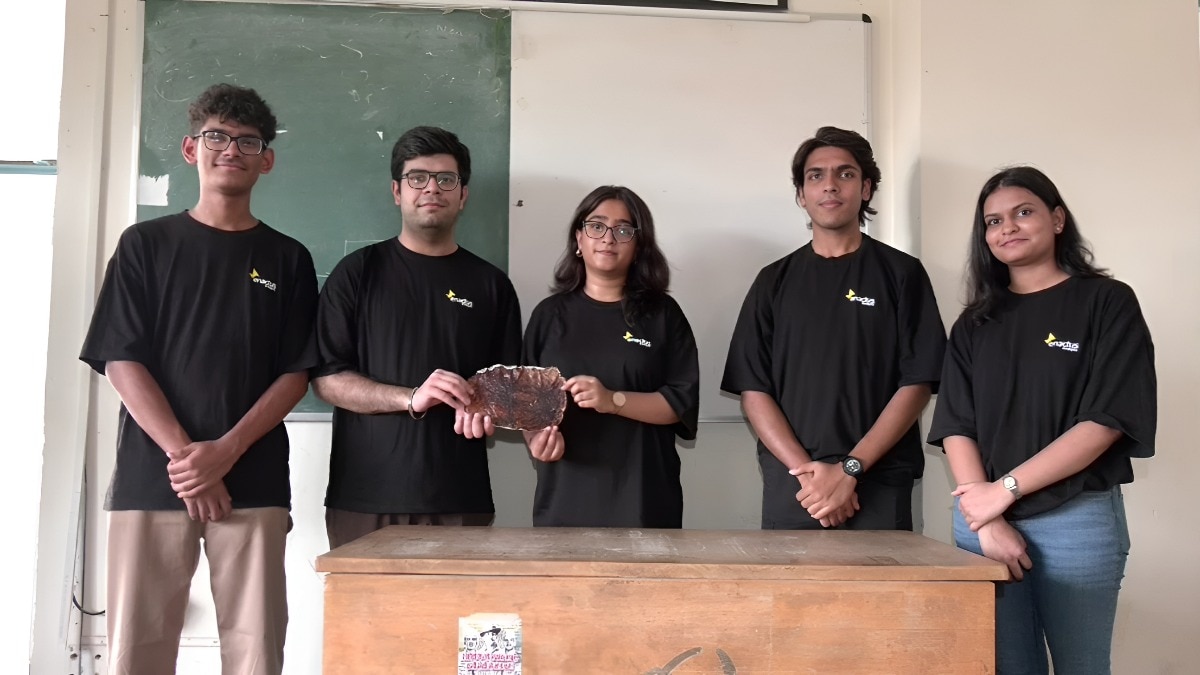
Students at Delhi University's Ramjas College have successfully engineered a sustainable, plant-based leather using discarded banana peels. This breakthrough aims to revolutionize the fashion industry by reducing animal waste and landfill impact.
Key Takeaways
- Ramjas College students developed 'Sahar', a plant-based leather.
- The material is created using discarded banana peels, turning waste into wealth.
- The project addresses both animal welfare and food waste management.
While leather has traditionally been sourced from animal hides, a group of visionary students from Ramjas College, Delhi University, is proving that a sustainable alternative might be sitting right in our kitchen bins. The team has successfully developed a plant-based leather using discarded banana peels, creating a material that mimics the texture and feel of conventional leather.
This innovation seeks to tackle two critical environmental issues simultaneously: reducing the heavy reliance on animal-derived products and providing a second life to organic food waste that would otherwise contribute to landfill emissions.
The Journey: From Waste to 'Sahar'
The development process was not instantaneous. The students spent nearly a year in rigorous experimentation, naming their creation 'Sahar'. Before settling on bananas, the team tested various organic wastes, including orange, mango, pineapple, and coconut peels. However, many prototypes were either too soft to hold shape or too brittle for practical application.
Turning organic waste into high-value textiles is the cornerstone of the emerging circular economy.
Why This Matters: BozokMedia Analysis
BozokMedia analysis shows that as the global fashion industry faces increasing scrutiny over its environmental footprint, bio-based materials like 'Sahar' are poised to become mainstream. This project demonstrates how localized, small-scale innovation can address massive global sustainability goals.
Current Applications and Future Scope
At present, the team is focusing on small-scale fashion accessories such as wallets, handbags, and diary covers. As the refinement process continues, they aim to expand into larger consumer goods, including footwear and apparel like jackets.
Frequently Asked Questions
1. Is the banana peel leather durable enough for daily use?
Yes, through a specialized natural binding technique, the students have ensured the material is strong and flexible.
2. Can this replace animal leather in the mass market?
While currently in the prototype/accessory stage, the goal is to refine it for large-scale industrial use.