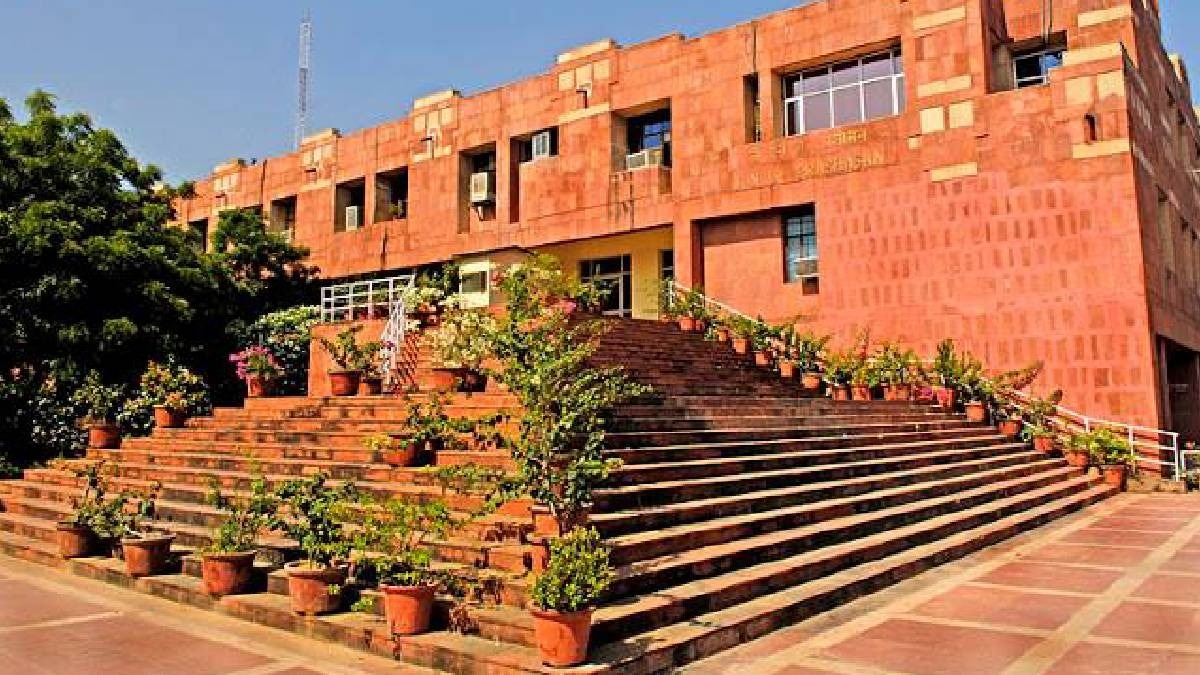
Despite the JNU administration cancelling the booking for the SSS-I auditorium, the JNUSU has announced that the discussion on Umar Khalid's book 'Fractured Communities' will proceed outside.
Key Takeaways
- JNU administration revoked the SSS-I auditorium booking for the August 10 event.
- The official reason cited was insufficient detail in the venue request form.
- JNUSU has termed the move 'undemocratic' and will hold the event outside the SSS-II building.
- Prominent speakers including Prof. Prabhu Mahapatra and Harsh Mander are scheduled to attend.
A fresh controversy has erupted at Jawaharlal Nehru University (JNU) following the administration's decision to cancel the booking of the SSS-I auditorium for a discussion on Umar Khalid's book, 'Fractured Communities'. The event, scheduled for August 10, was intended to mark Tribal Day.
According to the university administration, the booking was cancelled because the proposed event details provided in the venue request form were incomplete. This decision, issued by the Joint Registrar and approved by the Dean of the School of Social Sciences (SSS), has been met with stiff resistance from the Jawaharlal Nehru University Students' Union (JNUSU).
Why This Matters
BozokMedia analysis shows that this incident highlights the escalating tension between administrative protocols and academic freedom within premier Indian institutions. By labeling the move as 'undemocratic,' the student union is signaling a deeper struggle over which topics are deemed 'appropriate' for campus discourse, particularly those involving tribal rights and civil liberties.
'The shift from indoor auditoriums to open-air protests signifies a growing trend of academic resistance against administrative censorship.'
Rejecting the administration's technical justification, JNUSU has decided to move the discussion to the open space outside the SSS-II building. The union has called upon students, faculty, and staff to participate in the session, which features esteemed speakers such as Prof. Prabhu Mahapatra, Prof. Uma Chakravarti, and Harsh Mander.
Historical Background
JNU has historically been a crucible for political thought and social activism in India. Discussions surrounding constitutional rights, marginalized communities, and state policy are staples of its academic culture. The current friction over Umar Khalid's work is part of a long-standing pattern of engagement—and conflict—between the university's radical student politics and the central administration.
Frequently Asked Questions (FAQ)
1. What was the official reason for the cancellation?
The administration stated that the venue request form did not contain complete information about the proposed program.
2. Where will the discussion take place now?
The JNUSU has decided to hold the event outside the SSS-II building to ensure the discussion proceeds.