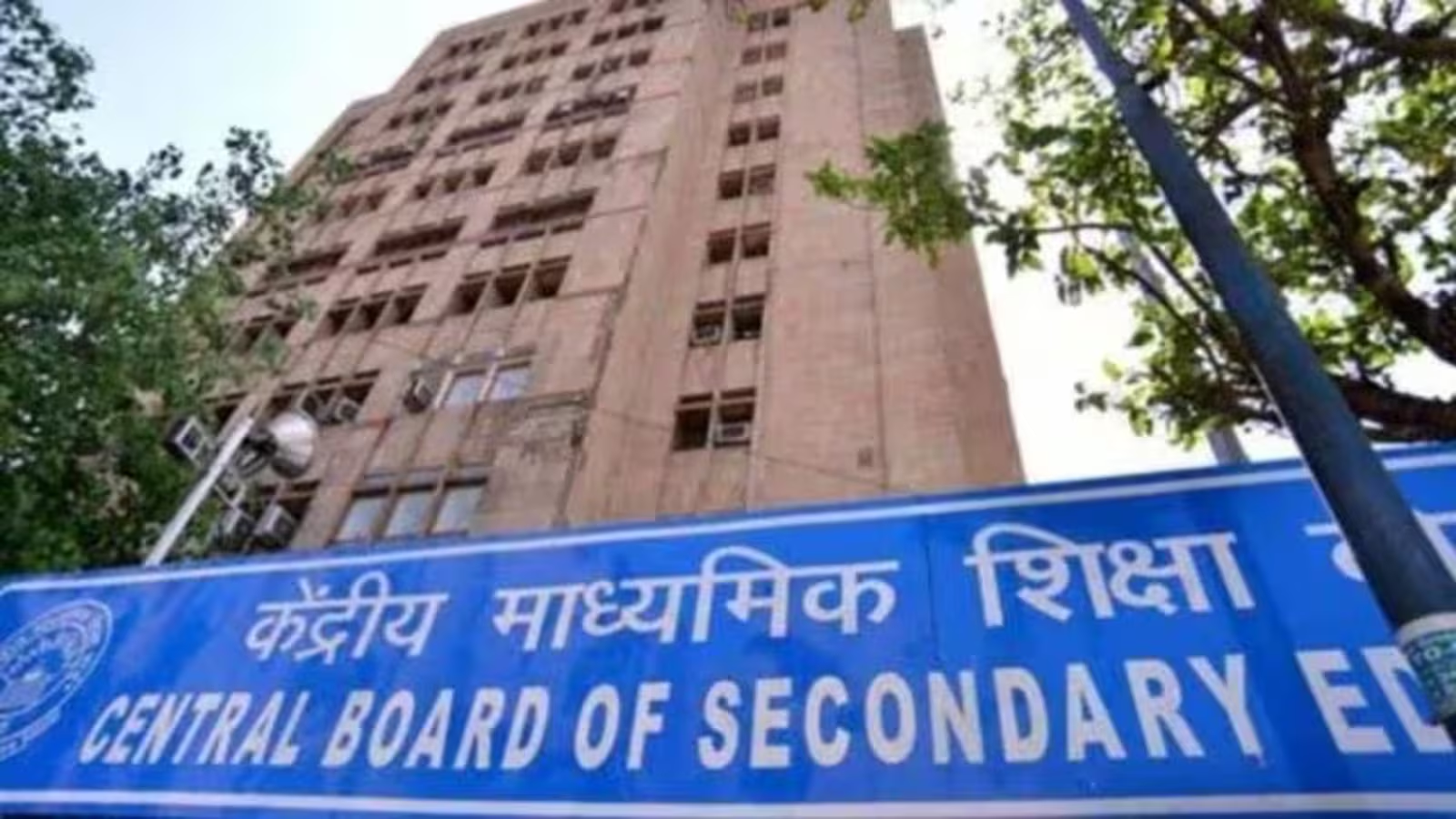
The Supreme Court has intervened in the growing crisis surrounding CBSE's On-Screen Marking (OSM) system. The bench has called upon the Centre and CBSE to safeguard the interests of students facing admission hurdles due to digital grading discrepancies.
Key Takeaways
- The Supreme Court will hear the plea regarding CBSE's On-Screen Marking (OSM) on August 21.
- Students report that digital evaluation errors have caused them to miss minimum qualifying marks for higher education.
- The Court has demanded immediate measures to protect the academic interests of affected candidates.
- A high-powered commission led by S. Radha Chauhan is currently reviewing systemic changes.
New Delhi: In a significant move regarding the future of thousands of students, the Supreme Court of India has expressed concern over the Central Board of Secondary Education's (CBSE) new On-Screen Marking (OSM) system. A bench comprising Chief Justice of India (CJI) Surya Kant and Justices Joymalya Bagchi and V. Mohana has scheduled the next hearing for August 21.
The controversy stems from the transition to a digital grading method where teachers assess scanned copies of physical answer sheets on computer screens. The petitioner, Rakesh Binjola, argues that this system has led to discrepancies in scoring, leaving students unable to meet the minimum aggregate requirements for various professional courses and entrance exams, even after passing their board exams.
Why This Matters
BozokMedia analysis shows that the shift to digital evaluation, while intended for efficiency, has created a precarious situation for students whose career trajectories depend on precise marking. The lack of standardized regulations for OSM could lead to systemic unfairness in national-level examinations.
The transition to digital assessment must be accompanied by rigorous oversight to ensure that technological efficiency does not compromise academic integrity.
During the proceedings, the bench posed a critical question to the CBSE counsel: "Find out how can you protect their interest." The court is looking for remedial steps to assist students who have already secured provisional admissions but are now at risk due to their CBSE scores.
Historical Background
For decades, Indian board examinations relied on the physical handling and manual checking of paper scripts. The introduction of OSM was part of a broader digital transformation in the education sector aimed at reducing the time taken for result declaration and minimizing physical damage to papers. However, the human-to-digital interface has introduced new variables in grading accuracy.
Frequently Asked Questions (FAQ)
1. What is the issue with CBSE's OSM system?
Students allege that the digital marking process has resulted in inaccurate scores, preventing them from meeting eligibility criteria for college admissions.
2. What is the next step in the legal process?
The Supreme Court will hear the matter again on August 21 to review the remedial steps taken by the government and CBSE.