Dinesh Kumar, a dedicated teacher from Patiala, has been selected for the prestigious National Teacher Award for developing a computer-based virtual physics lab.
- Dinesh Kumar will be honored by the President of India on Teacher's Day.
- He developed a 'Virtual Physics Lab' using computer programming to aid practical learning.
- The innovation solves the problem of lacking laboratory apparatus in government schools.
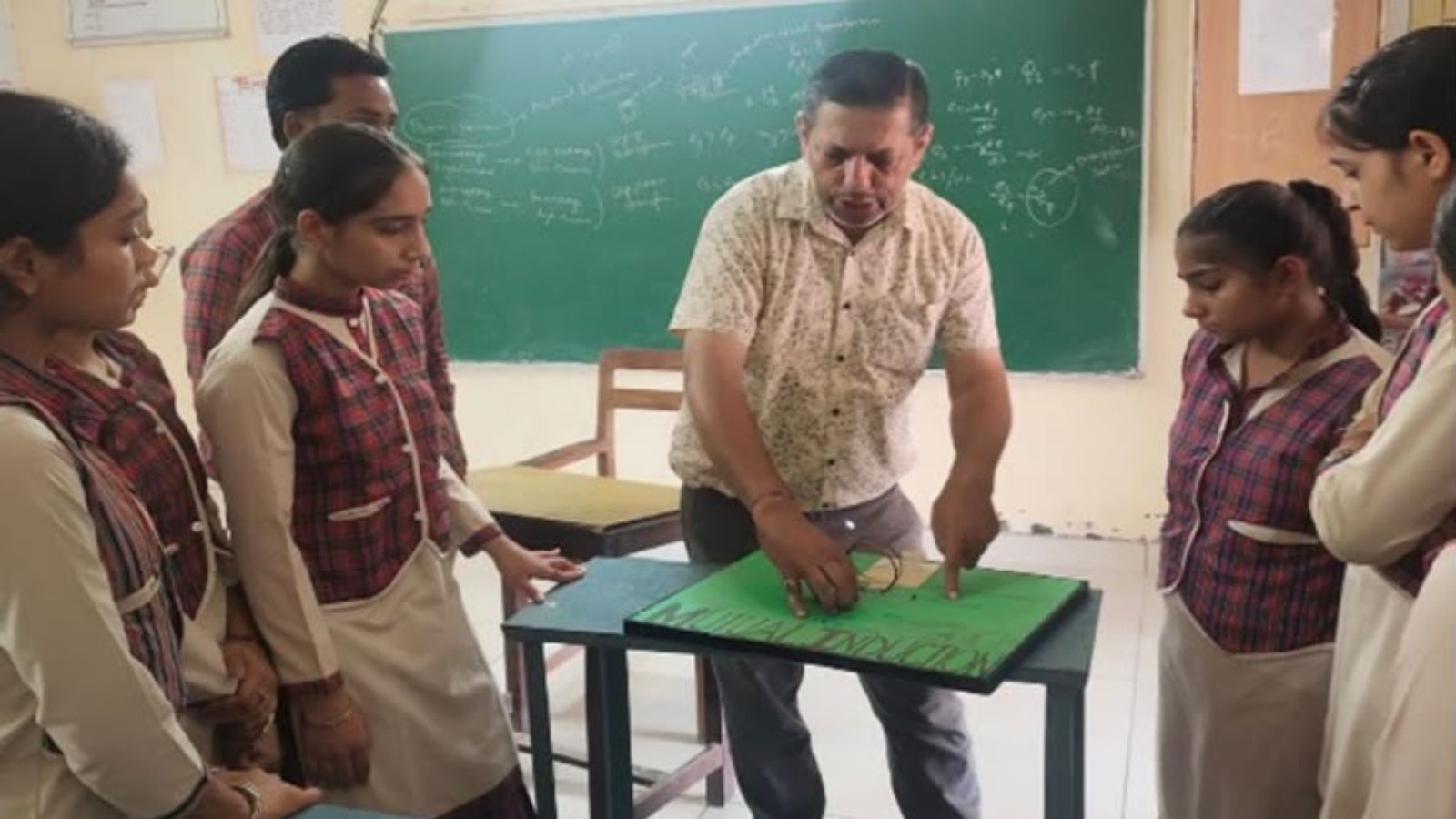
In a remarkable feat for the Indian education sector, Dinesh Kumar, a physics teacher from Patiala, Punjab, has been selected for the prestigious National Teacher Award. Kumar, who has pioneered a 'Virtual Physics Lab' to bridge the gap between theoretical knowledge and practical application, will be honored by the President of India in Delhi this coming Teacher's Day (September 5).
Holding a PhD in Physics, Kumar has been a cornerstone of the 120-year-old British-era Government Victoria Girls Senior Secondary School in Patiala for over a decade. His mission has always been clear: to eliminate the fear of physics among students by making the subject interactive and accessible.
Why This Matters
BozokMedia analysis shows that the lack of functional laboratories is one of the primary reasons for declining interest in STEM subjects in rural and government schools. By utilizing computer programming to simulate complex experiments, Kumar has created a scalable model that ensures students can perform practicals even in the absence of physical equipment.
Integrating digital simulations into traditional classrooms is the most effective way to democratize science education in resource-constrained environments.
With 25 years of teaching experience, Kumar has developed over a hundred teaching aids. Despite being UGC-NET qualified, he chose to remain in the school system to support underprivileged students. His impact is evident, as more than 50 of his former students are now pursuing high-level careers in engineering, pharmacy, and nursing at premier institutions.
Historical Background
Historically, science education in Indian government schools has faced significant hurdles due to budgetary constraints and the logistical difficulty of maintaining laboratory equipment. The shift towards 'EdTech' and virtual simulations represents a modern evolution in addressing these systemic gaps, as seen in Kumar's innovative approach.
Frequently Asked Questions
Question 1: What makes Dinesh Kumar's lab unique?
Answer: It is a computer-programmed virtual environment that allows students to conduct physics experiments without needing physical apparatus.
Question 2: When and where will he receive the award?
Answer: He will be honored by the President of India in Delhi on September 5, Teacher's Day.