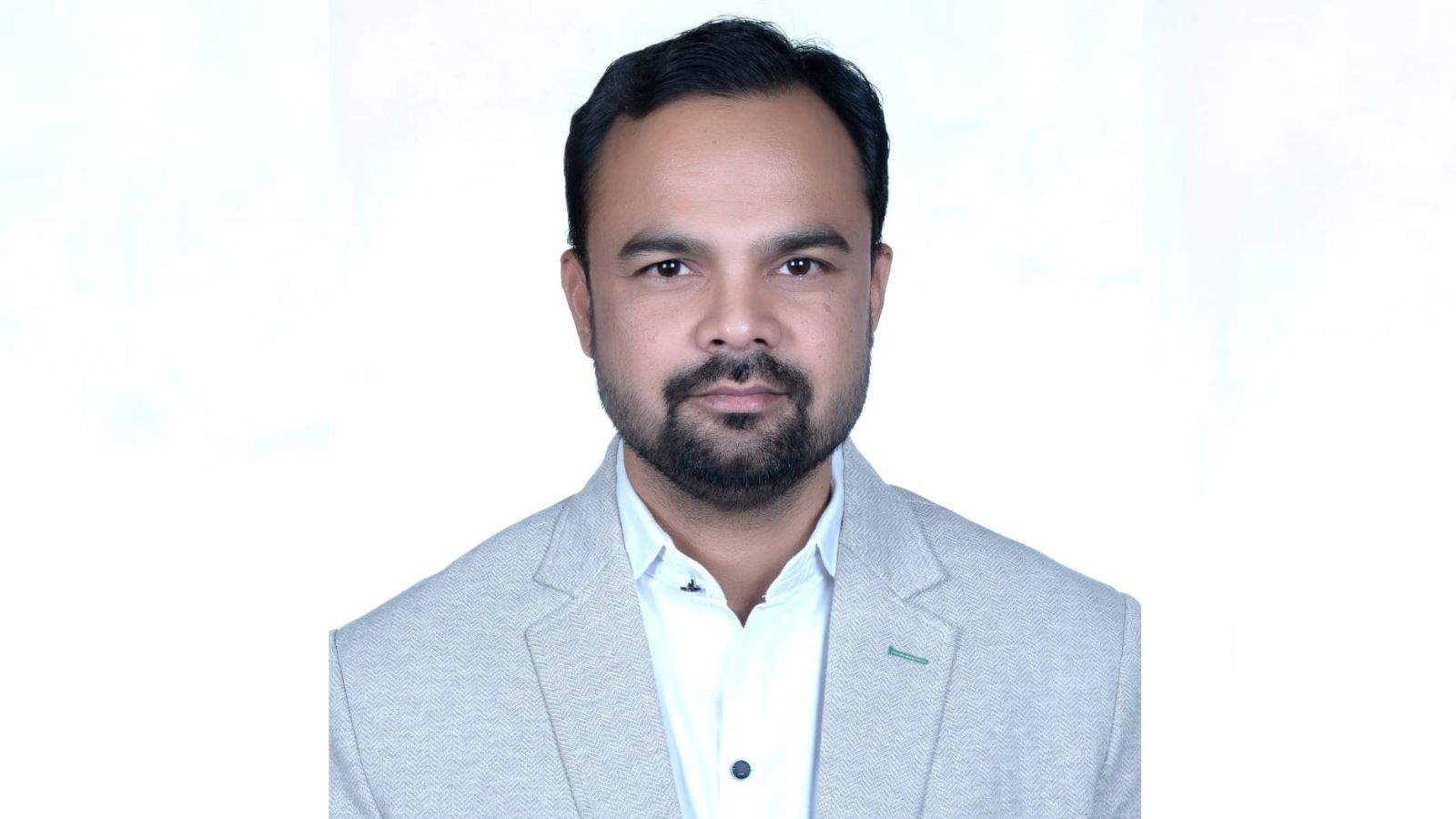
Divyendu Sen, a government school teacher from Rajasthan, has led his rural students to identify multiple asteroid candidates through a NASA-backed global campaign, earning him the prestigious National Teachers' Award.
- Divyendu Sen, a biology teacher from Jhalawar, Rajasthan, has won the National Teachers' Award.
- His students identified 12 asteroid candidates via the International Astronomical Search Campaign.
- Four of these candidates have been officially recognized as provisional discoveries.
- The teacher utilizes virtual labs and audio-based learning to overcome rural infrastructure gaps.
In the quiet village of Pachpahar in Rajasthan's Jhalawar district, a scientific revolution is unfolding. Divyendu Sen, a 40-year-old biology teacher at the Mahatma Gandhi Government School, has bridged the gap between rural education and deep space exploration. By guiding his students through a NASA-supported citizen science program, he has turned a local classroom into a hub for astronomical discovery.
Sen has been honored with the National Teachers' Award, India's highest recognition for educators. He is set to receive this prestigious accolade from President Droupadi Murmu on September 5, coinciding with India's Teachers' Day celebrations. His journey is a testament to his philosophy that academic success is driven by a hunger to learn rather than mere geographical location.
A Global Scientific Achievement
The students participated in the International Astronomical Search Campaign (IASC), a global initiative that allows amateur astronomers and students to discover real asteroids. Since the COVID-19 pandemic, Sen's students have successfully identified 12 asteroid candidates. Remarkably, four of these have already been officially recognized as provisional discoveries by the scientific community.
Advanced science is not the monopoly of big cities; rural children are equally capable when provided with the right guidance.
Adding a layer of profound emotion to this scientific feat, the students plan to propose a name for one of the asteroids to honor the seven children lost in a tragic school collapse in Jhalawar last year. This act transforms a mathematical discovery into a lasting scientific memorial.
Bridging the Digital Divide
BozokMedia analysis shows that Sen's impact extends far beyond astronomy. Recognizing the limitations of rural infrastructure, he has implemented virtual science laboratories and touch-panel technology, allowing students to conduct complex experiments digitally. He has also pioneered the conversion of educational content into audio formats using student voices to enhance engagement.
Why This Matters
This story challenges the long-standing myth that high-level scientific research is reserved for elite urban institutions. It highlights the transformative power of mentorship and demonstrates how digital tools can democratize science, making the cosmos accessible to the most remote corners of India.
Frequently Asked Questions
Question 1: What is the International Astronomical Search Campaign?
Answer: It is a global citizen science program that allows students and amateurs to participate in discovering real asteroids.
Question 2: How many asteroids have Sen's students identified?
Answer: They have identified 12 asteroid candidates, with four receiving provisional recognition.


