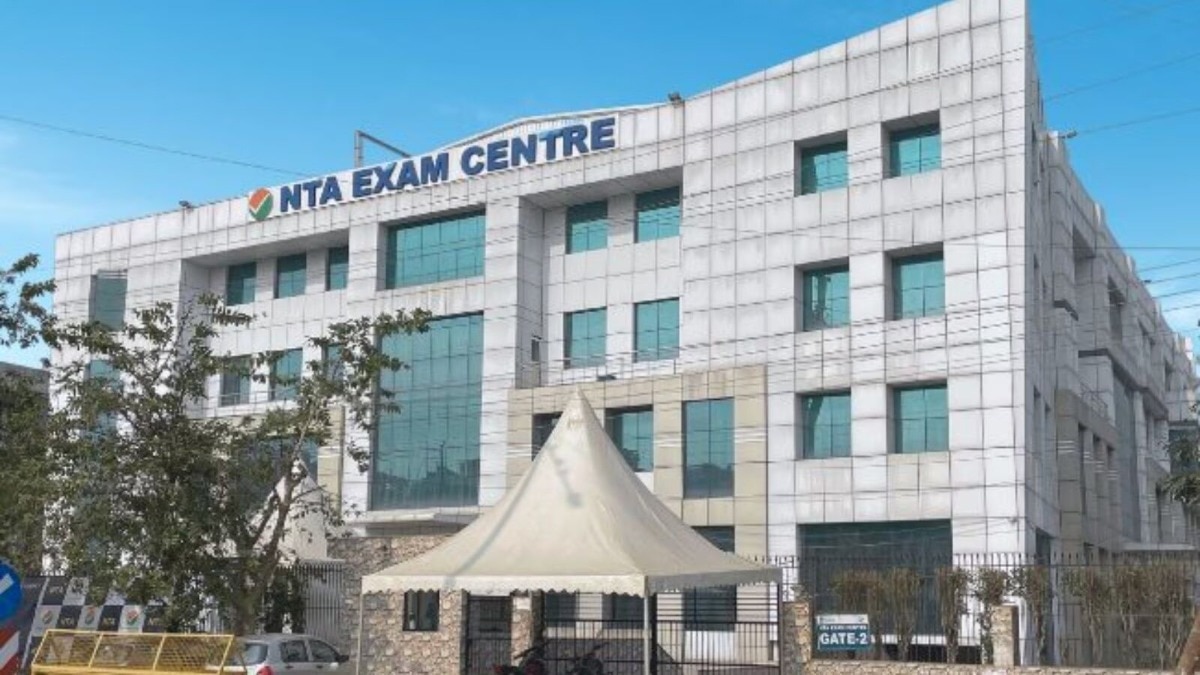
Former UGC Chairman Mamidala Jagadesh Kumar emphasizes that the National Testing Agency (NTA) requires profound structural reforms to fix security loopholes rather than being replaced entirely.
- NTA requires deep structural strengthening rather than total replacement.
- Exam security must be addressed as an 'end-to-end' challenge.
- 35 out of 46 major action points from the Radhakrishnan Committee have been implemented.
- A single national body ensures uniform security standards and cost-efficiency.
Amidst recurring controversies surrounding examination security, former UGC Chairman Mamidala Jagadesh Kumar has provided a strategic roadmap for the National Testing Agency (NTA). He argued that instead of discarding the agency, the focus should remain on deep structural strengthening to restore public trust.
Speaking on the complexities of large-scale testing, Kumar, who chairs the Review Committee for NEP 2020, noted that paper leaks should be treated as an "end-to-end examination-security challenge." This involves securing every link in the chain, including subject experts, digital systems, printing, logistics, and invigilation at centers.
Why This Matters
BozokMedia analysis shows that the NTA's ability to conduct seamless examinations is critical to India's socio-economic stability. Any breach in the testing lifecycle doesn't just affect a single exam; it undermines the meritocratic foundation of the nation's educational system and creates widespread student unrest.
The long-term goal should be to transform the NTA into a mission-critical professional institution.
The urgency of these reforms follows high-profile incidents like the NEET UG paper leak and errors in the UGC NET examinations. In response, the Central Government has taken decisive steps, including forming a high-level committee under technocrat Nandan Nilekani and passing stricter laws in Parliament to penalize malpractice in public exams.
Historical Background
The NTA was established to centralize and standardize entrance examinations in India. However, as the scale of examinations grew to involve over one crore candidates annually, the complexity of managing data, security, and logistics increased exponentially. The Radhakrishnan Committee was tasked with reviewing these processes to provide a framework for enhanced security and accountability.
Kumar rejected the idea of dividing examinations among multiple agencies, noting that a single national body provides common security standards and prevents the duplication of costs. He proposed a partnership model where academic institutions handle the syllabus and question quality, while the NTA provides the secure platform and delivery mechanism.
| Aspect | Proposed Reform | Expected Outcome |
|---|---|---|
| Security Model | End-to-End Traceability | Minimized leak opportunities |
| Organizational Structure | Single National Body | Uniform standards & lower costs |
| Expertise | 4-Tier Scrutiny | Higher question paper integrity |
Frequently Asked Questions
1. Why not replace the NTA with a new agency?
According to Kumar, the NTA already possesses significant experience, technology, and a national network that would be lost if the agency were replaced.
2. What are the key components of the proposed reforms?
Key components include digital traceability, fewer people handling confidential materials, and continuous risk assessment.