Glaring spelling errors in classroom posters in Punjab have reignited a long-standing debate over the quality of English education and the lack of specialized teachers in state government schools.
- Classroom posters in Punjab government schools featured major spelling errors like 'dear' for 'deer'.
- The issue stems from a historical lack of a dedicated English teacher cadre until 2007.
- Even in 2015, teachers failed basic English proficiency tests conducted by the government.
- Current promotion policies have been criticized for appointing non-specialists as English lecturers.
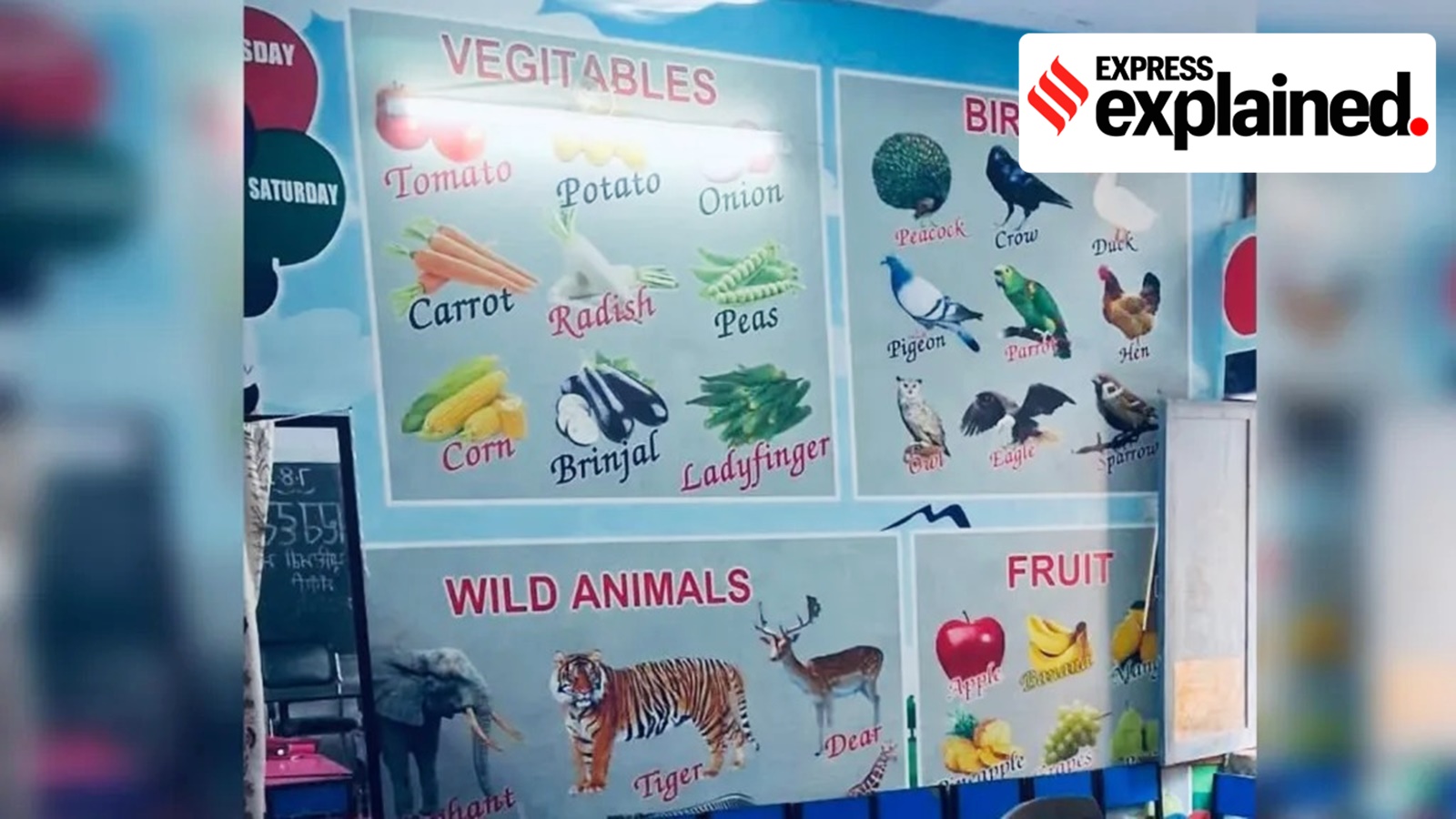
The quality of English education in Punjab's government schools has once again come under intense scrutiny. A recent photograph shared by Punjab Education Minister Harjot Singh Bains, intended to showcase the state's 'Sikhya Kranti' (Education Revolution), instead triggered a political firestorm. The image revealed blatant spelling mistakes on classroom posters, where the animal 'deer' was written as 'dear' and 'vegetables' as 'vegitables'.
This is not an isolated incident but a recurring symptom of a systemic failure. A decade ago, in 2015, when over 80,000 Class X students failed their English board exams, the then Education Minister Dr. Daljit Singh Cheema conducted a proficiency test for teachers. The results were devastating; teachers struggled with basic words like 'vacant' (written as 'vacent') and 'should' (written as 'shuld').
Why This Matters
BozokMedia analysis shows that these linguistic errors are more than just typos; they represent a structural deficiency in the state's pedagogical framework. With thousands of Punjabi youth migrating abroad via IELTS, the inability of the state school system to provide foundational English proficiency creates a significant barrier to global mobility and socio-economic advancement.
When the educators themselves lack linguistic mastery, the entire academic foundation of the student population is compromised.
The roots of this crisis lie in the state's recruitment history. Until 2007, Punjab lacked a separate cadre for English teachers. This forced subject teachers from disciplines like Social Studies or Punjabi to teach English to students from Classes 6 to 12. The absurdity of the situation reached the judiciary in 2016, when a history teacher moved the Punjab and Haryana High Court, arguing that being forced to teach English was jeopardizing the students' future.
While the current AAP-led government has attempted course corrections through collaborations with the British Council and the US Embassy's RELO, new controversies have emerged. In 2024, a promotion drive saw 301 teachers elevated to English lecturers, yet 298 of them lacked formal English expertise, having transitioned from other subjects through distance learning programs. This has sparked intense debate among English teaching aspirants regarding the standards of academic qualification.
Frequently Asked Questions
Question 1: Why are non-English teachers teaching English in Punjab?
Answer: Due to the historical absence of a dedicated English teacher cadre until 2007, teachers of other subjects were assigned English classes.
Question 2: What is being done to improve English proficiency in Punjab schools?
Answer: The government is collaborating with international organizations like the British Council to provide specialized training to teachers.