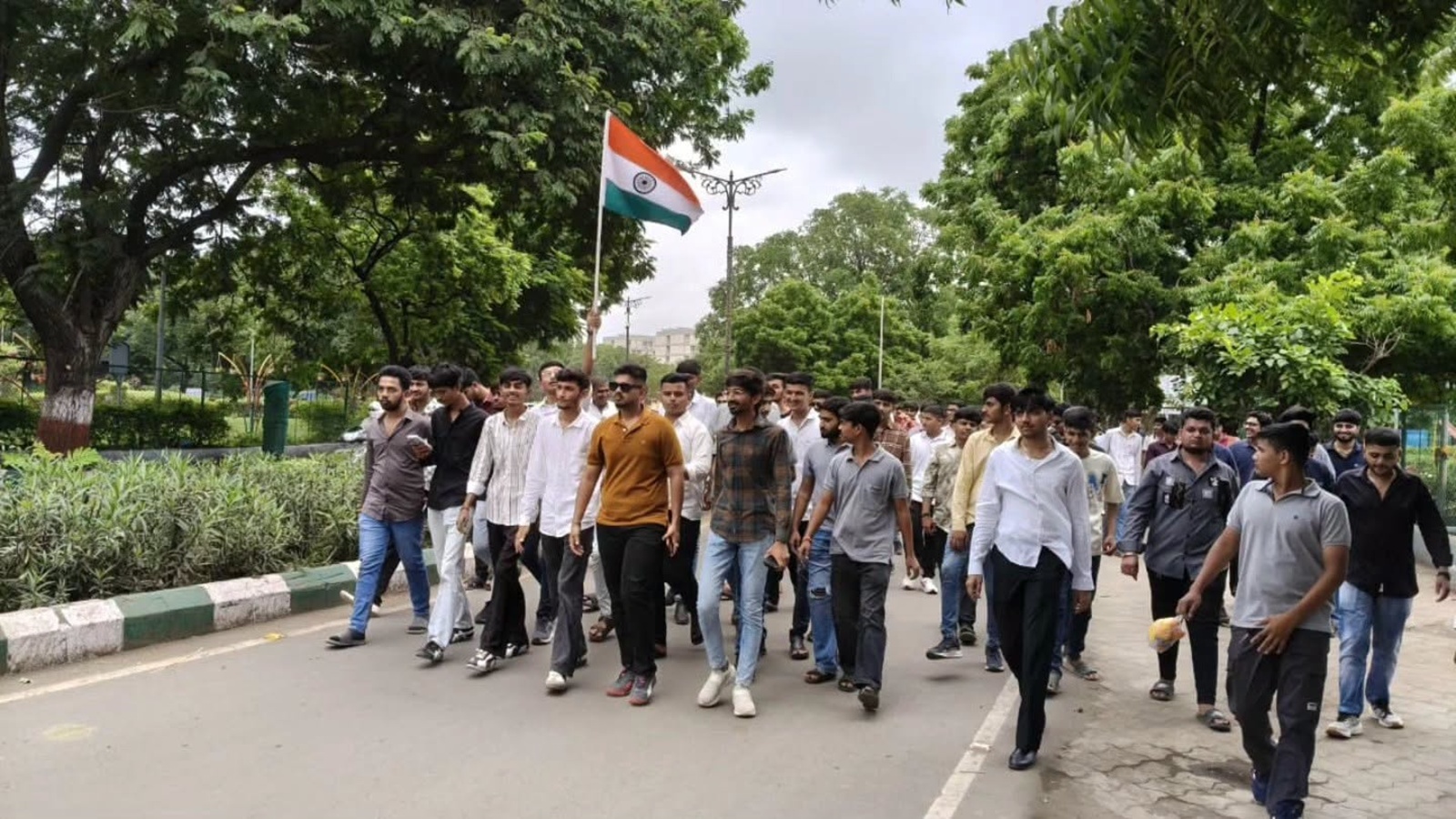
As university elections remain suspended in Gujarat, a new wave of student activism is emerging around academic grievances and systemic failures.
- Student union elections in major Gujarat universities have been stalled since 2020.
- Gen Z students are shifting focus from traditional party politics to academic issues like paper leaks and fee hikes.
- Student leaders across ideologies are calling for the restoration of campus elections to ensure representation.
The landscape of student activism in Gujarat is undergoing a significant metamorphosis. While formal student union elections have been absent in major institutions like Gujarat University for years, the spirit of student politics has not vanished; it has merely evolved. Instead of traditional ideological battles, the current generation of students—Gen Z—is mobilizing around critical academic concerns such as NEET paper leaks, rising tuition fees, and the inefficiency of centralized admission systems.
Recent nationwide protests have acted as a catalyst for this renewed energy. Shravan B Raj, National Secretary of the Akhil Bharatiya Vidyarthi Parishad (ABVP), recently noted that India's Gen Z is no longer content with passive endurance, signaling a shift toward more assertive activism. This sentiment is echoed by student leaders who argue that the absence of elections has created a vacuum in student representation.
Why This Matters
BozokMedia analysis shows that the suspension of campus elections creates a disconnect between the administration and the student body. Without a formal electoral process, student grievances often fail to reach the corridors of power, leading to systemic issues like teacher shortages and scholarship delays going unaddressed for extended periods.
The lack of campus elections prevents the development of a structured leadership pipeline for the country's future political landscape.
The perspectives on this vacuum vary across political spectrums. Devansh Brahmbhatt, ABVP's Gujarat State Secretary, contends that students remain highly engaged, particularly regarding the Gujarat Common Admission Service (GCAS) and the shortage of faculty in grant-in-aid colleges. He emphasizes that the issues are now deeply rooted in academic survival.
Conversely, Rahul Tharoda of the NSUI highlights a trend where students are prioritizing academics over political affiliation, forcing organizations to change their recruitment strategies. Meanwhile, Dharmik Mathukiya of the AAP's student wing argues that the reasoning for banning elections—preventing campus violence—is flawed. He suggests that enhanced security, rather than democratic suspension, is the professional way forward.
Historically, Gujarat has been a hotbed for student-led movements. The 1974 Navnirman Movement stands as a testament to how student mobilization can trigger massive political shifts. Today's leaders look back at such movements as blueprints for how organized student voices can demand accountability from the state.
Frequently Asked Questions
Question 1: Why were student elections stopped in Gujarat?
Answer: Authorities often cite concerns over campus violence and clashes between student groups as the primary reason for suspending elections.
Question 2: What are the main issues facing Gujarat students today?
Answer: Key issues include paper leaks, delays in government scholarships, faculty shortages, and problems with the GCAS admission process.