The Trump administration has introduced stricter enforcement of work authorization rules, impacting CPT internships and H-1B visa pathways for international students.
- A federal memo issued on August 24 warns universities regarding the misuse of Curricular Practical Training (CPT).
- Universities failing to comply with strict federal guidelines risk losing their international student enrollment certification.
- Proposed H-1B fee hikes and enhanced vetting are creating significant uncertainty for global talent.
The landscape for international students in the United States is undergoing a seismic shift. The Trump administration has taken decisive steps to tighten regulations governing internships and work authorizations, adding layers of complexity to the journey of foreign students. A recent federal memo has specifically targeted Curricular Practical Training (CPT), a vital component for F-1 visa holders seeking practical experience.
According to the memo issued on August 24, the Student and Exchange Visitor Program (SEVP), under Immigration and Customs Enforcement (ICE), has noted an uptick in CPT authorizations that do not strictly align with established academic curricula. This crackdown places immense pressure on educational institutions to ensure every internship is an integral part of the student's degree program.
University Responses and Immediate Impact
The ripple effects of this guidance were felt almost immediately across major academic hubs. The University of California, Los Angeles (UCLA) announced a pause on certain CPT authorizations to conduct internal reviews. Similarly, UC Berkeley indicated that while degree-linked training would continue, many other applications might face delays or denials in the near future.
A particular focus has been placed on "Day 1 CPT" arrangements, where students seek work authorization immediately upon enrollment. While this is not a new visa category, the increased scrutiny signals a move toward much stricter enforcement of existing mandates.
Why This Matters
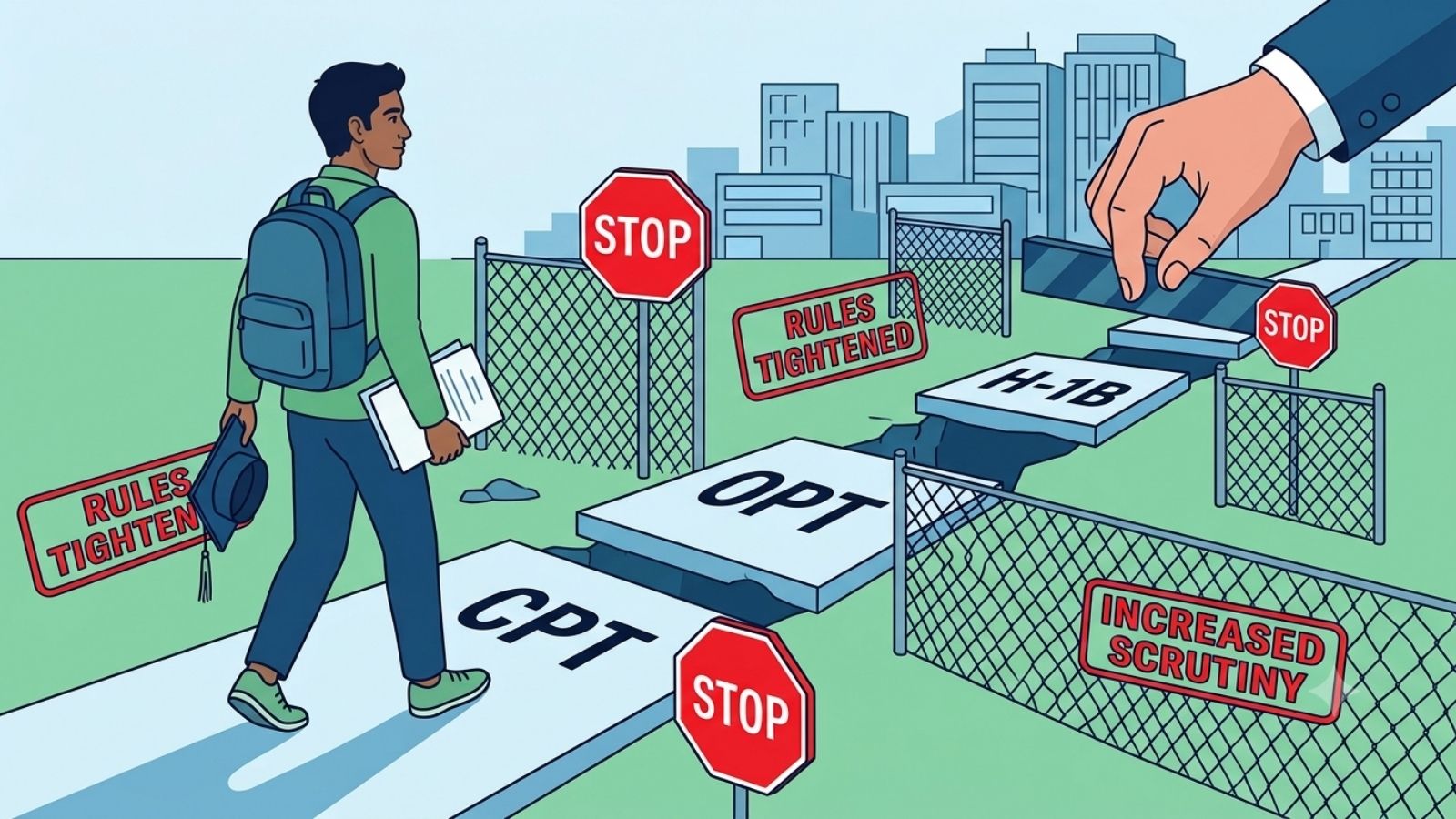
BozokMedia analysis shows that these regulatory shifts are part of a broader strategy to prioritize high-skilled, high-wage labor within the US economy. By tightening the entry points—starting from student internships (CPT) to post-study work (OPT) and eventually professional employment (H-1B)—the administration is effectively reshaping the international talent pipeline.
The tightening of CPT rules serves as an early warning sign for the increasingly restrictive environment surrounding H-1B sponsorships.
Comparing CPT and H-1B Pathways
| Feature | CPT (Curricular Practical Training) | H-1B Visa |
|---|---|---|
| Primary Use | Internships during academic studies | Employment in specialty occupations |
| Visa Status | F-1 Student Visa | Employment-based Visa |
| Sponsorship | University-led | Employer-led |
Beyond CPT, the H-1B visa system is facing its own set of hurdles. The Department of Homeland Security has proposed making a significant fee of $103,265 for new H-1B visas permanent. This comes amid a noticeable decline in H-1B registrations, which plummeted from 759,000 in 2023 to approximately 344,000 last year.
Historical Context of US Immigration Policy
Historically, the US has been a premier destination for global talent due to flexible work-study programs. However, the shift toward protectionist policies has led to increased vetting and higher costs. These changes reflect a growing tension between maintaining academic openness and protecting the domestic labor market.
Frequently Asked Questions
Question 1: Does this mean I can no longer do internships in the US?
Answer: No, but your university will now verify much more strictly that the internship is a mandatory part of your academic curriculum.
Question 2: How does CPT affect my future H-1B application?
Answer: While they are separate, a history of compliant CPT usage is essential for a smooth transition to OPT and eventually H-1B sponsorship.