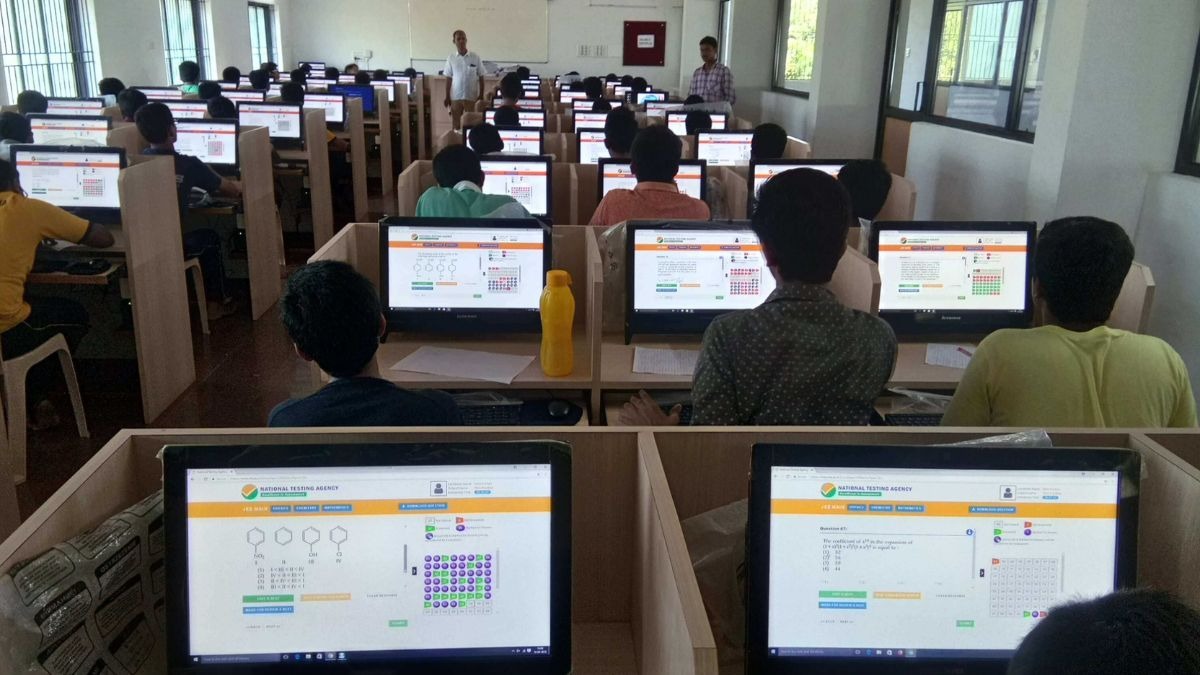
More than 12,000 IIT aspirants have urged the Ministry of Education to increase the JEE-Advanced attempt limit from two to three, citing mental pressure and unequal access to preparation resources.
- 12,000+ students petitioned for a 3rd attempt at JEE-Advanced.
- Current rule allows only 2 attempts in 2 consecutive years.
- Aspirants highlight the disparity between JEE-Main (6 attempts) and JEE-Advanced.
- Call for inclusivity for rural and underprivileged students.
In a significant move to challenge the rigid eligibility criteria of India's premier engineering entrance system, over 12,000 JEE-Advanced aspirants have submitted a formal petition to the Ministry of Education, the IIT Council, and the Joint Admission Board (JAB). The students are demanding a shift from the current two-attempt limit to three attempts.
Under the prevailing guidelines, candidates are permitted to appear for the JEE-Advanced exam only twice in two consecutive years. The first attempt must occur in the year the student completes Class 12, with the second attempt following in the immediate next year. The petitioners argue that this window is too narrow and fails to account for various personal and systemic hurdles.
Why This Matters
BozokMedia analysis shows that this movement reflects a growing demand for systemic flexibility in high-stakes testing. The stark contrast between JEE-Main, which allows six attempts over three years, and JEE-Advanced creates a psychological bottleneck. By restricting the final stage of admission, the system may be inadvertently filtering out talent based on timing rather than intellectual merit.
"Academic peak performance does not always align with a rigid calendar; talent should be evaluated at its zenith, regardless of a strict two-year window."
The petition emphasizes that JEE-Advanced is a high-pressure, single-day examination where factors such as acute anxiety, sudden health crises, or minor errors can derail years of hard work. Furthermore, the students pointed out the 'digital and coaching divide.' Students from rural backgrounds often lack early access to specialized coaching and may only begin serious preparation after their Class 12 exams.
Drawing a parallel with the COVID-19 pandemic era, the aspirants noted that the government had previously allowed additional attempts to mitigate the impact of the global crisis. This precedent proves that the administrative framework is capable of adapting to student needs without compromising the quality of the IITs.
| Feature | JEE-Main | JEE-Advanced (Current) |
|---|---|---|
| Total Attempts | 6 attempts over 3 years | 2 attempts in 2 consecutive years |
| Timeline | Flexible (3-year window) | Strict (2-year window) |
| Primary Goal | Screening & NIT/IIIT Entry | Exclusive IIT Entry |
Frequently Asked Questions
Q1: Why are students asking for a third attempt?
A: Students cite health issues, mental pressure, and unequal access to coaching as reasons why two attempts are insufficient to showcase their true potential.
Q2: Would an extra attempt increase competition unfairly?
A: Petitioners argue no, as JEE-Main already acts as a rigorous screening layer, and the total number of IIT seats would remain constant.