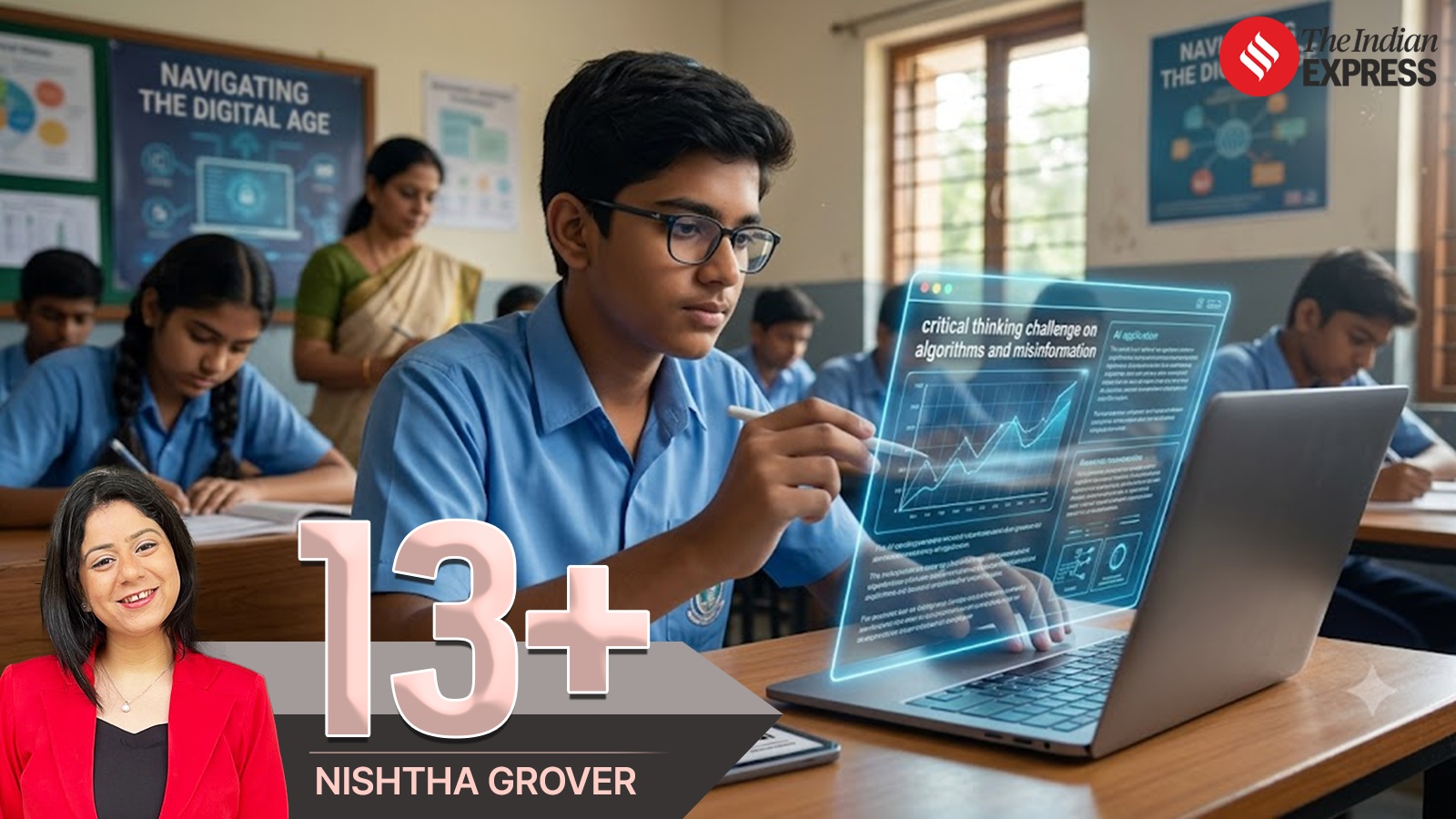
While parents push for social media bans, the real challenge lies in preparing children for an AI-driven future. Discover why literacy beats prohibition.
- 78% of Indians support banning social media for children under 14.
- Only 26% favor banning AI tools like ChatGPT in schools.
- The focus must shift from 'screen time' to 'content quality' and psychological impact.
- AI literacy is essential to prevent cognitive passivity in students.
A fascinating contradiction is emerging in our approach to youth and technology. While there is a growing consensus on protecting children from the pitfalls of social media, there is a simultaneous push to prepare them for a world where Artificial Intelligence (AI) is omnipresent. The Ipsos Education Monitor 2026 highlights this tension vividly.
According to the data, 78% of Indians surveyed support a ban on social media for children under 14, and 57% support banning smartphones in schools. However, only 26% favor banning AI in educational settings, with 61% opposing such a restriction. This suggests a nuanced public understanding of different technological functions.
Why This Matters
BozokMedia analysis shows that the psychological experience of technology is not uniform. A social media feed, engineered for endless scrolling and social validation, poses different risks to a child's developing brain compared to an AI tool designed for academic exploration. The metric of 'screen time' is becoming obsolete; what truly matters is the nature of the engagement.
We cannot prepare children for the future while pretending the future will not arrive.
The danger with AI is not the technology itself, but the potential for cognitive passivity. If students outsource every difficult thought process to a machine, they may lose the ability to struggle with uncertainty and complex problem-solving. The goal should be to use AI to deepen learning—such as asking why a math problem was wrong—rather than simply obtaining an answer.
Historically, every major technological shift—from the printing press to the internet—has been met with fears of intellectual decline. Yet, history shows that integration and literacy are more effective than isolation. For children, AI literacy must include psychological literacy: understanding when a tool is helping them think and when it is thinking for them.
| Feature | Social Media | Artificial Intelligence (AI) |
|---|---|---|
| Primary Driver | Social validation & dopamine loops | Information processing & problem solving |
| Psychological Risk | Comparison, anxiety, and FOMO | Cognitive passivity & intellectual laziness |
| Educational Role | Distraction/Socialization | Personalized learning/Research tool |
Frequently Asked Questions (FAQ)
1. Is AI a threat to critical thinking?
It can be if used as a shortcut, but if used as a tutor to explain concepts, it can actually enhance critical thinking.
2. Why is social media more dangerous for adolescents?
Adolescents are in a developmental stage where peer approval is vital, making them highly susceptible to the social comparison inherent in social media.