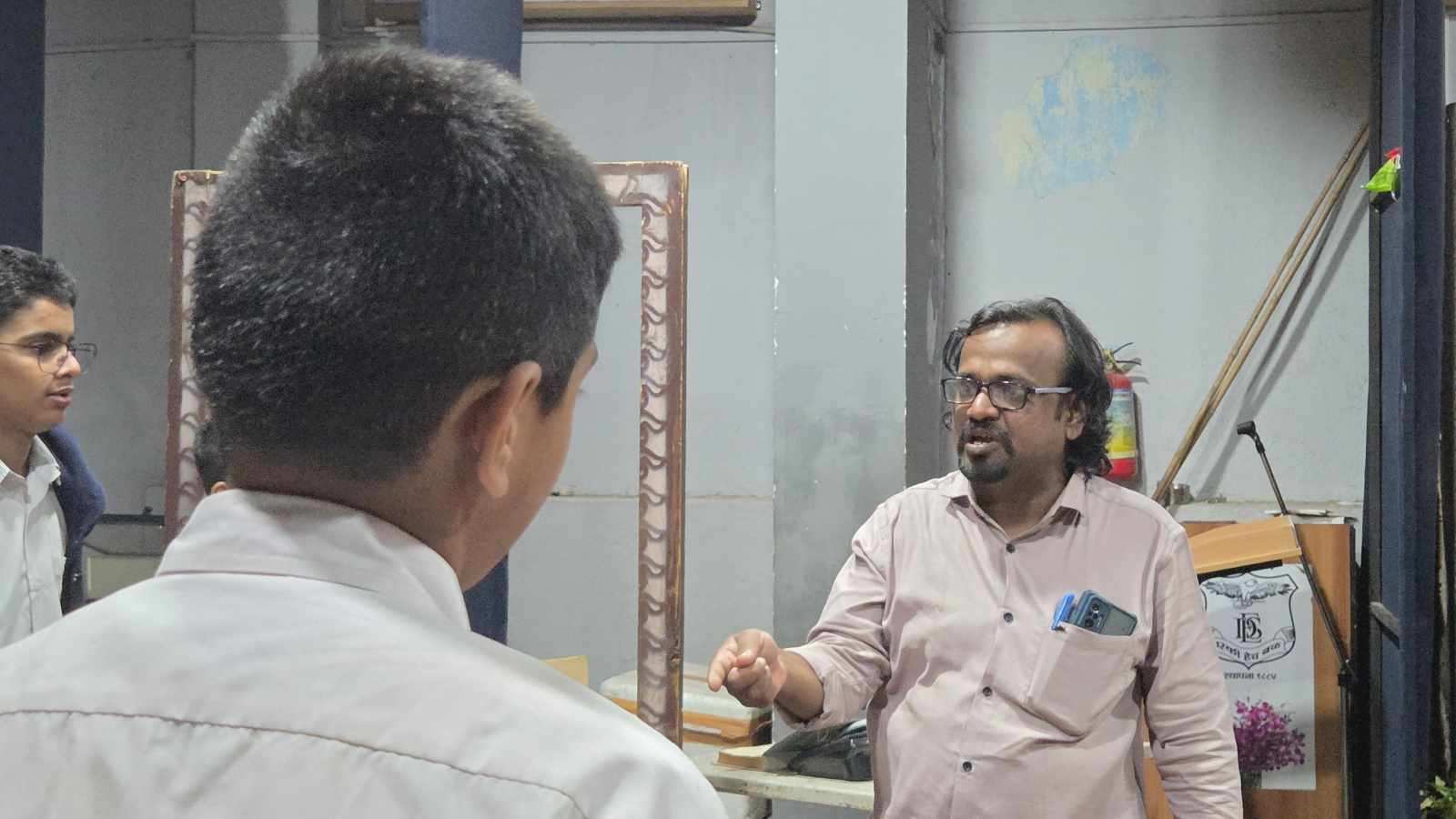
An insightful deep dive into Professor Sugata Mitra's vision of self-organized learning and his groundbreaking 'Hole in the Wall' experiment.
- The 'Hole in the Wall' experiment proved that children can learn complex skills via the internet without formal instruction.
- The SOLE (Self-Organized Learning Environment) method fosters critical thinking and teamwork.
- The solution to digital distractions is public, collective use rather than outright bans.
Imagine a classroom where students are empowered to explore concepts independently through the guidance of a teacher and the vast resources of the internet. This is the vision held by Professor Sugata Mitra, a renowned computer scientist and educational theorist, who seeks to redesign how we prepare students for a rapidly evolving future.
The Legacy of the 'Hole in the Wall'
The foundation of Mitra's philosophy lies in his landmark 1999 experiment known as 'Hole in the Wall'. By embedding an internet-connected computer into a brick wall separating his office from a slum in Kalkaji, New Delhi, he sought to answer a fundamental question: Could children from underprivileged backgrounds learn to navigate the digital world without formal schooling?
The results were transformative. Children, despite having no prior knowledge of English or computers, began teaching themselves and each other. Mitra notes that while older generations struggle to believe that children can learn without constant instruction, the experiment proved that curiosity, paired with access, is a powerful teacher.
Why This Matters
BozokMedia analysis shows that the shift from passive listening to active exploration is critical in the 21st century. Mitra's SOLE method addresses the gap between rote memorization and true cognitive engagement.
"What you'll get is an upside-down teaching process... they remember it for the rest of their lives because they go home and tell their parents what they taught the teacher."
Navigating the Digital Age: Ban vs. Integrate
In an era where many institutions are moving toward banning smartphones and social media, Mitra offers a provocative alternative. He argues that the issue isn't the device itself, but the privacy and isolation it often brings.
To mitigate the risks of digital distraction, Mitra suggests two vital rules: children must work in groups and the screens must be in public view. By making technology a shared, transparent experience, the impulse for private, distracting behavior is minimized. He proposes that instead of banning devices, classrooms should implement the SOLE (Self-Organized Learning Environment) method, where computers are used to tackle large, open-ended questions collectively.
| Feature | Traditional Classroom | SOLE Method (Mitra's Approach) |
|---|---|---|
| Primary Role of Teacher | Instructor/Lecturer | Facilitator/Guide |
| Learning Driver | Curriculum-led | Inquiry-led |
| Technology Usage | Often restricted/Individual | Collaborative/Publicly visible |
Frequently Asked Questions
1. What is the SOLE method?
It stands for Self-Organized Learning Environment, an approach where students use internet-connected devices to explore big questions together.
2. How does Mitra suggest handling mobile phones in class?
He suggests prohibiting individual mobile phone use (much like reading a novel during a lecture) but integrating computers in a way that the teacher can see all screens.