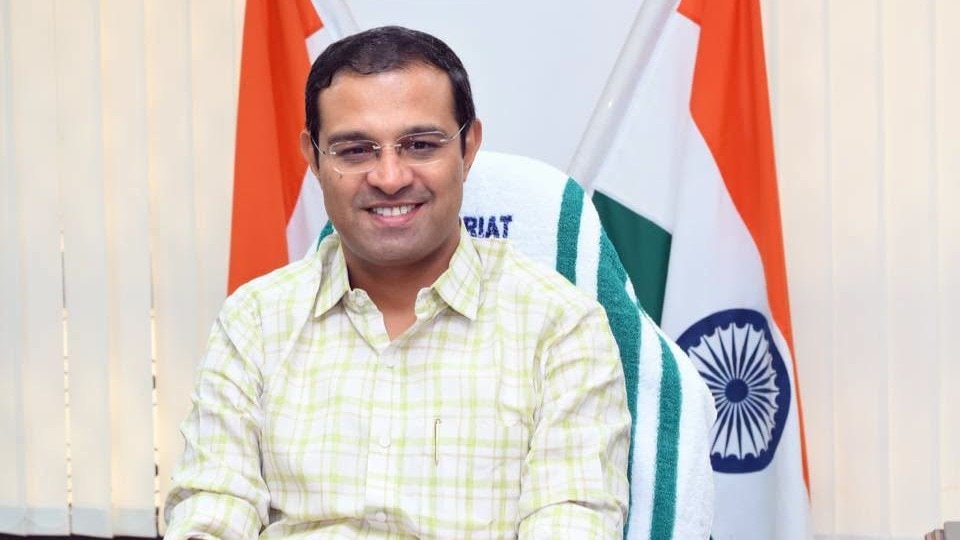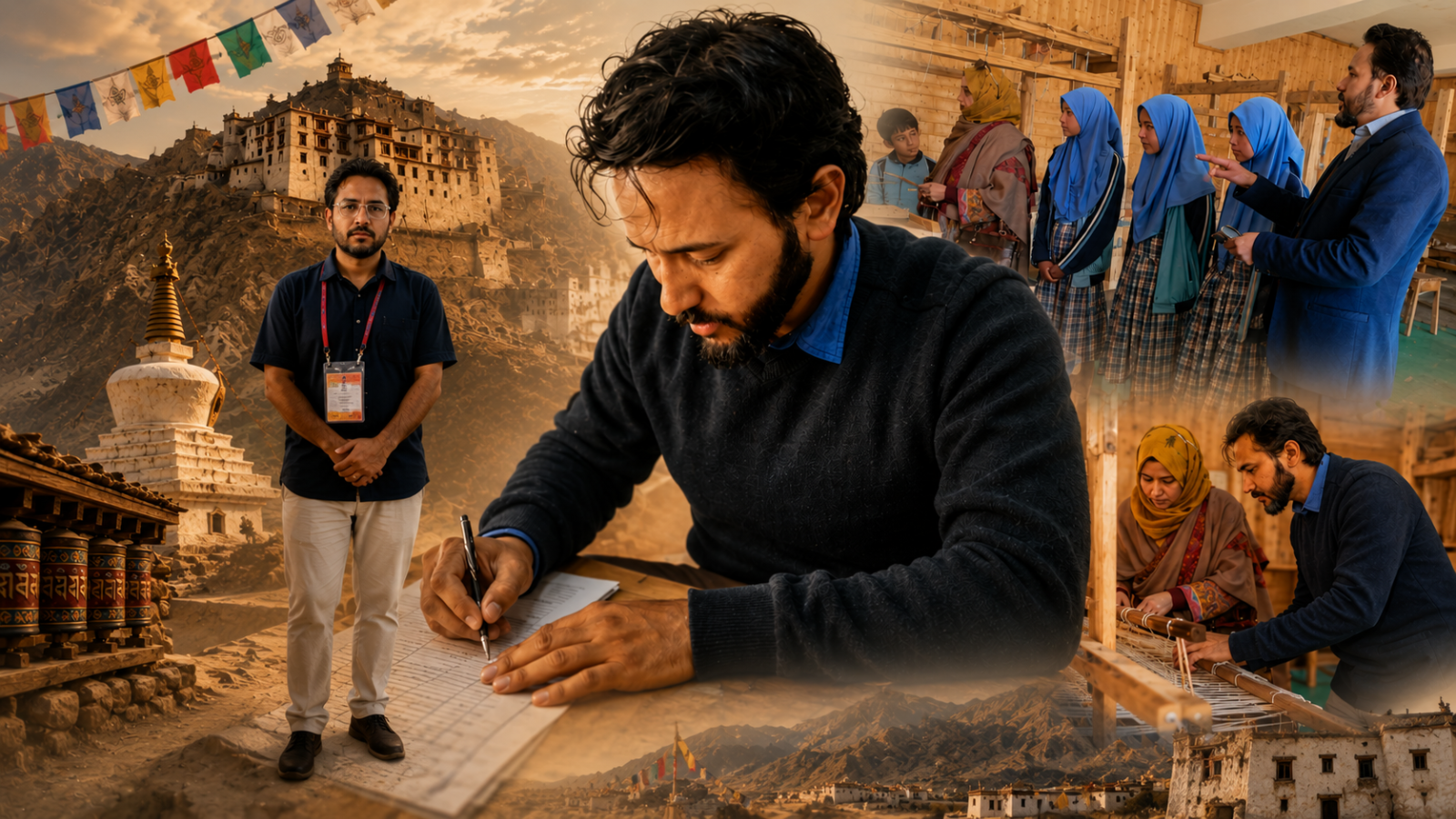
Mohd Mustafa Kamal, a teacher from Ladakh, has been honored with the National Teachers Award 2026 for transforming abandoned Kargil War bunkers into innovative learning spaces.
- Mohd Mustafa Kamal is a recipient of the prestigious National Teachers Award 2026.
- He converted abandoned military sand bunkers into 'Prehistoric Labs' for students.
- His teaching method focuses on experiential learning and democratic simulation.
- He transformed Social Science from a rote-learning subject to a practical experience.
Growing up amidst the shelling of the Kargil War, Mohd Mustafa Kamal experienced a childhood defined by conflict and uncertainty. Today, that same resilience has fueled a revolutionary approach to education. The 41-year-old teacher from Wakha village, Ladakh, has been shortlisted for the National Teachers Award 2026, an honor he will receive from President Droupadi Murmu in New Delhi.
Mustafa’s journey is a testament to the power of unconventional thinking. While teaching classes 6 to 8 at Government Model Middle School Grong Pashkum, he realized that traditional textbook learning failed to engage students in a border region. To bridge this gap, he looked toward the landscape around him—specifically, the derelict military bunkers left behind by the defense forces during the Kargil conflict.
Turning War Relics into Learning Hubs
In a stroke of genius, Mustafa converted horizontal sand bunkers into a 'Prehistoric Lab.' By bringing students into these cave-like structures, he allowed them to visualize how ancient humans lived. This move transformed history from a collection of dates into a tangible, sensory experience.
Mustafa has successfully bridged the gap between the National Education Policy's vision and classroom reality.
Why This Matters
BozokMedia analysis shows that Mustafa’s methodology aligns perfectly with the modern shift toward experiential learning. By rearranging classroom benches into a U-shape to mimic a Parliament, he turned civics lessons into live debates. Students act as ruling and opposition parties, discussing contemporary issues to understand the mechanics of democracy firsthand.
His innovation extends to gamification. Through 'Great Bath Ludo' (inspired by Mohenjo-Daro) and the use of ancient artifacts found by students, he has successfully removed the 'stress' from examinations, replacing it with curiosity-driven assessment.
| Method | Traditional Classroom | Mustafa's Innovation |
|---|---|---|
| Environment | Standard Desks/Chairs | Bunker-Labs & Parliament Layout |
| Subject Approach | Rote Memorization | Experiential & Practical |
| Student Role | Passive Listeners | Active Debaters & Explorers |
Frequently Asked Questions
1. What makes Mohd Mustafa's teaching style unique?
He uses local geography, such as war bunkers, to create immersive labs and uses parliamentary simulations to teach civics.
2. Where is Mohd Mustafa from?
He is a teacher from Wakha village, located near the Kargil region in Ladakh.