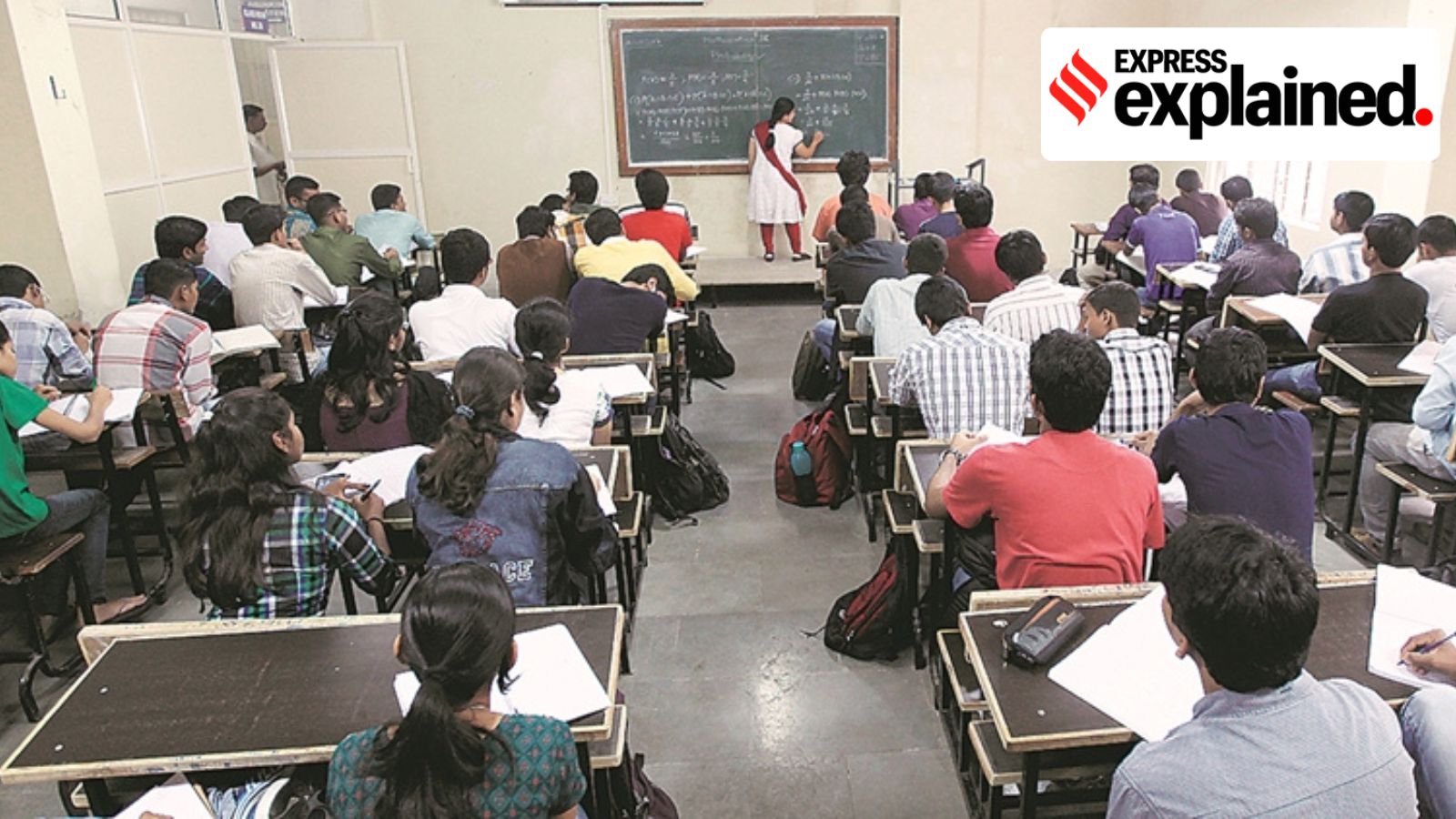
As the Supreme Court upholds NCTE's power to monitor training institutions, the debate over the quality of teacher education in India intensifies under the NEP 2020 framework.
- The Supreme Court upheld the NCTE's authority to mandate annual Performance Appraisal Reports (PAR) from Teacher Education Institutions (TEIs).
- Under NEP 2020, the focus is shifting toward a four-year Integrated Teacher Education Programme (ITEP) as the minimum qualification.
- Regulatory bodies like NCTE enforce strict standards on faculty, infrastructure, and curriculum for TEIs.
Ahead of Teachers’ Day, a landmark judicial development has refocused the national conversation on the quality of educators. The Supreme Court has upheld the power of the National Council for Teacher Education (NCTE) to require Teacher Education Institutions (TEIs) to submit annual Performance Appraisal Reports (PAR). This move effectively sets aside a 2023 Delhi High Court ruling that had deemed such mandatory reporting as arbitrary.
This legal reinforcement comes at a critical juncture when the integrity of teacher training is under scrutiny. For instance, the West Bengal government recently issued show-cause notices to 450 B.Ed colleges following inspections that revealed massive lapses, including allegations of students purchasing degrees without attending actual classes. Such incidents underscore the urgent need for stringent oversight.
Understanding Teacher Education Institutions (TEIs)
TEIs are the specialized colleges and university departments responsible for preparing the next generation of educators. They offer diverse professional programs such as D.El.Ed (for elementary teaching), B.Ed, B.El.Ed, and advanced qualifications like M.Ed. Under the NCTE Act, 1993, these institutions are not merely educational centers but regulated entities that must adhere to specific standards regarding faculty expertise, infrastructure, and student intake.
Why This Matters
BozokMedia analysis shows that the ripple effect of substandard teacher training is profound. If the 'trainers of trainers' fail to meet professional benchmarks, the entire pedagogical foundation of the nation weakens, directly impacting student learning outcomes and long-term human capital development.
The quality of an education system cannot exceed the quality of its teachers.
The National Education Policy (NEP) 2020 is currently driving a massive structural overhaul. The policy aims to integrate teacher education into multidisciplinary universities and establish the four-year Integrated Teacher Education Programme (ITEP) as the baseline qualification. This shift is designed to move away from standalone, often dysfunctional, TEIs toward a more holistic academic environment.
Furthermore, the introduction of the National Professional Standards for Teachers (NPST) by the NCTE seeks to define excellence. The NPST framework outlines expectations for professional values, pedagogical knowledge, and classroom practice, allowing teachers to progress through defined levels: from Proficient to Advanced and eventually to Expert.
| Feature | Traditional Route | NEP 2020 Vision |
|---|---|---|
| Minimum Qualification | 2-year B.Ed/D.El.Ed | 4-year Integrated ITEP |
| Institutional Type | Standalone TEIs | Multidisciplinary Universities |
| Focus | Subject-specific training | Integrated Subject + Pedagogy |
Frequently Asked Questions
1. What is the role of the NCTE?
The NCTE is the statutory body responsible for planning, coordinating, and maintaining standards in teacher education across India.
2. What is the ITEP?
The Integrated Teacher Education Programme (ITEP) is a multidisciplinary course combining subject study with professional teacher training, as envisioned by NEP 2020.
