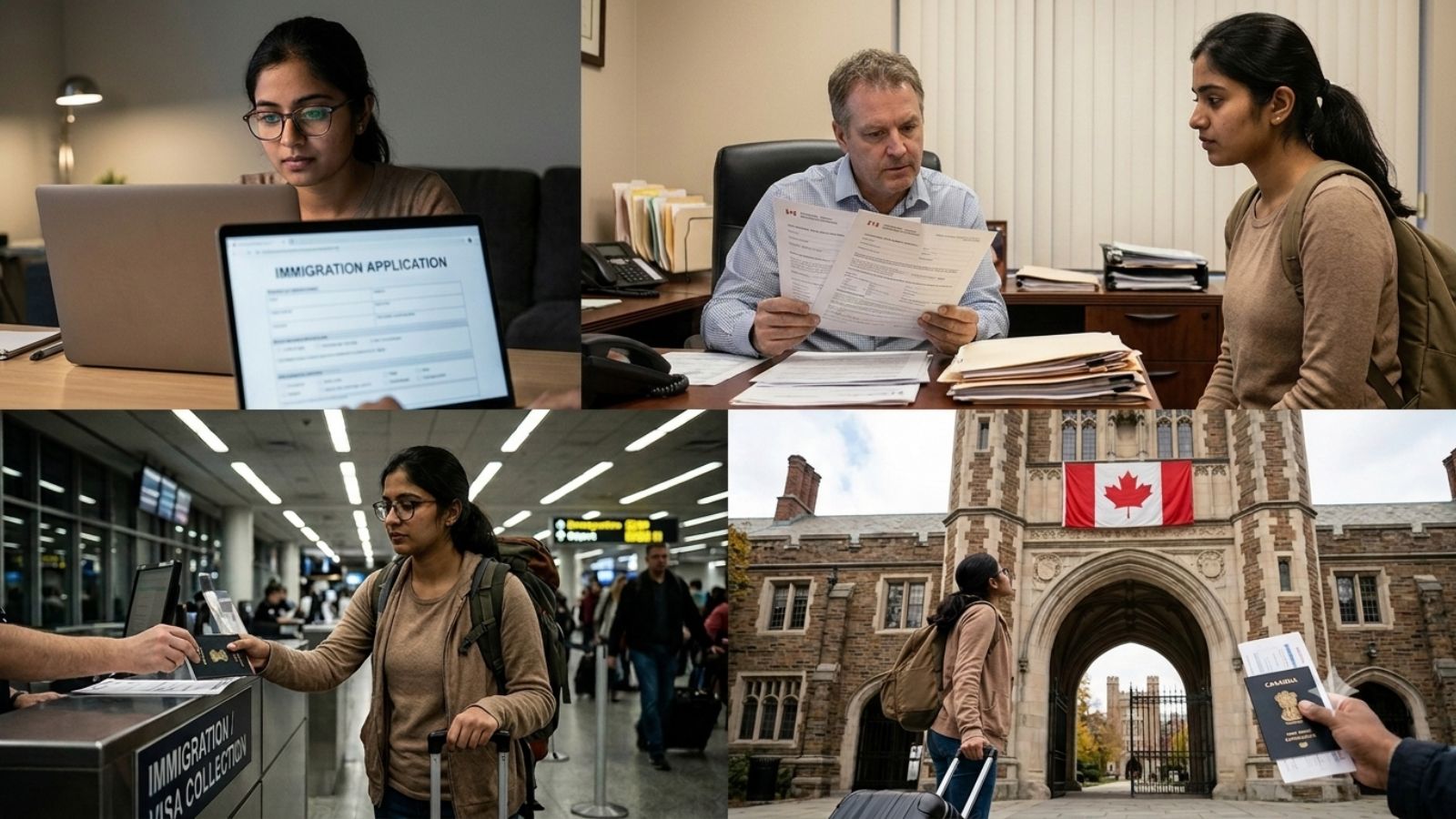
Canada has announced sweeping changes to its international student program for 2026, including increased living expense requirements and enhanced document verification. Prospective students must now demonstrate significantly higher financial stability.
- Living expense requirement increases to C$23,448 for single students from Sept 1, 2026.
- New centralized verification system to combat fraudulent Letters of Acceptance.
- Mandatory co-op and internship placements no longer require separate work permits.
- Canada targets 155,000 new student arrivals under the 2026-2028 plan.
Canada is implementing a series of significant regulatory shifts for international students, effective through 2026. As part of a broader strategy to manage temporary resident numbers, the Canadian government has introduced stricter financial thresholds and more rigorous verification processes. For study permit applications submitted on or after September 1, 2026, a single student applying outside of Quebec must demonstrate proof of funds amounting to C$23,448 for living expenses.
Crucially, this amount is strictly for living costs and does not include tuition fees or transportation expenses. The financial burden scales with family size; for instance, a family of three will need to show C$35,888. This policy aims to ensure that international students can support themselves without immediate reliance on local employment, thereby reducing the economic strain on the country's social infrastructure.
Why This Matters
BozokMedia analysis shows that these changes represent a fundamental shift in Canada's immigration philosophy—moving from a high-volume model to a high-stability model. By raising the bar for financial preparedness, Canada is effectively filtering for students who possess the long-term economic resilience required to integrate into the Canadian economy.
The era of 'easy entry' is transitioning into an era of 'verified entry,' where financial solvency is as critical as academic merit.
Beyond finances, the IRCC (Immigration, Refugees and Citizenship Canada) is ramping up its fight against academic fraud. A new centralized function is being expanded to verify Letters of Acceptance (LOA). If a document is flagged as a "no match," it could trigger a procedural fairness process, potentially leading to a permit refusal based on misrepresentation.
Historical Background
Historically, Canada has been one of the world's most welcoming destinations for international students. However, following recent pressures on housing and healthcare, the 2026-2028 Immigration Levels Plan marks a decisive pivot. The government is now utilizing Provincial Attestation Letters (PAL) and territorial quotas to strictly regulate the influx of new students.
| Requirement/Feature | 2025 Standard | 2026 Standard |
|---|---|---|
| Single Student Living Funds | C$22,895 | C$23,448 |
| Co-op Work Permit | Required separately | Included under Study Permit |
| Verification Method | Decentralized | Centralized/Enhanced |
Frequently Asked Questions
1. Does the new financial requirement include my tuition fees?
No, the C$23,448 is specifically for living expenses. You must show proof of tuition payment or funds separately.
2. What happens if my admission letter cannot be verified?
If the IRCC cannot verify your Letter of Acceptance, your application may be refused due to suspected misrepresentation.