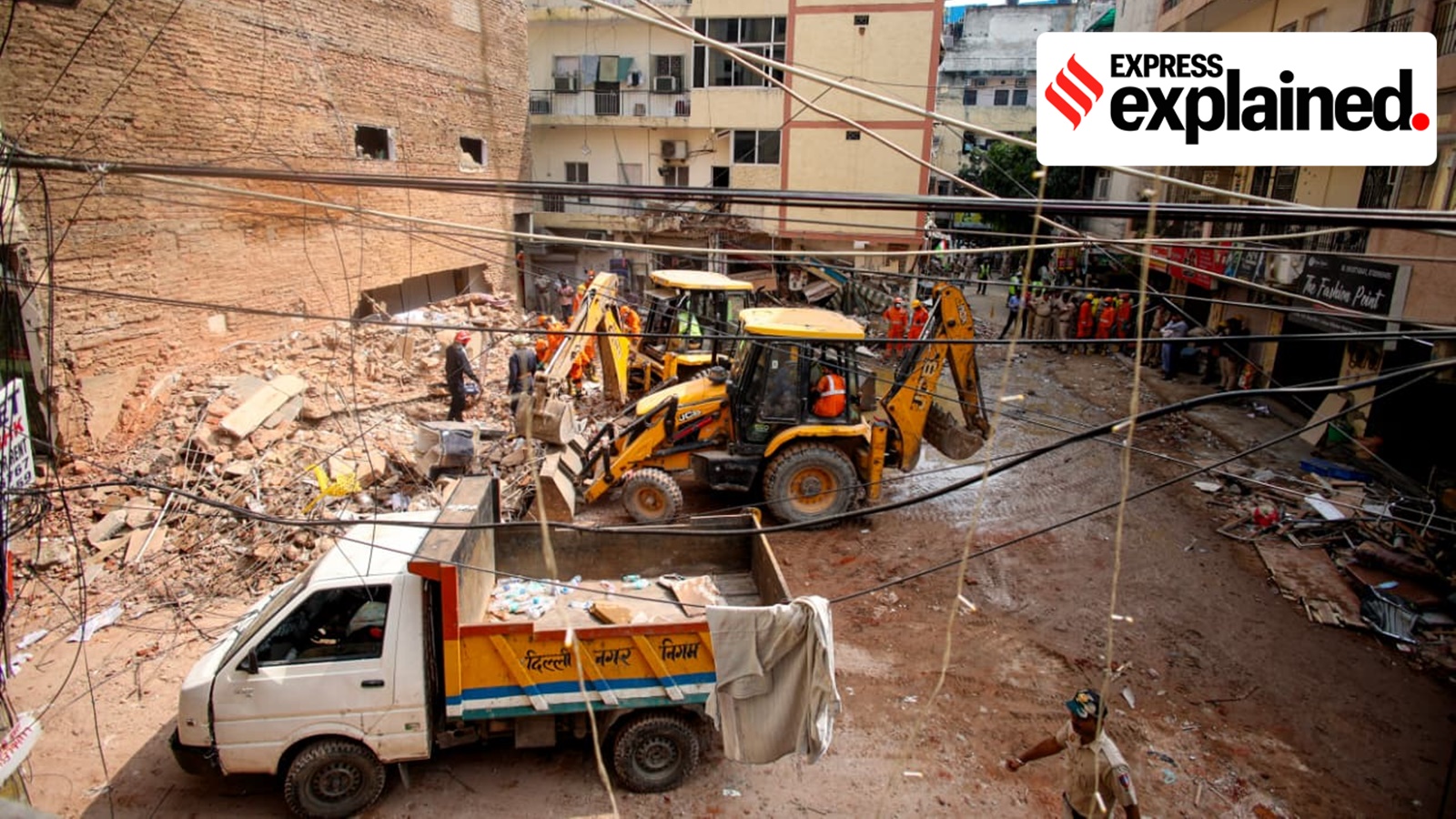
The tragic collapse of a private PG in Satya Niketan has exposed the severe lack of university-provided housing at DU, forcing thousands of outstation students into unsafe, unregulated accommodations.
- 5-story private PG collapse in Satya Niketan kills 7, highlighting housing insecurity.
- DU accommodates only ~9,000 students out of a total body of 2.5 lakh.
- Significant surge in students from Bihar, UP, and Rajasthan following CUET implementation.
- Severe disparity in hostel availability compared to IIT-Delhi and AIIMS.
The devastating collapse of a five-storey private paying guest (PG) accommodation in New Delhi’s Satya Niketan on September 6 has cast a harsh light on the systemic failure of student housing in the national capital. With at least seven dead and several injured, the incident underscores a dangerous trend: the reliance of thousands of students on unregulated, often illegal, private constructions due to a chronic shortage of official university hostels.
The Staggering Gap in Capacity
According to Delhi University’s (DU) Annual Report for 2024-25, the institution manages an enormous student population of over 2.5 lakh. While more than half of these students hail from outside Delhi, the university’s total hostel capacity is a mere 9,000 beds. This creates a mathematical impossibility for the majority of outstation students to find safe, affordable, and institutional housing.
The disparity is even more evident when compared to other central institutions. While IIT-Delhi and AIIMS can house approximately 50% and 70% of their students respectively, DU’s capacity barely scratches the surface. For instance, at Hansraj College, where the student body exceeds 5,000, fewer than 250 undergraduate students can access hostel facilities, leaving thousands to navigate the predatory private rental market.
Why This Matters
BozokMedia analysis shows that the housing crisis is not merely a logistical issue but a barrier to social mobility. When high-quality public education is coupled with exorbitant and unsafe private housing costs, it creates a systemic filter that penalizes students from lower-income backgrounds. The physical danger of collapsing buildings is a symptom of a larger failure to provide a basic right: safe shelter for learners.
The lack of institutional housing transforms the pursuit of education into a gamble with personal safety for thousands of migrant students.
Historical Context and the Rise of PGs
The proliferation of PGs in areas like Satya Niketan and Mukherjee Nagar is a direct result of DU's historical expansion. The North Campus was established in 1922, while the South Campus only emerged in 1973. Rather than investing in residential infrastructure for the South Campus, the university relied on mobility solutions like the 'U-Special' bus service. This left a void that was quickly filled by private developers who built high-density, low-safety PG accommodations to cater to the demand.
| Institution | Hostel Capacity (Est.) | Housing Status |
|---|---|---|
| IIT-Delhi | ~50% | Stable |
| AIIMS | ~70% | High |
| Delhi University | ~3-4% | Critical Shortage |
The introduction of the Common University Entrance Test (CUET) in 2022-23 has further strained this infrastructure. There has been a marked increase in students from Tier-2 and Tier-3 cities in Bihar, Uttar Pradesh, and Rajasthan. With the Bihar School Examination Board being one of the largest feeders, the influx of outstation students has far outpaced the growth of available beds.
Frequently Asked Questions
1. Why is the hostel shortage so severe at DU compared to IITs?
DU operates on a much larger scale with hundreds of thousands of students across multiple campuses, making the cost and land requirement for hostels significantly higher.
2. How has CUET impacted the housing crisis?
CUET has democratized access, bringing in more students from distant states, which has exponentially increased the demand for safe, affordable rental housing in Delhi.

