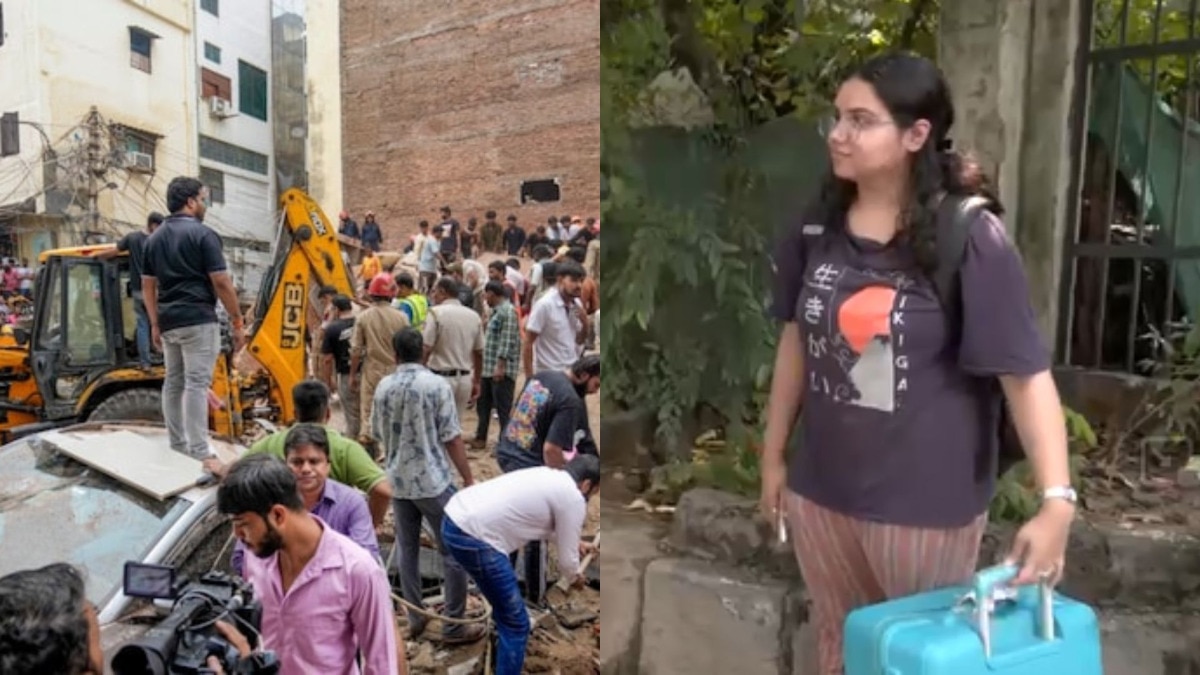
Delhi University's aggressive expansion of academic seats without a corresponding increase in hostel capacity has pushed students into dangerous private PGs, highlighted by a recent fatal building collapse in Satya Niketan.
- DU has expanded undergraduate seats significantly but hostel capacity remains stagnant at around 4,000.
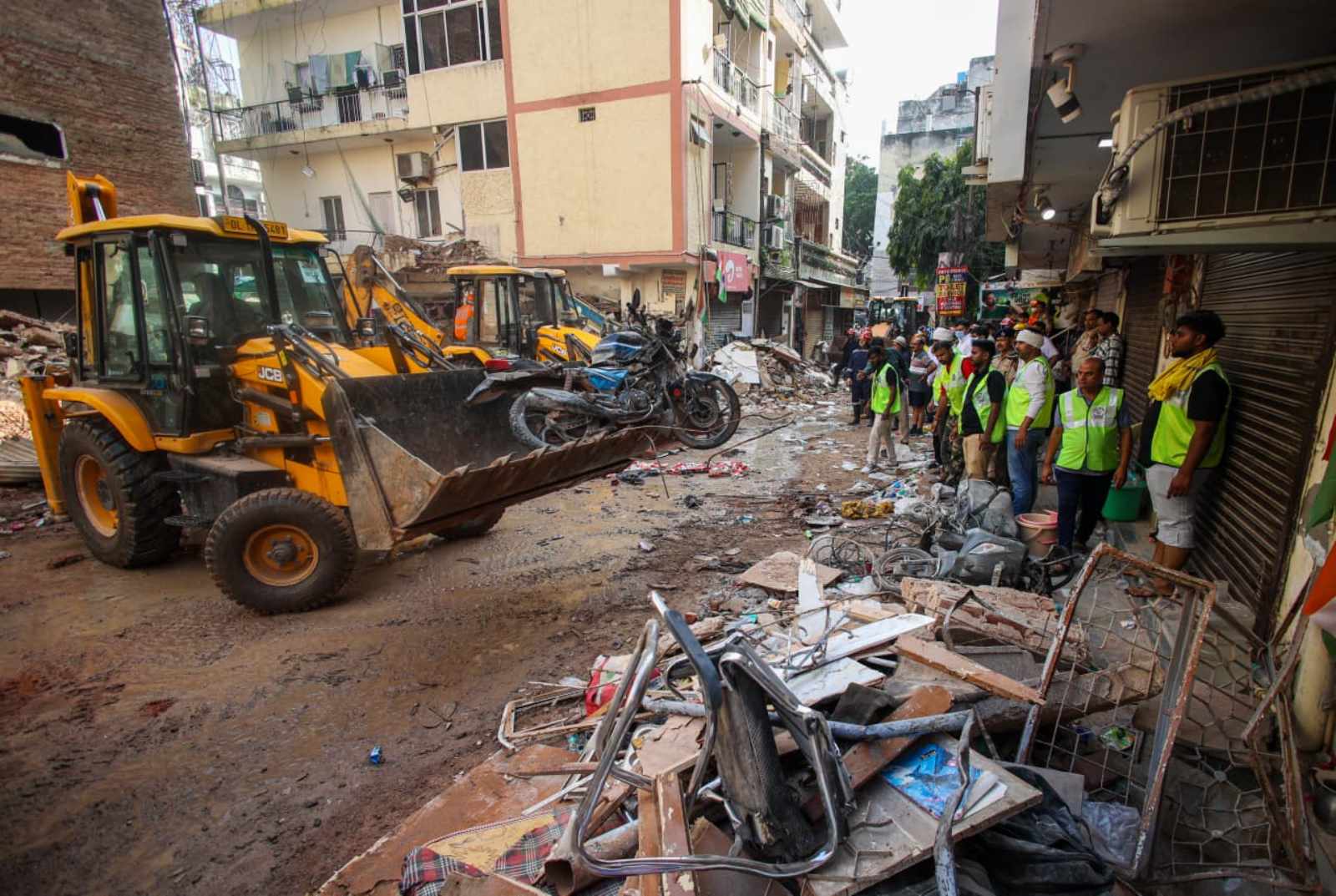
- The collapse of a PG in Satya Niketan, killing seven, exposes the lack of safety audits in private student housing.
- South Campus colleges face the most acute shortage, forcing students into unregulated rental markets.
- Housing inequity is hindering students from economically weaker backgrounds.
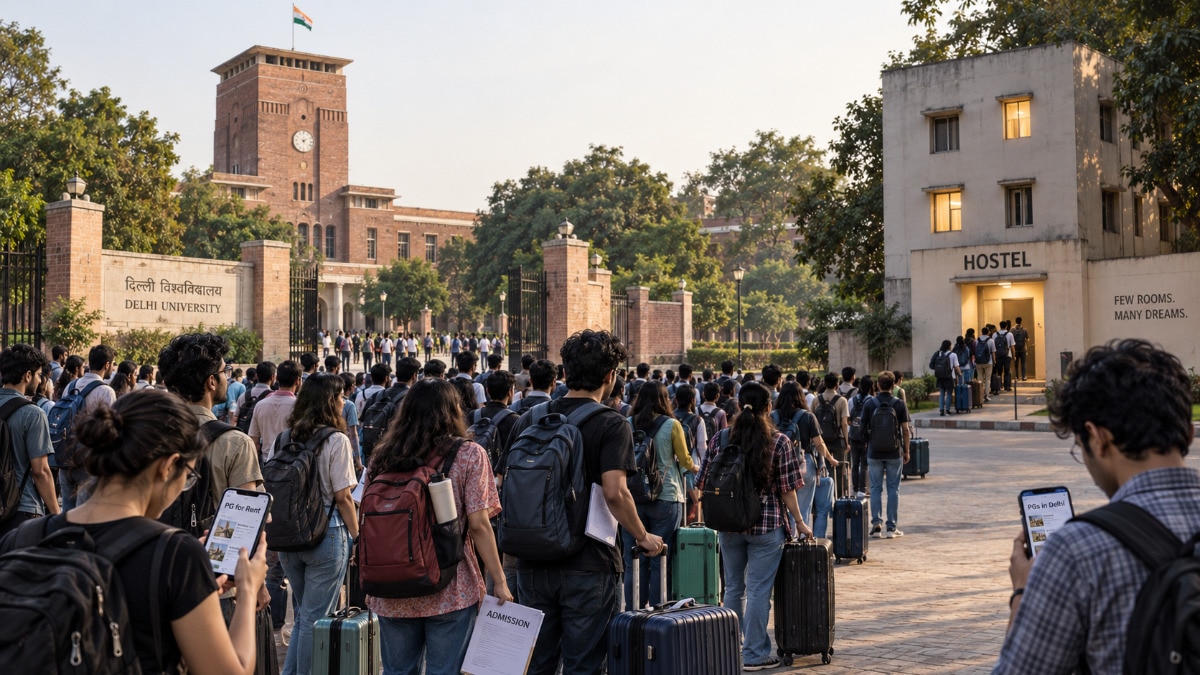
For an outstation student, securing admission to Delhi University (DU) is a pinnacle of academic achievement. However, this triumph is quickly overshadowed by a desperate search for housing. With university hostels accommodating only a fraction of the student body, thousands are forced into the unregulated wilderness of private Paying Guest (PG) accommodations and rented flats. The recent tragedy in Satya Niketan, where a five-storey PG building collapsed killing seven people, has stripped away the facade of safety in these student hubs.
The disparity between academic capacity and residential infrastructure is staggering. For the 2026-27 session, over 2.7 lakh candidates entered the Common Seat Allocation System (CSAS). While DU offers approximately 71,000 undergraduate seats, the total hostel capacity across central and college hostels hovers around 4,000. This mathematical impossibility forces the vast majority of outstation students to rely on private brokers and high-interest rentals.
The South Campus Struggle
The crisis is most visible in the South Campus region. Institutions such as Jesus and Mary College, Atma Ram Sanatan Dharma College, and Ram Lal Anand College provide minimal to no on-campus housing for undergraduates. Consequently, neighborhoods like Satya Niketan, Munirka, and Gautam Nagar have evolved into dense, often illegal, housing clusters where safety codes are routinely ignored to maximize profit.
BozokMedia analysis shows that the current trajectory of DU's growth is unsustainable. By increasing enrollment without investing in living infrastructure, the university is inadvertently creating a socio-economic barrier. When housing is left entirely to the private market, students from marginalized backgrounds face higher risks of exploitation and physical danger, undermining the very essence of inclusive education.
"More than accommodation, this is about equity. It’s about ensuring that talent is never limited by geography or by the cost of a PG in Delhi."
Even premier institutions like Lady Shri Ram (LSR) College struggle with this gap. After years of closure for repairs, their residence hall reopened to accommodate only 150 first-year students—a drop in the bucket compared to the actual need. The reliance on grants and slow administrative processes means the crisis will likely persist for years to come.
Q1: Why doesn't DU provide more hostel rooms?
A: The university has focused on academic scaling and increasing intake numbers, but has failed to allocate sufficient land or funds for residential infrastructure expansion.
Q2: What should students do to ensure their safety in private PGs?
A: Students should demand safety certificates, avoid buildings with visible structural cracks, and verify the legal status of the PG with local authorities before paying deposits.