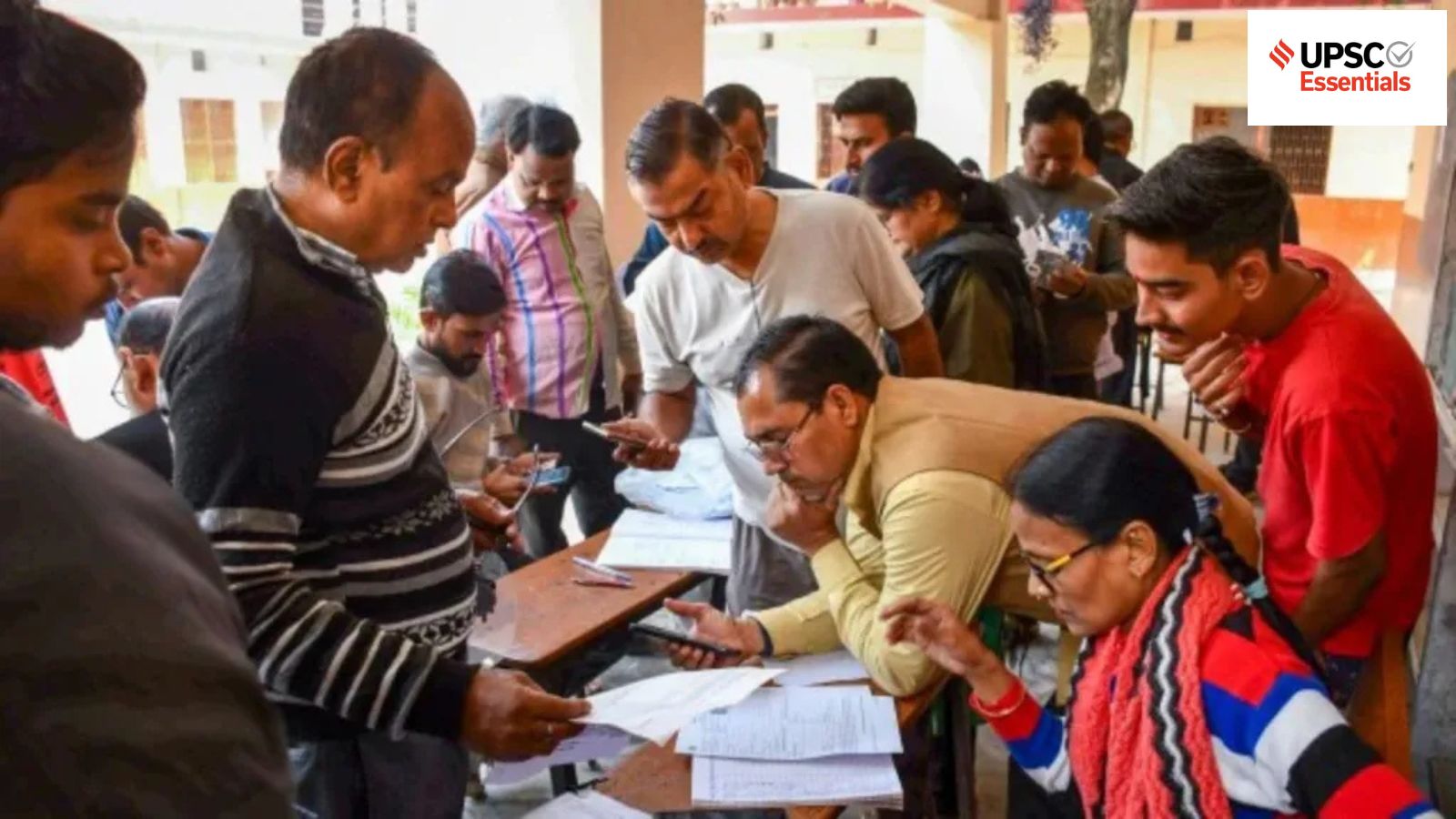
A deep dive into the critical nuances of the Indian Constitution, focusing on the Supreme Court's enforcement powers under Article 142 and the legal evolution of the right to vote.
- Article 142 empowers the Supreme Court to pass decrees for 'complete justice,' enforceable across India.
- The right to vote is interpreted as a constitutional right under Article 326, governed by the Representation of the People Act, 1950.
- Until Parliament legislates, the President (not the CJI) prescribes the manner of enforcing SC decrees.
As aspirants prepare for the UPSC CSE 2027 Prelims, mastering the intricacies of Indian Polity remains a cornerstone of success. The latest subject-wise quiz for Week 179 highlights critical areas of the Constitution that are frequently tested but often misunderstood, specifically the intersection of judicial power and electoral rights.
Decoding Article 142: The Power of 'Complete Justice'
One of the most potent tools in the Indian judicial arsenal is Article 142. This provision allows the Supreme Court to pass any decree or order necessary for doing 'complete justice' in any cause or matter pending before it. This power is unique because it allows the Court to step beyond the strict letter of the law to ensure equity and fairness.
Crucially, while these orders are enforceable throughout the territory of India, the procedural mechanism for such enforcement is governed by laws made by Parliament. In the absence of such parliamentary legislation, the President of India holds the authority to prescribe the manner of enforcement, a detail that often serves as a trap in competitive examinations.
Why This Matters
BozokMedia analysis shows that the UPSC is shifting from simple factual recall to application-based questions. By linking Article 142 to current events—such as the quashing of FIRs for protestors—the examiners are testing whether candidates understand how constitutional provisions operate in real-world scenarios to protect civil liberties.
The Supreme Court's power under Article 142 is not a license for judicial overreach, but a safety valve to prevent a failure of justice where existing laws are silent or inadequate.
The Legal Nature of the Right to Vote
The debate over whether the right to vote is a 'fundamental right' or a 'statutory right' is a recurring theme in Indian jurisprudence. While Article 326 guarantees universal adult suffrage, it is notably absent from Part III (Fundamental Rights) of the Constitution. Historically, the judiciary viewed it as a 'creature of statute,' governed primarily by the Representation of the People Act, 1950.
However, the legal landscape evolved with the People’s Union for Civil Liberties (2003) case, where the judiciary elevated the right to vote to a 'constitutional right.' This distinction is vital: while not a fundamental right (which would allow a direct approach to the Supreme Court under Article 32), it remains a protected constitutional guarantee enforceable through High Courts and election tribunals.
| Feature | Fundamental Right | Constitutional Right (Vote) |
|---|---|---|
| Location | Part III of Constitution | Article 326 |
| Remedy | Direct SC Access (Art 32) | High Court / Tribunals |
| Nature | Inalienable Core Right | Statutory/Constitutional Framework |
Frequently Asked Questions
Q1: Who prescribes the enforcement of SC decrees if Parliament hasn't made a law?
The President of India prescribes the manner of enforcement by order.
Q2: Is the right to vote a fundamental right in India?
No, it is considered a constitutional right under Article 326, governed by the Representation of the People Act, 1950.

