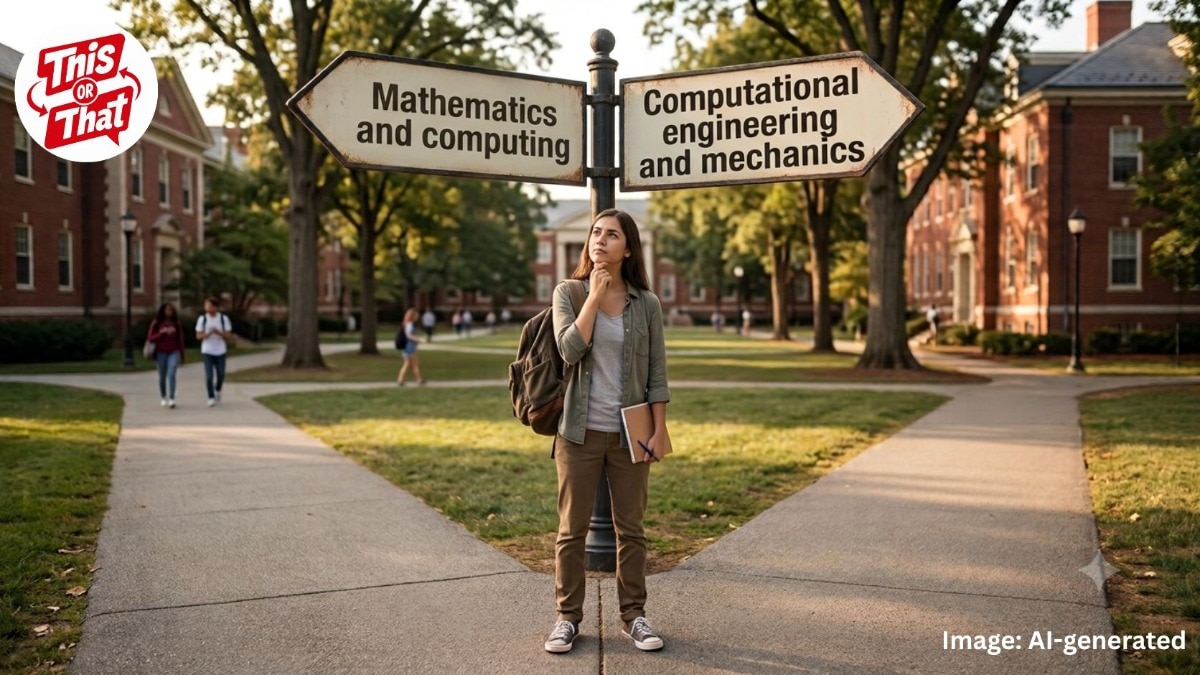
Choosing between Mathematics and Computing (MnC) and Computational Engineering and Mechanics (CEM) depends on your affinity for either data-driven algorithms or physical engineering systems. Here is a deep dive into both.
- Mathematics and Computing (MnC) focuses on algorithms, data science, and theoretical computing.
- Computational Engineering and Mechanics (CEM) emphasizes physical systems, simulation, and mechanical engineering.
- MnC is ideal for AI and Finance careers, while CEM is tailored for Aerospace and Automotive industries.
For students who possess a strong aptitude for mathematics but are undecided between the realms of pure computing and traditional engineering, two interdisciplinary BTech paths emerge: Mathematics and Computing (MnC) and Computational Engineering and Mechanics (CEM). While both leverage computational tools, their trajectories are fundamentally different.
Mathematics and Computing: The Engine of the Digital Age
A BTech in MnC is a rigorous blend of mathematics, statistics, and computer science. The curriculum typically delves into calculus, linear algebra, probability, and discrete mathematics, paired with data structures and algorithm design. The goal is to create professionals capable of mathematical modelling to solve complex computational problems.
This path is exceptionally rewarding for those interested in the 'invisible' side of technology—the logic that powers artificial intelligence, machine learning, and high-frequency trading in quantitative finance. It provides a versatile foundation for those aiming for research or high-end software roles.
Why This Matters
BozokMedia analysis shows that the shift toward a global digital economy has created a massive talent gap in quantitative analysis. MnC graduates are uniquely positioned to bridge the gap between theoretical mathematics and scalable software deployment, making them highly coveted by Big Tech and Hedge Funds.
"Mathematics and Computing is the architectural blueprint for the AI revolution; it transforms abstract logic into functional intelligence."
Computational Engineering and Mechanics: Simulating the Physical World
In contrast, CEM integrates engineering principles with mathematical techniques to analyze physical systems. Rather than focusing on data for its own sake, CEM uses computing to simulate how materials, fluids, and structures behave under real-world stress. This reduces the need for expensive physical prototypes in the early stages of design.
Students in this program study numerical methods, mechanics, and engineering fundamentals. It is the perfect choice for those who love physics and want to apply mathematical precision to build safer planes, faster cars, or more efficient energy systems.
| Factor | Mathematics and Computing (MnC) | Computational Engineering and Mechanics (CEM) |
|---|---|---|
| Primary Focus | Algorithms & Data Science | Simulation & Physical Systems |
| Mathematics Level | Extremely High | High |
| Physics Component | Limited | Critical |
| Career Paths | AI, Data Science, Quant Finance | Aerospace, Automotive, R&D |
Frequently Asked Questions
1. Is coding mandatory for Mathematics and Computing?
While not a prerequisite for admission, coding is a core component of the degree, as students must implement mathematical theories through programming.
2. Can a CEM graduate work in the software industry?
Yes, the computational skills acquired in CEM are transferable to software engineering, although the training is more specialized toward engineering simulations.

