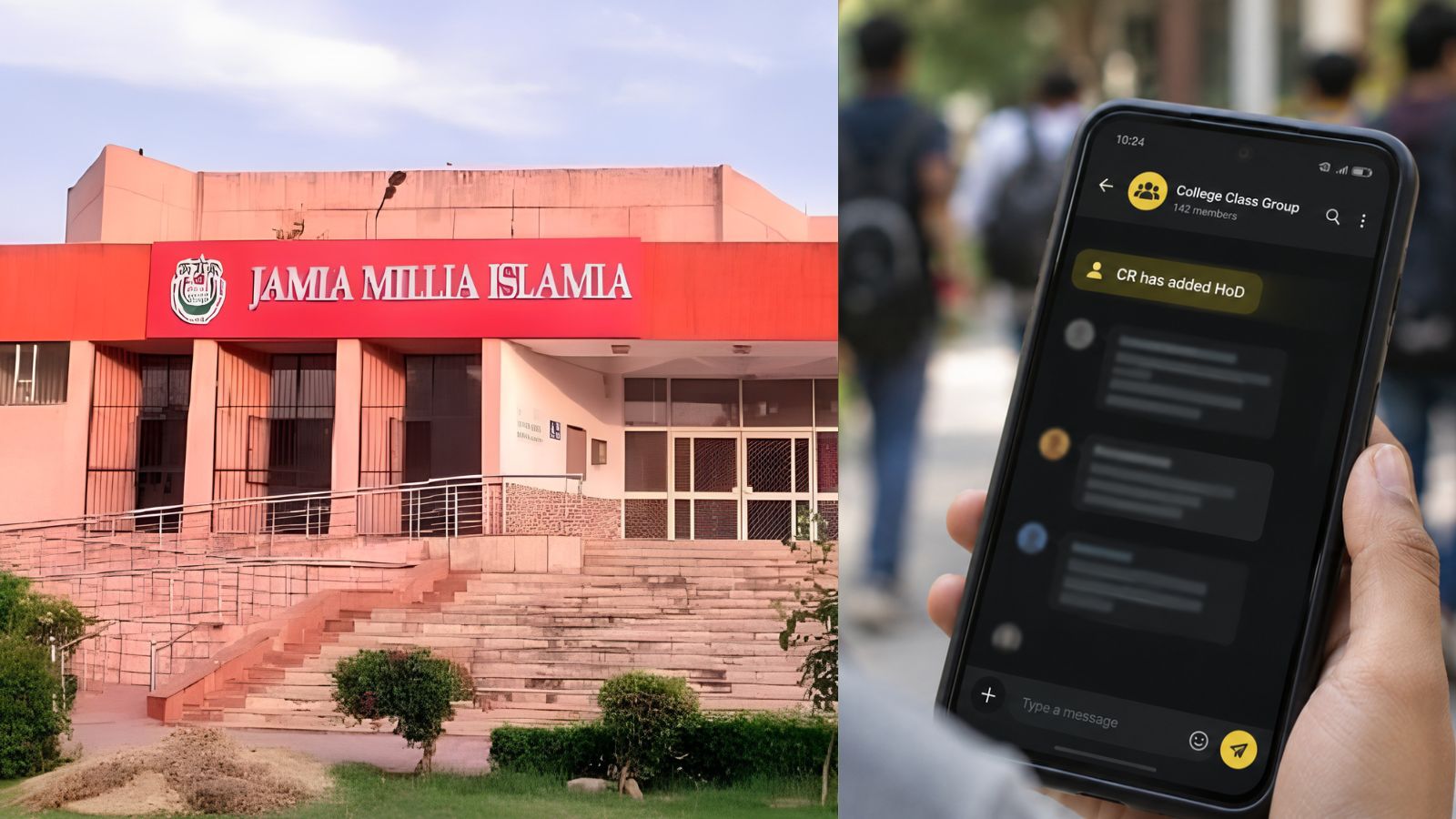
Jamia Millia Islamia has prohibited students from using unofficial social media groups for academic communication, mandating that all official groups include a nominated faculty member to prevent objectionable content.
- Complete ban on unofficial class groups for academic communication.
- Mandatory inclusion of one nominated faculty member in every official group.
- Class Representatives (CRs) to act as admins under faculty supervision.
- Strict prohibition of obscene or objectionable content.
Jamia Millia Islamia (JMI), a premier central university in New Delhi, has issued a strict directive to its students to steer clear of unofficial class groups. The university administration has ordered Deans of faculties, heads of departments, and directors of centers to ensure that all academic information is disseminated exclusively through official channels.
The latest notice reinforces a policy originally established on September 15, 2025. According to the administration, student-led unofficial groups on social media platforms have frequently become breeding grounds for conflict. In several reported instances, these groups were misused for settling personal scores or sharing obscene and vulgar content, which contradicts the university's code of conduct.
Why This Matters
BozokMedia analysis suggests that this move comes at a strategically sensitive time. Following recent student protests regarding the 2026-27 spot admission process, the university appears to be tightening its grip on digital communication. By mandating faculty presence in groups, the administration can monitor student sentiment in real-time and curb the rapid spread of unrest or misinformation.
Under the new operational framework, the official class groups will be managed by the Class Representative (CR) serving as the administrator. However, the presence of a nominated faculty member is now mandatory. This faculty member is tasked with the critical responsibility of overseeing the discourse to ensure that only academic content is shared and that no "objectionable, obscene, or vulgar" material is posted.
"The shift toward institutionalized digital communication reflects a broader global trend where universities seek to mitigate the risks of cyber-bullying and misinformation within student cohorts."
The timing of this directive is particularly notable, as it follows intense protests by student organizations demanding a transparent inquiry into admission irregularities and the lifting of campus bans imposed on protesting students. The university's move to centralize communication may be viewed as a method to stabilize the campus environment.
Frequently Asked Questions
Q1: Can students still create private groups for socializing?
The university's mandate specifically targets groups used for academic information and communication related to batches.
Q2: What is the role of the faculty member in the group?
The faculty member acts as a moderator to ensure academic relevance and prevent the posting of inappropriate content.