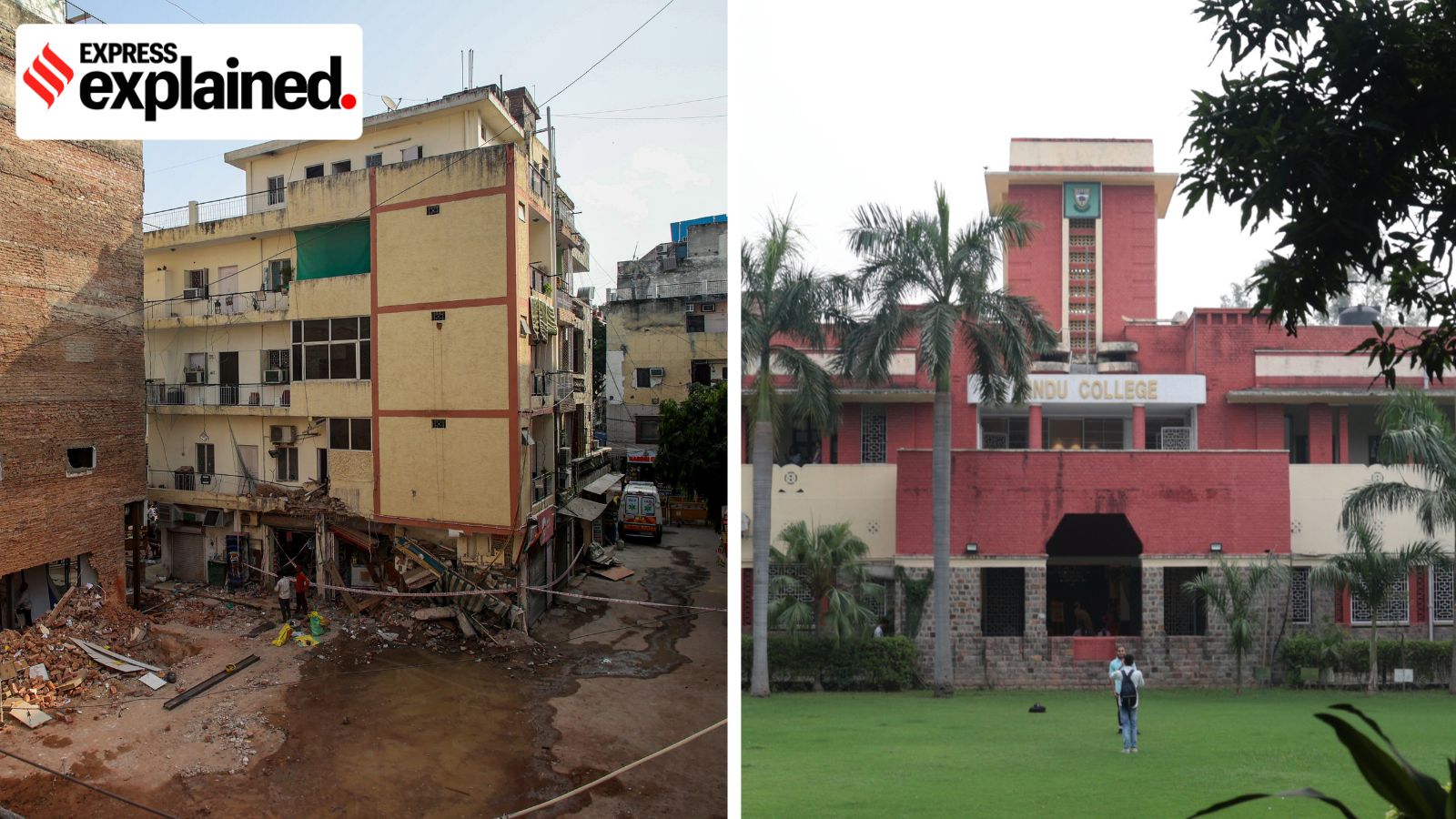
The tragic collapse of a PG building in Satya Niketan has exposed the systemic failure of Delhi University to provide adequate housing, forcing thousands of students into perilous private rentals.
- Seven deaths in Satya Niketan PG collapse highlight the danger of unregulated student housing.
- DU's hostel capacity is estimated to cover less than 10% of its outstation student population.
- A complex mix of heritage laws, land constraints, and a 'PG Economy' hinders expansion.
The collapse of a Paying Guest (PG) accommodation in South Delhi’s Satya Niketan on September 6, resulting in at least seven fatalities, has ignited a fierce debate over the housing crisis at Delhi University (DU). The tragedy has prompted the Delhi High Court to intervene, flagging the "absolutely inadequate" number of hostels available to students who travel from across India to study in the capital.
Satya Niketan has evolved into a hub for private student housing due to its proximity to South Campus colleges. However, this convenience comes at a steep price. Many students reside in 'death traps'—buildings with zero ventilation, poor structural integrity, and extreme overcrowding, all while paying exorbitant rents.
The Growing Gap: Demand vs. Supply
Under the Delhi University Act of 1922, the university was intended to provide residential facilities. Fast forward to 2024-25, and the scale of the university has exploded. With 90 colleges and over 6 lakh students, the infrastructure has failed to keep pace. Approximately 2.5 lakh students are in conventional courses, and more than half are from outside Delhi.
The disparity is staggering. While consolidated data is scarce, reports from 2015 suggested only 9,000 seats were available for nearly 1.8 lakh students. In South Campus, the crisis is more acute. Maitreyi College, for instance, inaugurated a hostel in 2022 with a capacity of 103 students for a student body exceeding 4,000.
Why This Matters
BozokMedia analysis shows that the shortage of university-run housing creates a vacuum filled by an unregulated private market. This 'PG Economy' operates on a high-profit, low-investment model, where safety audits are ignored and building codes are bypassed. The result is a precarious living environment that jeopardizes the very youth the university aims to nurture.
"The reliance on private PGs is a systemic failure; when the state fails to house its students, it effectively outsources their safety to profit-driven landlords."
Roadblocks to Expansion
University administrators point to severe land constraints and regulatory hurdles. Miranda House principal Bijayalaxmi Nanda noted that many buildings are heritage structures, making expansion legally complex. Furthermore, obtaining clearances from the Municipal Corporation of Delhi (MCD) and maintaining mandatory green spaces slows down new construction.
Conversely, student organizations like the SFI argue that the lack of initiative is intentional. They suggest that the massive financial inflow from the private PG sector to various stakeholders creates a disincentive for the university to build its own comprehensive housing infrastructure.
| Factor | Administrative View | Student/Activist View |
|---|---|---|
| Land Availability | Limited holdings & Heritage laws | Inefficient use of vacant properties |
| Approval Process | Slow MCD/Civic clearances | Political influence of PG owners |
| Feasibility | 100% residential campus impossible | Willful neglect of basic safety |
Frequently Asked Questions
1. Why are there so few hostels in South Campus?
South Campus was established later (1973) and lacks the expansive landholdings of the North Campus, making the construction of large-scale hostels more difficult.
2. What makes private PGs in Delhi unsafe?
Many are constructed without approved blueprints, lack fire safety exits, and are structurally overloaded with too many residents in small spaces.


