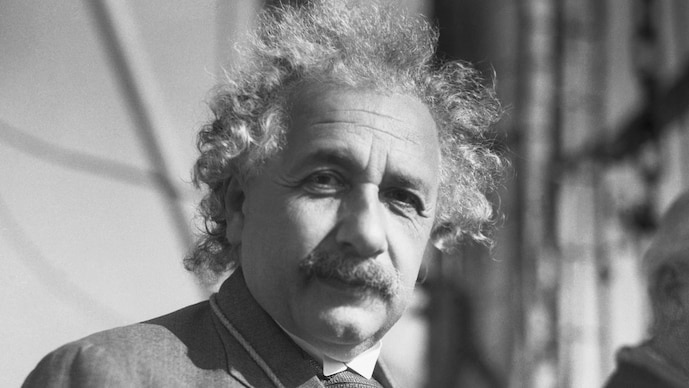
Explore the profound philosophy of Albert Einstein and why his mandate to 'never stop questioning' remains the ultimate blueprint for innovation and lifelong learning.
- Curiosity is the fundamental engine of human understanding.
- Learning is a continuous journey, not a destination reached by finding answers.
- Challenging established norms is essential for scientific and personal growth.
The legendary physicist Albert Einstein once remarked, "The important thing is not to stop questioning." This profound statement serves as a cornerstone for anyone seeking to understand the complexities of the universe. For Einstein, curiosity was not merely a tool for problem-solving; it was a fundamental way of interacting with existence itself. His philosophy encourages us to look beyond the surface of what is known.
This iconic quote was famously documented in LIFE magazine on May 2, 1955, during an interview with editor William Miller, shortly before Einstein's passing. He emphasized that the sense of wonder—the ability to be amazed by the world—is inextricably linked to the act of questioning. To Einstein, a mind that stops asking questions is a mind that has ceased to grow.
Why This Matters
BozokMedia analysis shows that in our modern era of instant gratification and AI-driven answers, the human capacity for critical inquiry is at risk of atrophy. While technology provides the 'what,' only deep, persistent questioning can lead us to the 'why' and 'how.' The ability to formulate the right questions is becoming more valuable than the ability to memorize answers.
True intelligence lies not in the accumulation of facts, but in the relentless pursuit of deeper understanding through inquiry.
A Legacy of Intellectual Revolution: Born on March 14, 1879, in Ulm, Germany, Einstein's journey took him from a clerk at the Swiss Patent Office to the pinnacle of scientific achievement. His 1905 'Annus Mirabilis' papers fundamentally reshaped our understanding of space, time, and matter. By challenging the long-held certainties of Newtonian mechanics, he paved the way for the General Theory of Relativity and earned the Nobel Prize in Physics in 1921 for his work on the photoelectric effect.
Scientific Paradigm Shift
| Concept | Classical Physics (Newton) | Modern Physics (Einstein) |
|---|---|---|
| Nature of Time | Absolute and Constant | Relative to the observer |
| Gravity | A force between masses | Curvature of spacetime |
Einstein's career was a masterclass in intellectual courage. He did not merely accept the physics of his time; he scrutinized its limitations, proving that questioning the 'obvious' is the only way to uncover the truth.
Frequently Asked Questions
Question 1: What was the main focus of Einstein's Nobel Prize?
Answer: He was awarded the Nobel Prize in Physics specifically for his explanation of the photoelectric effect.
Question 2: How does Einstein's quote apply to modern life?
Answer: It encourages lifelong learning and critical thinking, reminding us that being satisfied with current knowledge can lead to stagnation.