On Engineers' Day 2026, new data reveals a massive 52% increase in the number of female students admitted to IITs since 2019, driven by strategic supernumerary seat policies.
- The absolute number of female students rose from 2,416 in 2019 to 3,664 in 2025.
- Female enrollment grew by 52%, significantly outpacing the 34% growth in total seats.
- The implementation of supernumerary seats has pushed female representation above 19% across all surveyed IITs.
As India celebrates Engineers’ Day 2026, the demographic landscape of the nation's premier technical institutes is undergoing a profound transformation. Recent admission data reveals that the gender composition within the Indian Institutes of Technology (IITs) is shifting toward greater inclusivity. Since 2019, the absolute number of women entering these prestigious classrooms has seen a staggering 52% increase.
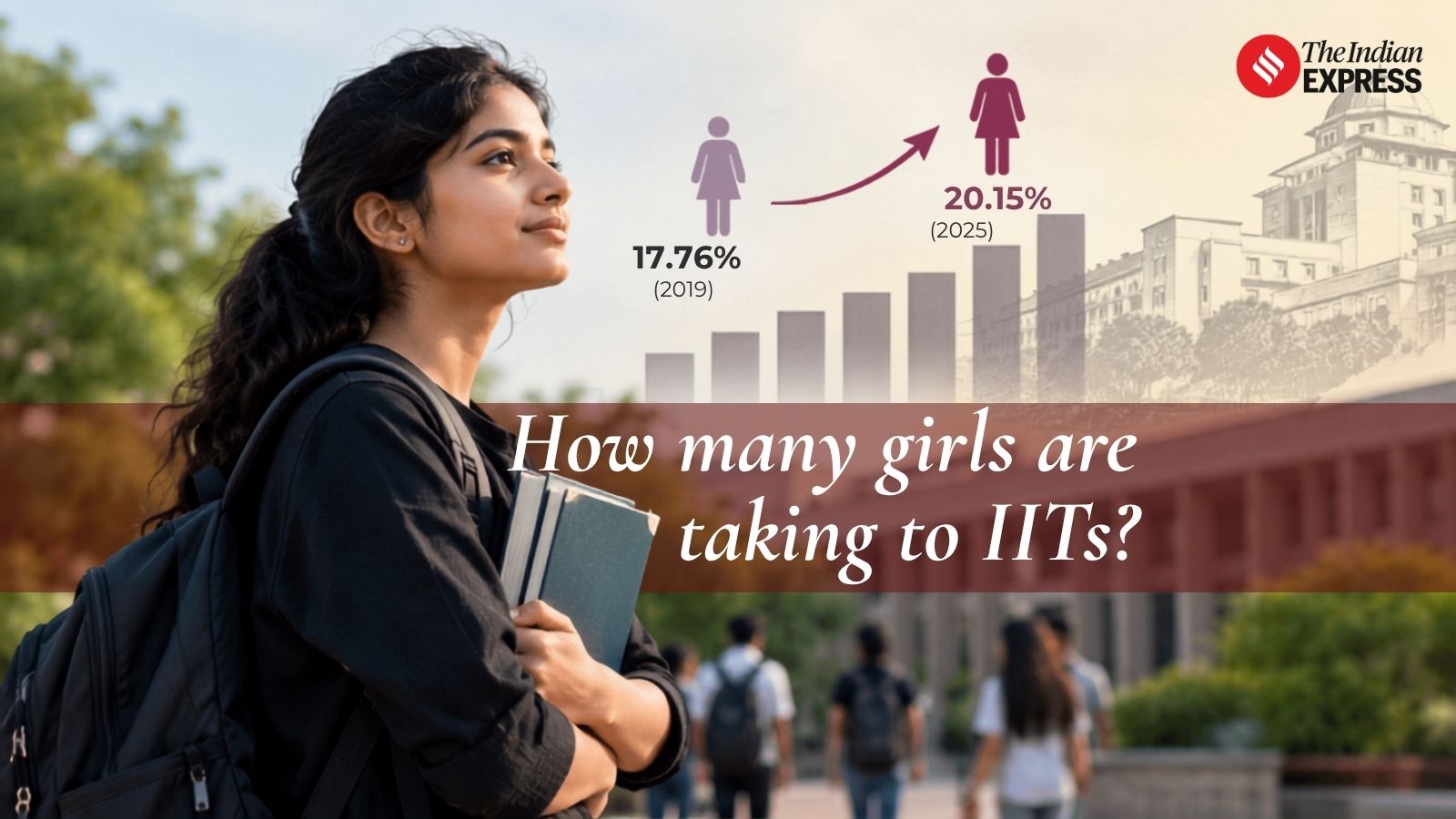
While the percentage share of female students has grown more gradually—moving from 17.76% in 2019 to 20.15% in 2025—the raw numbers tell a much more powerful story. In 2019, there were 2,416 female students across the 23 IITs; by 2025, that number climbed to 3,664. This growth is particularly notable because it has significantly outpaced the overall expansion of total seats, which grew by approximately 34% in the same period.
The Impact of Policy Interventions
This trend is not accidental but is the direct result of targeted government intervention. Recognizing the historically low female representation in engineering (which hovered around 8% in previous decades), the government introduced supernumerary seats. These additional seats were designed to boost female enrollment to specific targets—14% in 2018-19, 17% in 2019-20, and eventually 20% in 2020-21.
The rise in female engineering students is a testament to how structural policy changes can effectively dismantle long-standing gender barriers in academia.
Why This Matters
BozokMedia analysis shows that this shift is critical for India's long-term economic and technological growth. By diversifying the talent pool in engineering, the country is better positioned to tackle complex global challenges with a broader range of perspectives. The move toward a 20% baseline ensures that gender diversity is no longer an outlier but a standard feature of the IIT ecosystem.
Comparative Analysis of Top Performing IITs (2025)
| IIT Institution | Total Seats | Female Candidates | Female Share (%) |
|---|---|---|---|
| IIT Tirupati | 255 | 55 | 21.57% |
| IIT Madras | 1,124 | 237 | 21.09% |
| IIT Delhi | 1,241 | 256 | 20.63% |
| IIT Indore | 480 | 99 | 20.63% |
| IIT Bombay | 1,364 | 267 | 19.57% |
The data also highlights a newfound uniformity across the IIT network. In 2019, female representation varied widely, from a low of 16.67% at IIT Goa to 20.68% at IIT Indore. By 2025, this gap has largely closed, with every single IIT in the dataset reporting a female share of approximately 19% or higher. IIT Tirupati leads the charge with 21.57%, closely followed by IIT Madras at 21.09%.
Frequently Asked Questions
1. How did the government increase female enrollment in IITs?
The government introduced 'supernumerary seats,' which are additional seats specifically reserved for women to improve gender diversity without affecting general admissions.
2. Is the gender gap closing in all IITs?
Yes, the data shows that while representation used to vary significantly, almost all IITs now maintain a female student share of at least 19%.