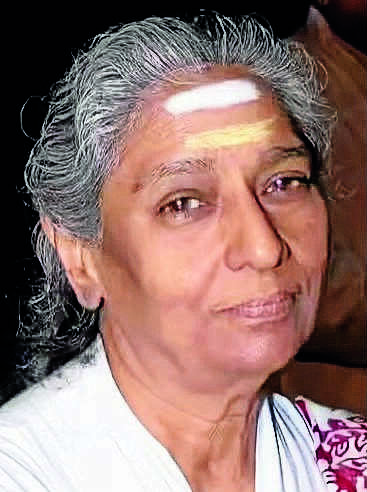
Renowned playback singer S Janaki, the voice that defined Tamil cinema for six decades, has died at the age of 88. Her death marks a profound loss for Indian film music and the countless fans who grew up with her timeless songs.
Key Takeaways (मुख्य बिंदु)
- S Janaki passes away at 88
- Six‑decade-long pillar of Tamil film music
- Iconic collaborations with Ilaiyaraaja and M S Viswanathan
S Janaki, often hailed as the nightingale of several generations, died on 12 July 2026 at a private hospital in Mysuru due to age‑related complications. Her demise has been recorded as a monumental loss for Indian cinema’s musical heritage.
Early Life and Career Beginnings
Born in Andhra Pradesh, Janaki moved to Chennai in the mid‑1950s on her uncle’s advice and joined AVM Studios. Her playback career launched in 1957 with the Tamil film “Vidhiyin Vilayattu.” Though the first recording went largely unnoticed, it set the stage for one of India’s most illustrious musical journeys.
Breakthrough and Rise to Stardom
The turning point arrived with “Singara Velane Deva” from “Konjum Salangai” (1962). Singing alongside the nadaswaram of Karakurichi Arunachalam, Janaki displayed extraordinary control, seamlessly blending classical nuance with cinematic emotion. This song cemented her status as a versatile vocalist capable of fusing classical finesse with filmic expression.
Collaboration with M S Viswanathan
Initially, M S Viswanathan relied on established voices, but he soon recognized Janaki’s remarkable adaptability. Throughout the 1960s and early 1970s, she delivered a string of memorable hits under his baton, including “Unnidathil Ennai Koduthen” from “Avalukendru Or Manam,” which solidified her place among Tamil cinema’s leading female playback singers.
Legendary Partnership with Ilaiyaraaja
It was Ilaiyaraaja who elevated Janaki to legendary status. From the late 1970s through the 1990s, their collaboration, often alongside S P Balasubrahmanyam, redefined Tamil film music. Ilaiyaraaja trusted Janaki with his most demanding compositions, knowing she could effortlessly navigate Western melodies, Carnatic ragas, rustic folk tunes, and emotionally charged ballads. Iconic tracks such as “Senthoora Poove” (16 Vayathinile), “Inji Iduppazhagi” (Thevar Magan), “Ponmeni Uruguthey” (Moondram Pirai), and “Dhoorathil Naan Kanda” (Nizhalgal) showcase her vocal brilliance and dramatic storytelling.
Artistry Beyond Singing
Janaki’s greatest strength lay in her ability to *perform* a song rather than merely sing it. She laughed, cried, whispered, giggled, teased, and even mimicked other voices when the situation demanded. Directors often remarked that she could grasp a character’s emotional arc after a single narration. Unlike many playback singers whose voices retained a fixed identity, Janaki’s voice evolved with each heroine—be it Sridevi, Revathi, Radha or Radhika.
Her legacy endures as a testament to the power of voice as an instrument of storytelling. Future generations will continue to study her nuanced performances, ensuring that the soul of South Indian cinema lives on through her timeless recordings.