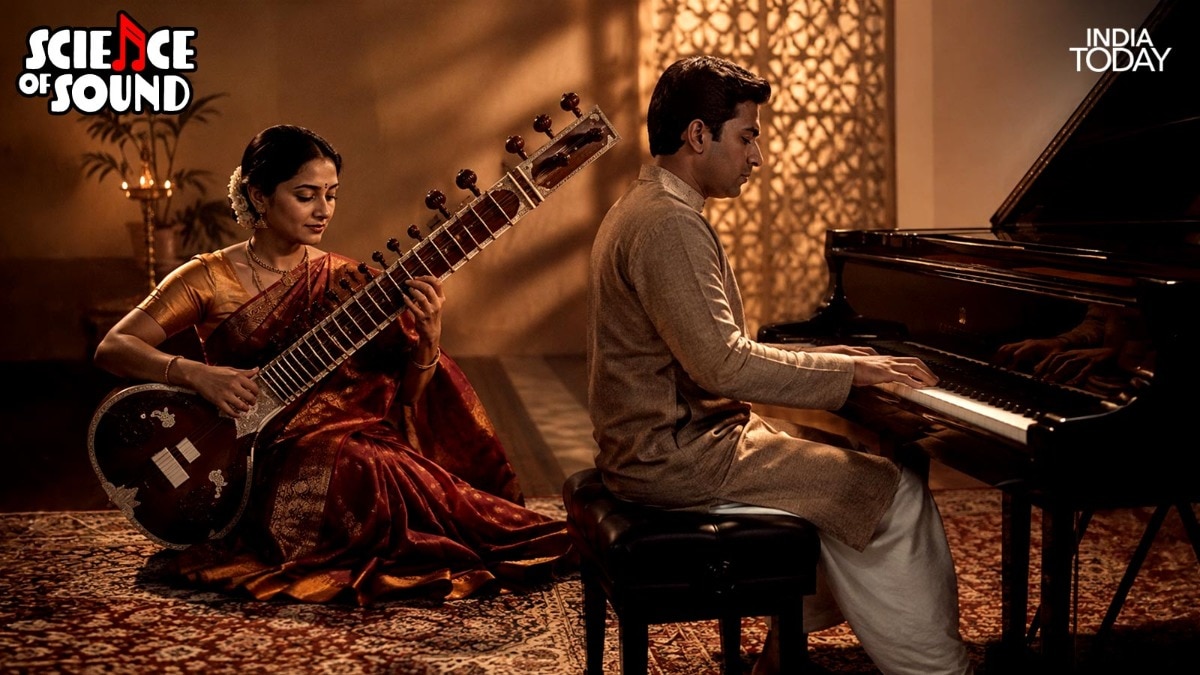
While a sitar and piano can share a stage, creating a flawless jugalbandi defies the laws of musical physics. Explore the cultural clash, technical hurdles, and what this experiment means for future collaborations.
Key Takeaways
- The sitar‑piano blend offers listeners a fresh sonic palette.
- Jugalbandi’s tuning challenges conventional physics of harmony.
- Opens avenues for experimental musicians worldwide.
Sitar and piano are icons of classical music, yet their tuning systems, tonal vocabularies, and playing techniques differ fundamentally. The sitar embraces micro‑tonal intervals integral to Indian ragas, whereas the piano is built on the 12‑tone equal‑tempered scale. This disparity often hinders seamless harmonic integration.
Jugalbandi Tradition Meets Modern Fusion
Jugalbandi, a dialogue‑driven performance tradition in Indian classical music, historically pairs sitar with tabla, sarod, or violin. Pairing it with a piano is a relatively recent curiosity, driven by global collaborations that seek to merge divergent sonic worlds. The result is an intriguing auditory experience that challenges listeners’ expectations.
Why Physics Pushes Back
The piano’s equal‑tempered system guarantees that each of its 88 keys is spaced by an identical semitone, ensuring consistent harmonic relationships across the keyboard. In contrast, the sitar’s frets produce micro‑tones that sit between Western semitones, creating pitches that Western harmony deems “out‑of‑tune.” When both instruments play simultaneously without adjustment, pitch clashes, phase interference, and dissonant beating emerge—phenomena that, from a strict acoustical standpoint, violate the conventional rules of consonance.
Experimental Workarounds and Future Directions
Musicians are tackling the issue through several avenues: retuning pianos with micro‑tonal adapters, employing pitch‑shifting software for the sitar, or designing a “common tonal centre” where both instruments operate within a limited pitch band. Some innovators use real‑time digital signal processing to align pitches on the fly, delivering a coherent jugalbandi that feels natural to the ear.
Cultural Impact and Audience Reaction
When a sitar‑piano jugalbandi takes the stage, it becomes more than a technical experiment—it is a cultural conversation. Audiences have described the fusion as “a new dimension of music,” while purist circles sometimes label it “a breach of tradition.” This polarisation has sparked academic interest, prompting musicology departments to launch research projects on cross‑cultural tuning systems.
Bottom line: The dream of a perfect sitar‑piano jugalbandi remains a work in progress, perched at the intersection of art and science. Advances in tuning technology and a willingness to experiment could eventually dissolve the physical barriers, allowing two distinct musical worlds to truly share a stage.