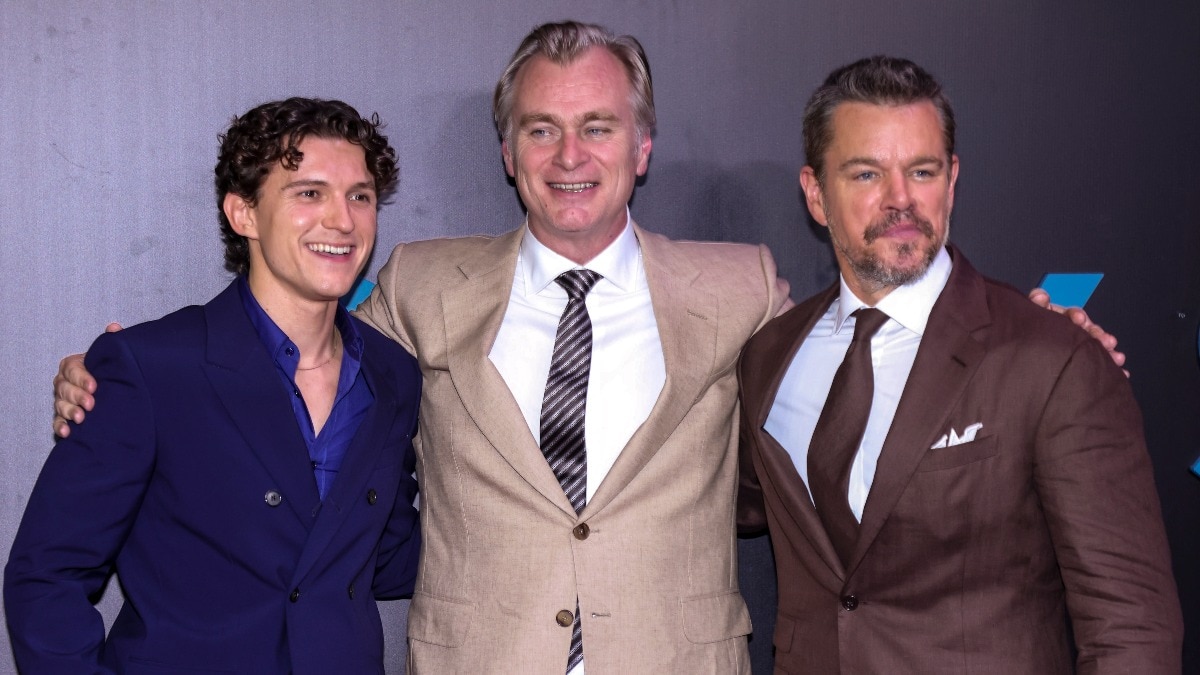
Hollywood auteur Christopher Nolan has placed India at the heart of his global campaign for “The Odyssey,” premiering the film in Mumbai with stars Matt Damon and Tom Holland. The move underscores India’s growing importance as a premier market for blockbuster cinema.
Key Takeaways
- Nolan positions India as a central hub for the film’s global promotion
- “The Odyssey” premiered in Mumbai with Matt Damon and Tom Holland on the red carpet
- Indian audiences are now a primary target for high‑budget Hollywood releases
Director Christopher Nolan, along with producer Emma Thomas, arrived in Mumbai on July 10 for the Indian premiere of his latest epic, The Odyssey. The star‑studded event at PVR Icon IMAX, Phoenix Palladium saw Matt Damon and Tom Holland walk the red carpet to a cheering crowd of thousands, signaling that India is no longer an afterthought but a priority stop on the film’s worldwide rollout.
This is more than a promotional stunt; it reflects a deepening bond between Nolan’s cinematic vision and Indian cinephiles. Earlier Nolan projects—“The Dark Knight Rises” (which featured iconic Mumbai sequences) and “Tenet” (partially shot in India)—already proved the market’s appetite for complex, high‑concept storytelling. The pandemic curtailed Tenet’s Indian push, leaving fans eager for a proper showcase, which The Odyssey now delivers.
Historical Background
While many Hollywood blockbusters have filmed in India—such as “Octopussy” (1983) and “Eat Pray Love” (2010)—they rarely returned with their leading talent for a dedicated campaign. Nolan’s decision to bring his principal cast to Mumbai marks a first for his filmography, turning the country into a genuine launchpad rather than a peripheral location.
“Oppenheimer” became Nolan’s sole Indian grosser to cross the ₹100‑crore mark, outpacing even the global juggernaut “Barbie”. Its subtle nods to the Bhagavad‑Gita resonated deeply, highlighting how Indian philosophical motifs can amplify a film’s impact. This success reinforced Nolan’s confidence that Indian viewers not only consume but dissect his narratives, debating timelines and practical effects with the same fervor as domestic releases.
Why This Matters
According to BozokMedia analysis, Nolan’s India‑first strategy carries dual significance for the local film ecosystem. First, it drives premium‑format investments—IMAX 70mm and large‑screen venues—boosting cinema‑chain revenues and encouraging further high‑technology infrastructure. Second, it validates Indian audiences as sophisticated consumers who demand narrative depth and technical excellence, prompting domestic studios to elevate their own production standards.
Beyond economics, the event fuels cultural exchange: Indian fans, accustomed to treating Hollywood spectacles as communal experiences, now see a Hollywood director personally engaging with their market. This reciprocity can inspire collaborative ventures, co‑productions, and a richer cinematic dialogue between East and West.
“The Odyssey’s Indian launch proves that the Indian market is no longer a peripheral box‑office tally; it’s a decisive factor in a film’s global strategy,” says film analyst Dr. Maya Patel.
Frequently Asked Questions
Q1: When was “The Odyssey” released in India?
A: The film opened across Indian theatres on July 17, 2026.
Q2: Can audiences watch the film in its original 70mm format?
A: Only select IMAX theatres currently support 70mm projection; most cities will view the film in standard digital formats.